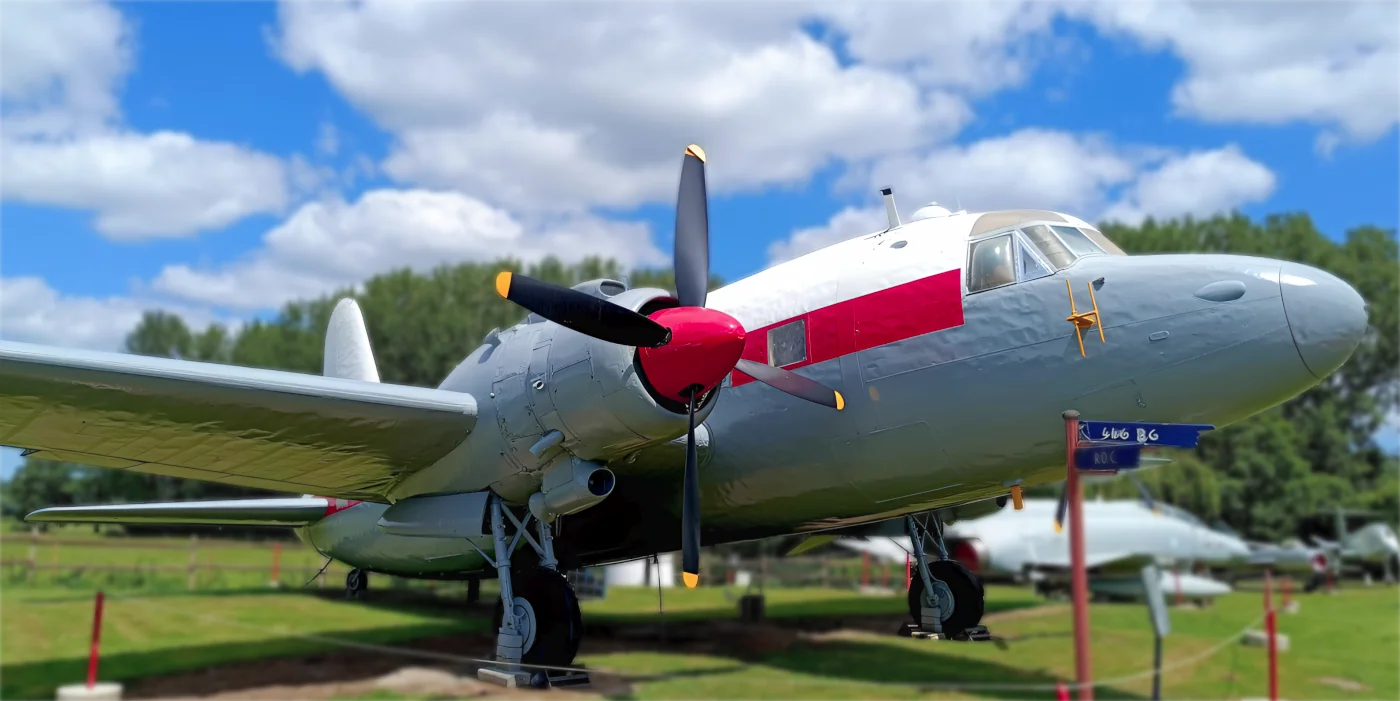
The Vickers Valetta C.2 was a lesser-known but important VIP and communications variant of the standard Valetta C.1 — itself a post-war military transport derivative of the Vickers Viking airliner. Introduced into Royal Air Force service in the early 1950s, the C.2 was externally similar to the C.1, but featured a luxuriously appointed interior, designed to transport senior military and government personnel.
Unlike the more utilitarian C.1 (which could carry up to 34 troops or be adapted for cargo or paratroop operations), the C.2 was configured for VIP transport, with individual seating, additional insulation, and improved communications equipment. The type was typically finished in high-polish silver or grey/white RAF liveries with discreet national markings and roundels.
These aircraft were operated by RAF Transport Command, and several C.2s were allocated to overseas postings and diplomatic flights, transporting commanders, defence staff, and other key personnel between airbases in the UK, Europe, the Middle East, and occasionally to Commonwealth nations. Some were also attached to RAF Malta and RAF Cyprus, providing flexible long-range VIP capacity.
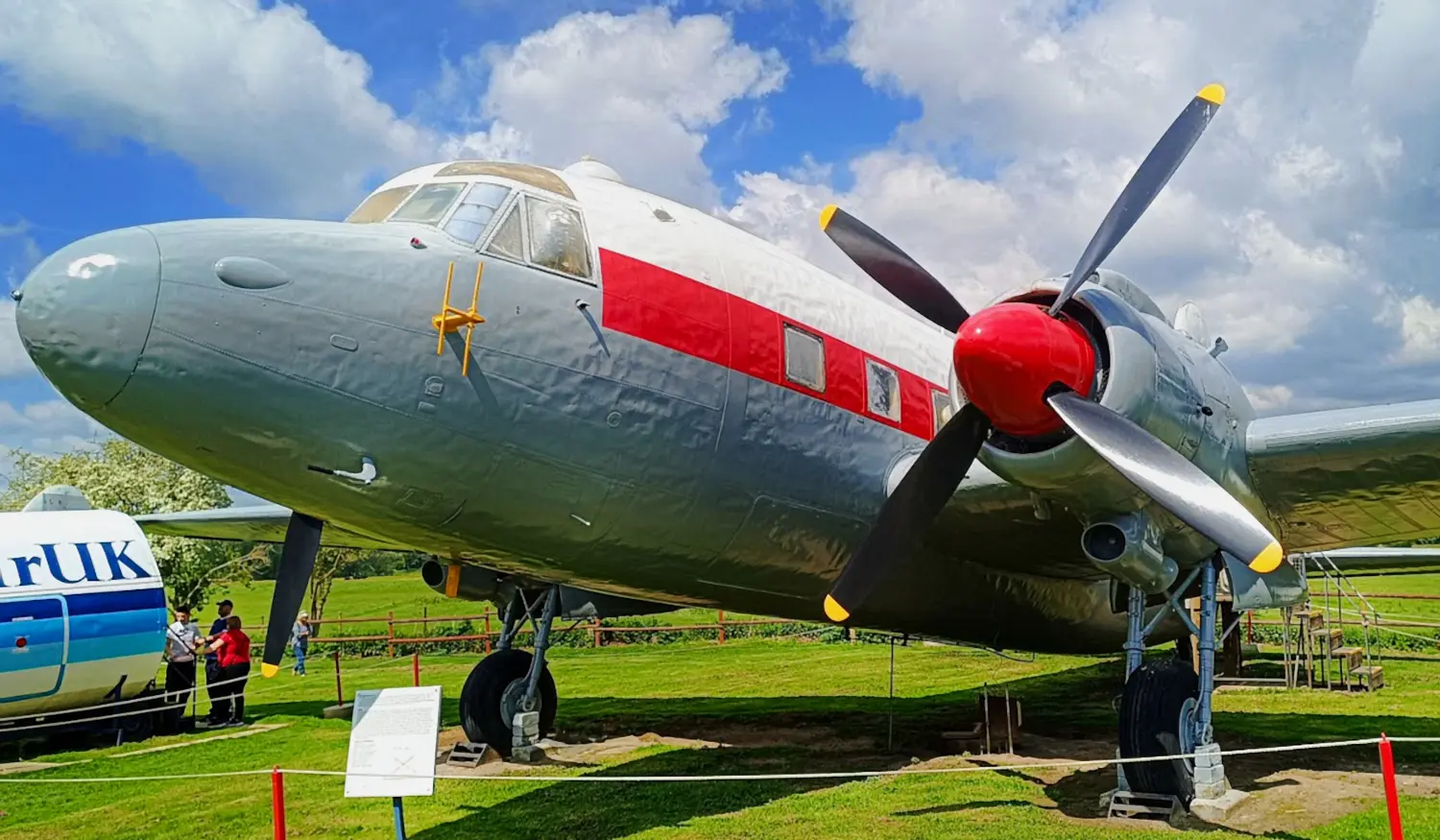
Despite its relatively small production numbers (fewer than 10 were built or converted to C.2 standard), the Valetta C.2 remained in service throughout the 1950s and into the early 1960s. As jet and turboprop aircraft like the de Havilland Comet 2, Bristol Britannia, and Andover entered service, the piston-engined C.2s were gradually phased out.
Owing to their high-profile role and non-combat function, many C.2 airframes did not survive into museum preservation. However, elements such as interiors, flight logs, and photographic evidence remain, helping to document their discreet but important role during the early Cold War period.
The Vickers Valetta C.2, a military transport aircraft, played a crucial yet often overlooked role in the Royal Air Force’s (RAF) operations during the post-World War II era. Developed from the civilian Vickers Viking, the Valetta served as a dependable workhorse for nearly two decades, contributing significantly to the RAF’s transport and training capabilities.
The Valetta’s story begins in the immediate aftermath of World War II. With the need for a new military transport aircraft to replace the aging Douglas Dakota, the RAF turned to Vickers-Armstrongs for a solution. The company proposed a militarized version of their Viking airliner, which had been developed using the wings and undercarriage of the wartime Wellington bomber. The first Valetta prototype flew on June 30, 1947, with production aircraft entering service with the RAF in 1948. The C.2 variant, optimized for freight transport, became the most numerous, with 108 aircraft produced.
The Valetta C.2 quickly became an essential part of the RAF’s Transport Command. Its primary roles included:
- Freight transport
- Troop transport
- Parachute training
- Casevac (casualty evacuation)
The aircraft saw extensive use during various post-war operations, including:
- The Berlin Airlift (1948-1949)
- The Malayan Emergency (1948-1960)
- Operations in Aden and the Persian Gulf
Valettas remained in RAF service until 1969, a testament to their reliability and versatility. Pilots who flew the Valetta often spoke of its predictable handling and excellent visibility.
Entering the Valetta’s cockpit, pilots are greeted by a spacious and well-organized environment. The large windows provide excellent visibility, crucial for both transport operations and training flights. The instrument panel is logically arranged, with flight instruments centrally located and engine gauges easily visible. The Valetta features a conventional control yoke, with engine controls located on a central pedestal between the pilot and co-pilot. The aircraft’s systems, while more complex than its civilian Viking counterpart, are straightforward and reliable.
As the Valetta accelerates down the runway, pilots appreciate the aircraft’s stable behavior. The take-off roll is relatively long due to the aircraft’s weight, but it becomes airborne smoothly at around 100 knots. The Valetta’s excellent field performance, inherited from its Wellington lineage, allows it to operate from relatively short runways. Once airborne, the climb rate of approximately 1,000 feet per minute allows for efficient ascents to cruising altitude. The Valetta’s high wing design provides good ground visibility during the climb, a useful feature for both transport and training missions.
At typical cruise speeds of around 180 knots, the Valetta exhibits stable and predictable handling characteristics. The controls are well-harmonized, allowing for smooth and precise maneuvering. This stability made the Valetta an excellent platform for transport operations and parachute training, as it allowed for consistent and safe drop zones. The Valetta’s behavior in various weather conditions was generally good, a crucial factor for an aircraft expected to operate in diverse environments around the globe. Its de-icing systems were effective, allowing for operations in light icing conditions.
One of the Valetta’s most appreciated features was its range. With a maximum range of over 1,500 nautical miles, the aircraft could undertake long-distance transport missions, significantly enhancing the RAF’s logistical capabilities.
Approaching for landing, pilots appreciate the Valetta’s docile low-speed handling characteristics. The aircraft’s design allows for stable approaches, with good visibility over the nose facilitating accurate landings. The effective flaps and robust landing gear enable operations from relatively short runways, a valuable capability for a military transport aircraft.
The aircraft’s large cargo door and spacious cabin allowed for the transport of bulky cargo, including vehicles and aircraft engines. This versatility made the Valetta an invaluable asset for the RAF’s logistical operations.
- Typical troop capacity: 34 fully equipped soldiers
- Parachute drop capacity: 20 paratroopers
Throughout its service life, the Valetta C.2 was involved in numerous operations that showcased its reliability and versatility.
Berlin Airlift:
Although introduced towards the end of the Berlin Airlift, Valettas played a role in this crucial operation, demonstrating the aircraft’s ability to operate in high-pressure, high-frequency transport missions.
Malayan Emergency:
During the Malayan Emergency, Valettas were extensively used for troop transport, supply drops, and casualty evacuation. The aircraft’s ability to operate from short, unprepared airstrips proved invaluable in the jungle environment.
Parachute Training:
The Valetta C.2 became a mainstay of the RAF’s parachute training program. Its stable flight characteristics and large cargo door made it an ideal platform for training paratroopers.
Middle East Operations:
Valettas were heavily involved in RAF operations in Aden and the Persian Gulf during the 1960s, providing essential transport and support capabilities in these challenging environments.
While the Valetta C.2 may not have achieved the fame of some of its contemporaries, its impact on RAF operations was significant. The aircraft’s reliability and versatility made it a valuable asset in a variety of roles. The Valetta’s success in the transport and training roles helped maintain the RAF’s global reach during a period of post-war transition. Its ability to operate from austere airfields and carry substantial payloads enhanced the flexibility of British military operations worldwide.
The experience gained with the Valetta influenced the development of subsequent RAF transport aircraft. While more advanced aircraft would eventually take on its roles, the Valetta had demonstrated the value of a robust, versatile transport platform in military aviation.
The Vickers Valetta C.2, though often overshadowed by more famous aircraft, played a crucial role in RAF operations for nearly two decades. Its adaptability, seen in its successful employment in roles ranging from freight transport to parachute training, exemplifies the versatility prized in military aviation. For the pilots and crew who flew it, the Valetta represented a reliable and capable platform. Its stable flying characteristics made it an ideal transport and trainer, while its payload capacity and range made it a valuable asset in operational roles.
As we reflect on the Valetta’s history, we see an aircraft that epitomized the workhorse ethos. It may not have been the fastest or most advanced aircraft of its era, but its contributions to the RAF’s capabilities were substantial. The Valetta’s legacy lives on in the generations of aircrew it helped train and in the logistical support it provided during a crucial period of British military history.