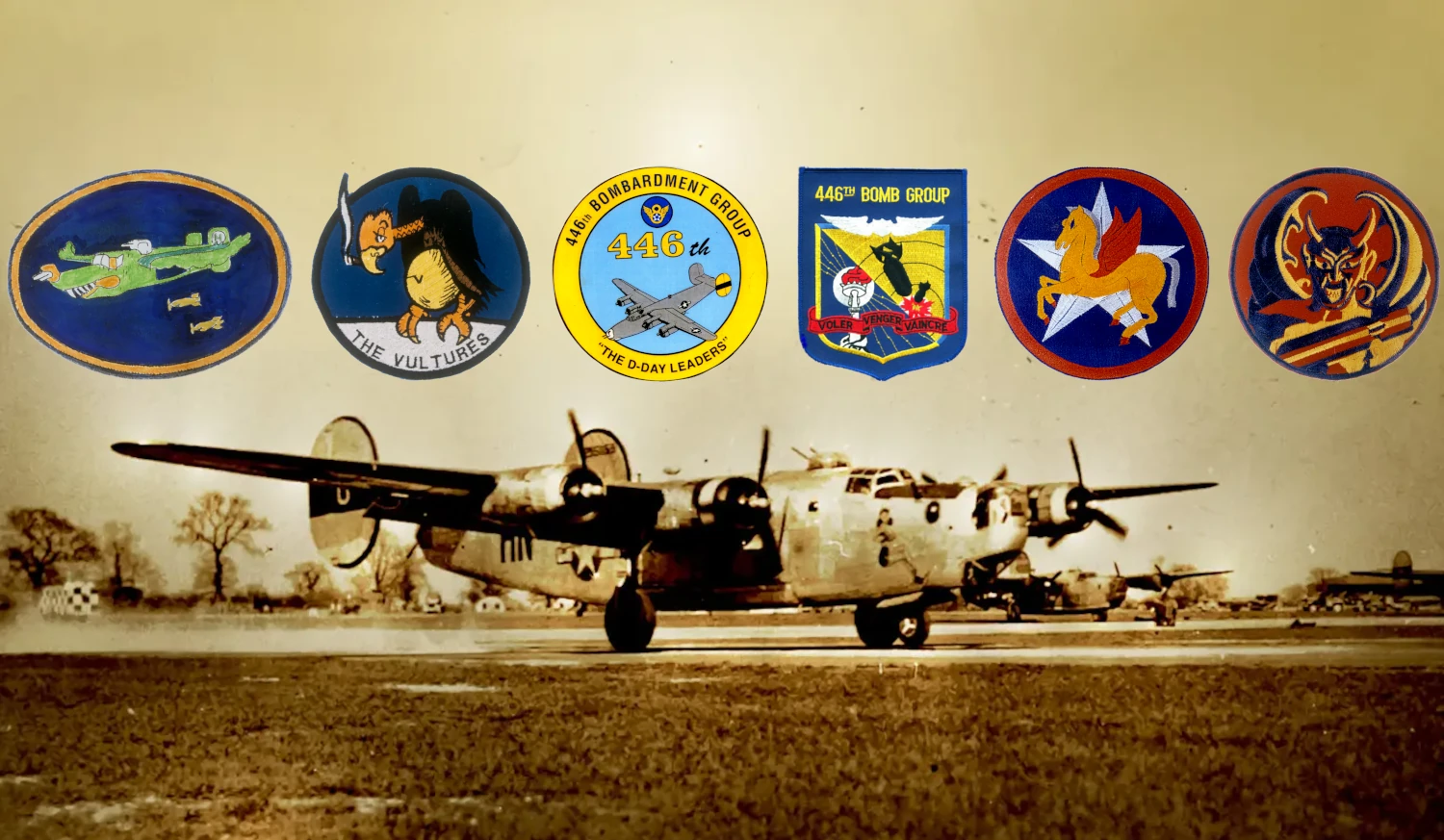
The 446th Bomb Group, nicknamed the “Bungay Buckaroos,” was a distinguished unit of the United States Army Air Forces (USAAF) that played a crucial role in the strategic bombing campaign against Nazi Germany during World War II. Operating from their base at Station 125 in Bungay, Suffolk, England, the group flew B-24 Liberator heavy bombers and participated in some of the most significant air operations of the war.
Activated on April 1, 1943, at Davis-Monthan Field, Arizona, the 446th Bomb Group underwent intensive training before deploying to the European Theater of Operations. The air and ground crews were briefly moved to Almagordo in New Mexico, then to Lowry AAB in Colorado to complete their training. In October 1943 they left Colorado for England. The air crews took the southern route to England, flying from Florida to Puerto Rico, then on to Brazil before crossing to the African continent and flying north to Marrakesh. The group arrived at its Bungay base in November 1943 and were assigned to the 2nd Combat Bombardment Wing of the 2nd Air Division, VIII Bomber Command (later Eighth Air Force).
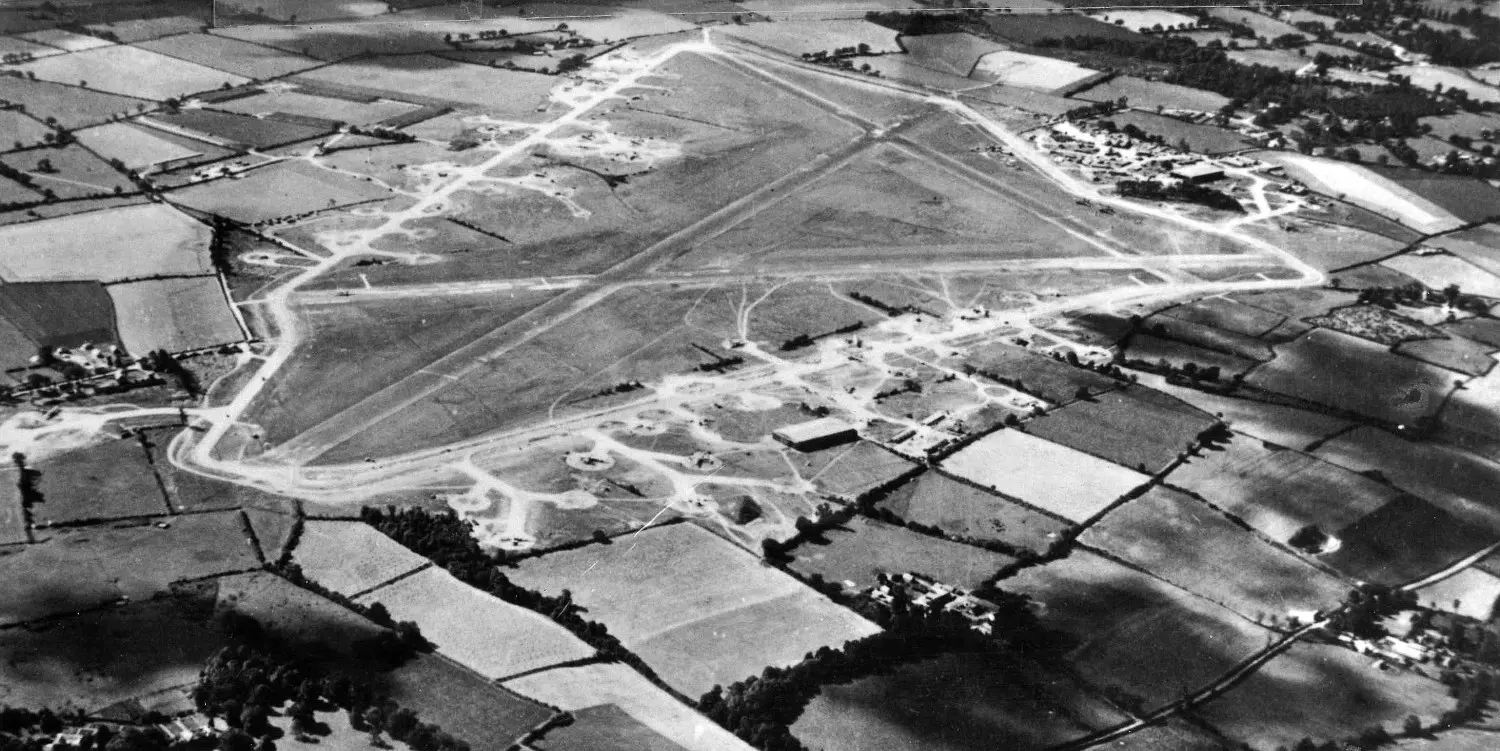
(above) Flixton (Bungay), Station 125, 446th Bomb Group. Coming in to land at Flixton, the pilot would use the callsign “Hello Beachbell” at this point.
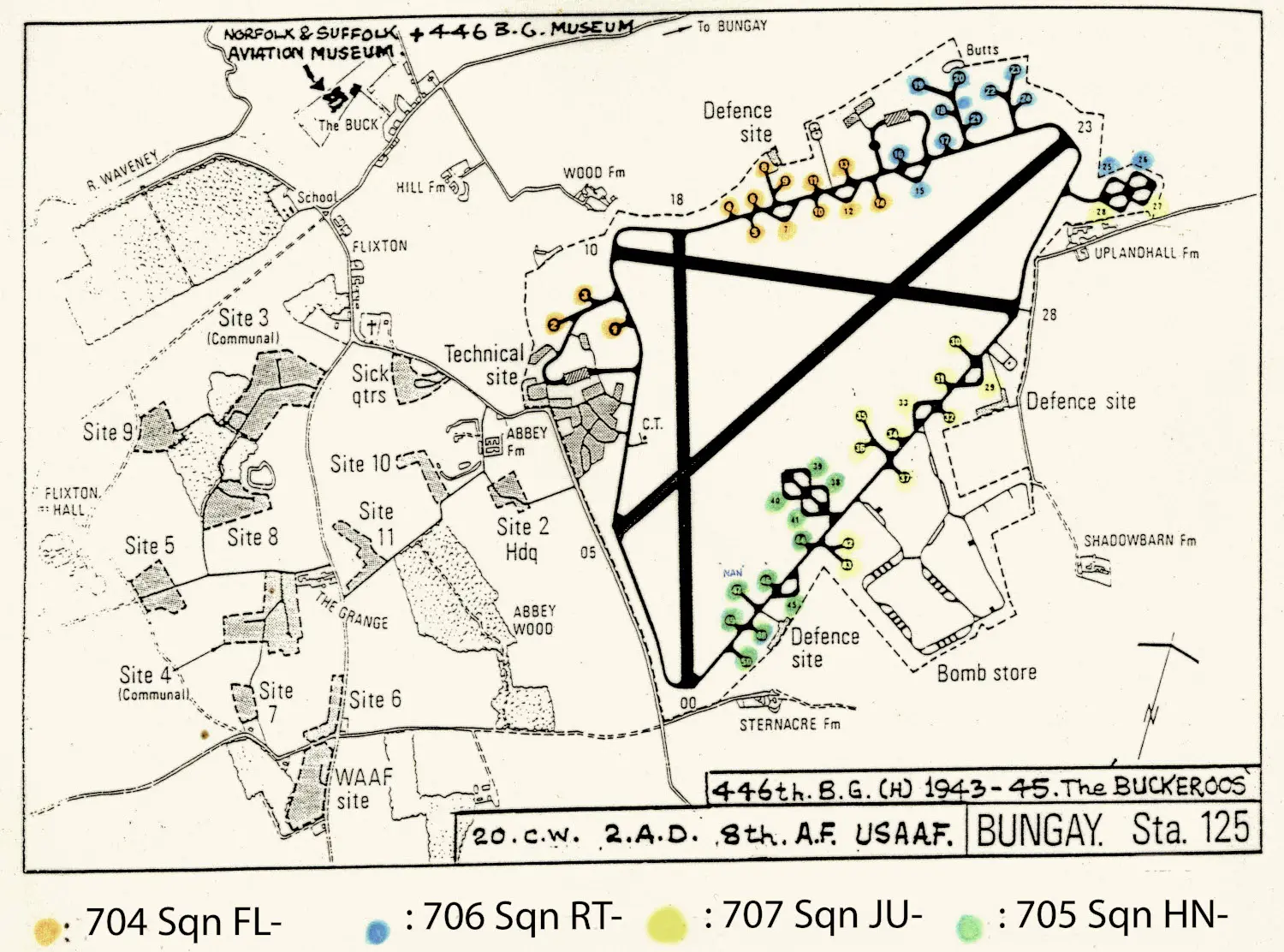
The group consisted of four squadrons:

704th Bombardment Squadron
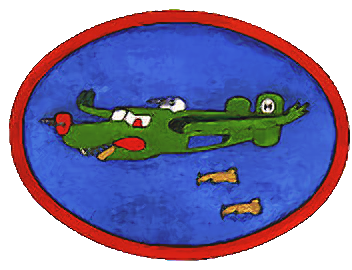
705th Bombardment Squadron

706th Bombardment Squadron

707th Bombardment Squadron
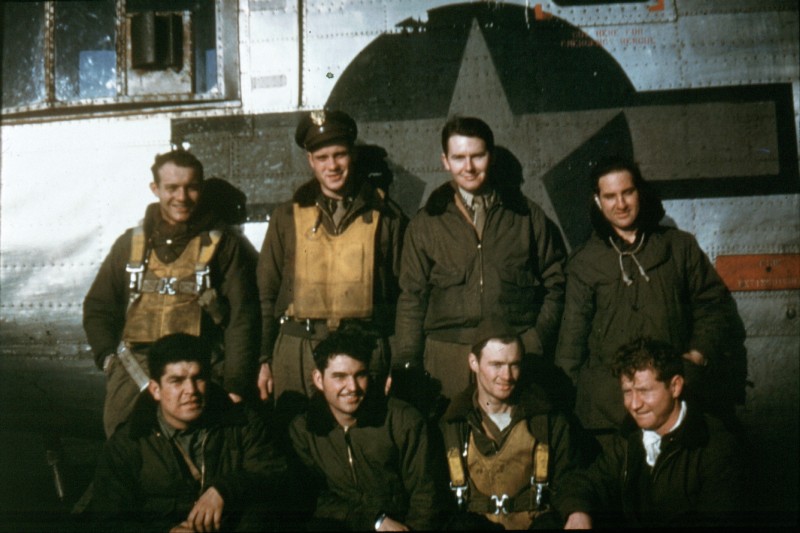
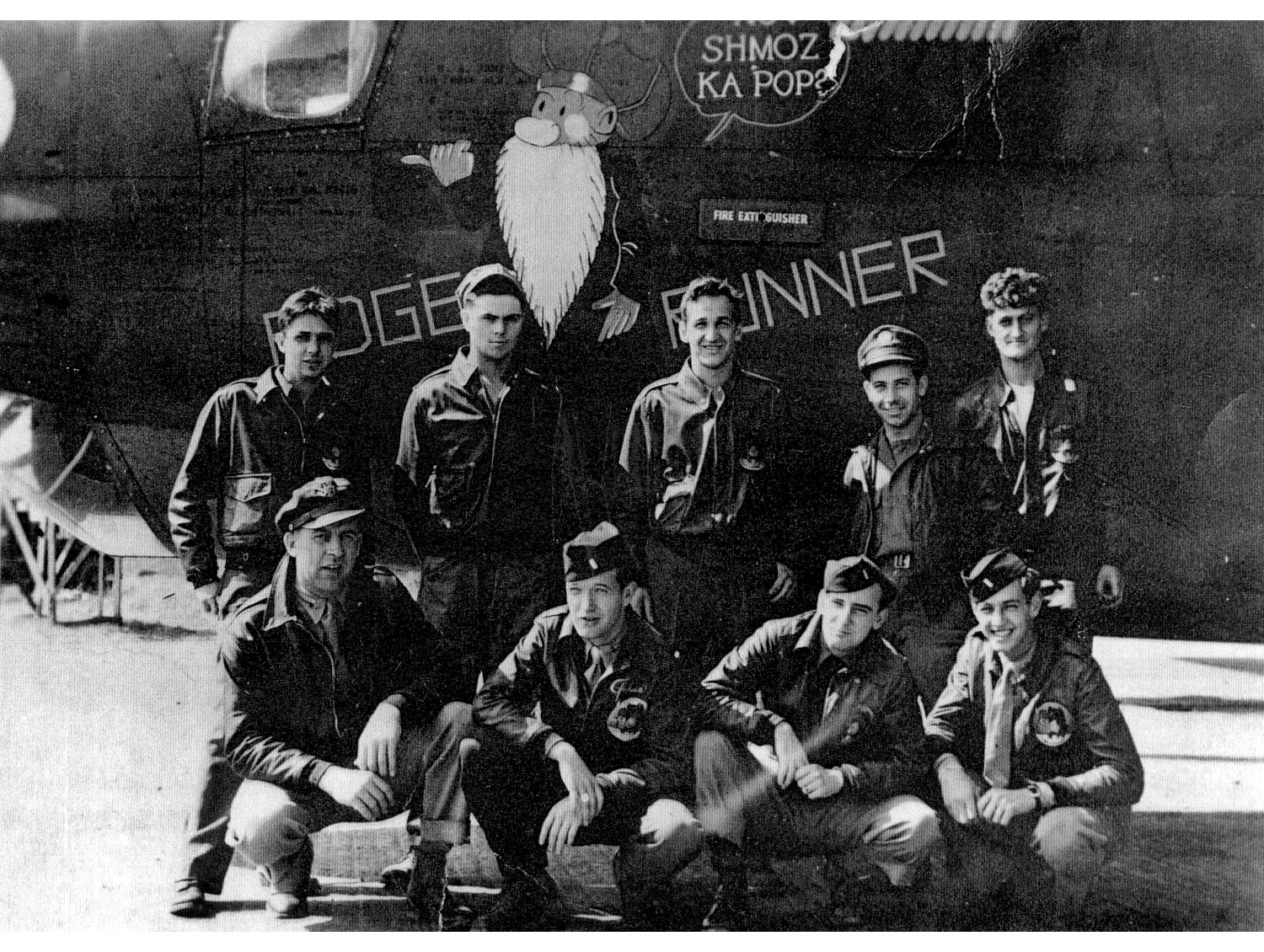
B-24 Liberator (RT-H, serial number 44-40268) “Kentucky Belle” bomber crew, led by Lieutenant Grant, of the 446th Bomb Group.
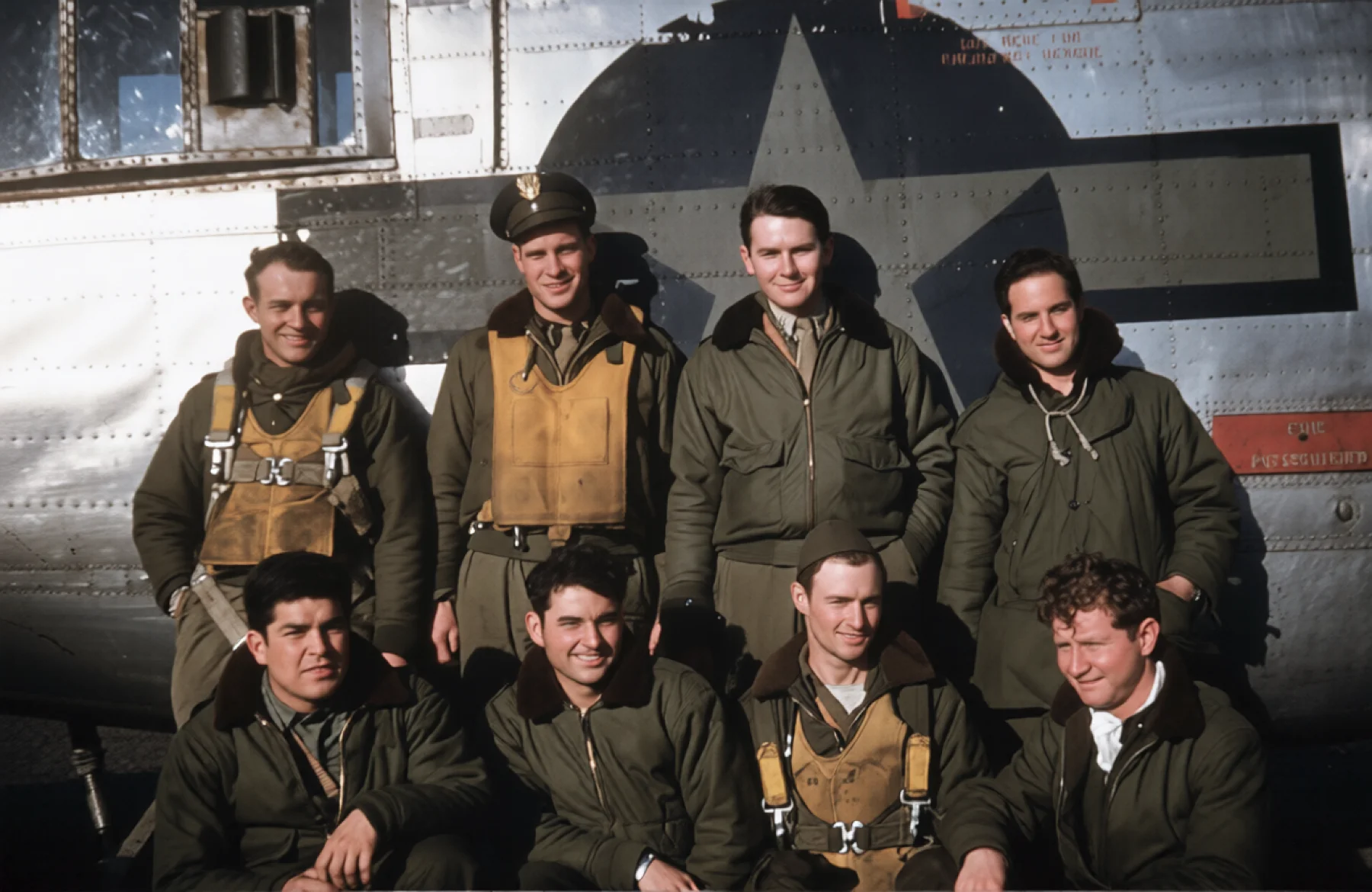
Restored version of the photo of the Kentucky Belle crew.
Operations and Notable Missions
The 446th Bomb Group flew its first combat mission on December 16, 1943, targeting Bremen, Germany. This mission marked the beginning of the group’s contribution to the Allied strategic bombing campaign. On returning, two B-24s crash landed on or near base and were written off. This was followed by a mission to Osnabruck on 22nd December, when the first losses were sustained over enemy territory.
Throughout their service, the Bungay Buckaroos participated in numerous significant operations:
Big Week (February 20-25, 1944): The group took part in this massive air offensive against German aircraft production facilities, helping to establish air superiority before the D-Day invasion. One mission was to the Me. 110 plant at Gotha on 24 February when the Bungay group got off lightly with two losses out of a total of 33 sustained by the 2nd Bomb Division. The mission to the Hamm marshalling yards on 22nd April 1944, was postponed until late in the day and caused the 2nd Division groups to return at dusk with navigation lights on. A surprise follow-up by Ju. 88s and Me. 410s of KG 51, which hit the Waveney Valley groups during their let-down for landing, caused chaos in the area. 13 Liberators of the division crashed or crash landed as a result of these intruder’s actions and our own anti- aircraft guns which were shooting wildly in the panic. Although Flixton airfield was attacked, no known losses were sustained – the worst hit being Seething where 3 B-24s piled into each other on the runway and two were shot down just before reaching their base.
D-Day Support (June 6, 1944): On the morning of the Normandy invasion, the 446th bombed coastal defenses and transportation infrastructure to support the Allied landings. It was also the group that led the Eighth Air Force and Second Air Division on the first heavy bomber missions on D-Day, 6 June 1944.
Operation Market Garden (September 1944): The group provided air support for the ambitious but ultimately unsuccessful Allied airborne operation in the Netherlands.
Battle of the Bulge (December 1944 – January 1945): During Germany’s last major offensive, the 446th bombed transportation targets to hinder enemy movements.
Dresden Bombing (February 13-15, 1945): The group participated in the controversial bombing of Dresden, which remains a subject of historical debate.
Throughout their combat operations, the 446th Bomb Group demonstrated exceptional skill and bravery. They were known for their accuracy in bombing and their ability to maintain tight formations, which was crucial for mutual defense against enemy fighters.
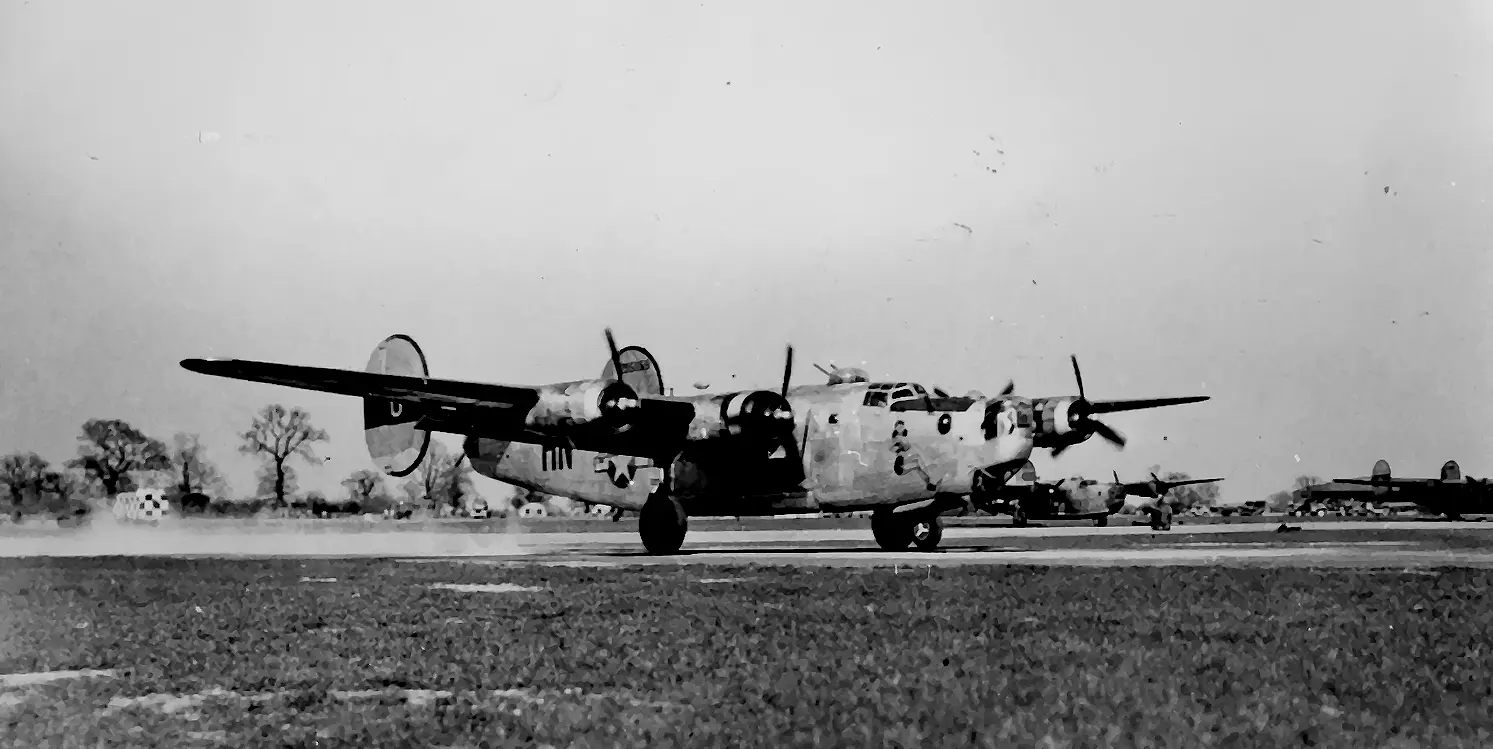
A B-24 Liberator of the 705th Bomb Squadron, 446th Bomb Group lands at Bungay after a mission, 23 April 1945
Key Missions
While every mission flown by the 446th Bomb Group was significant, some stand out for their historical importance or the particular challenges they presented:
Gotha Raid (February 24, 1944): As part of Big Week, the 446th participated in a raid on the Gotha aircraft factory. Despite heavy resistance, the group successfully bombed their target, contributing to the disruption of German fighter production.
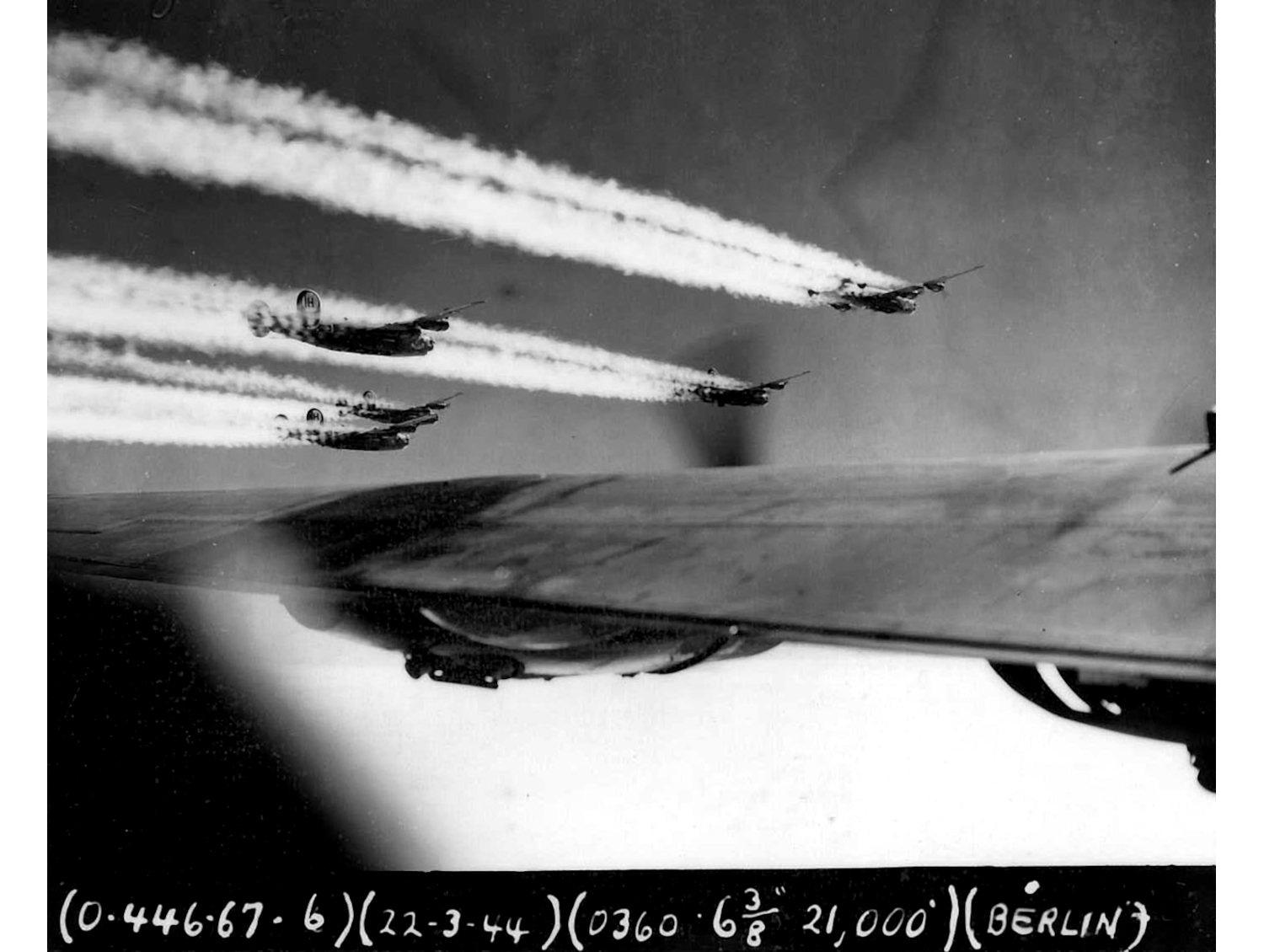
Berlin Mission (March 6, 1944): The group took part in one of the earliest daylight raids on Berlin, the heavily defended German capital. This mission demonstrated the increasing reach and capability of Allied strategic bombing.
Poznań Oil Refinery (May 29, 1944): In a long-range mission to Poland, the 446th bombed oil facilities, part of the campaign to cripple Germany’s fuel production.
Misburg Oil Refinery (November 26, 1944): The group participated in a massive raid on this critical oil facility near Hannover, braving intense flak to hit their target.
Magdeburg (January 16, 1945): In one of their last major operations, the 446th bombed railway yards in Magdeburg, contributing to the disruption of German logistics in the final months of the war.
Key People
Several individuals played significant roles in the 446th Bomb Group’s history:
Colonel Jacob J. Brogger: The group’s first commanding officer, who led the unit during its formation and initial deployment to England.
Colonel Troy W. Crawford: Took command of the group in May 1944 and led it through many of its most significant missions.
Major William R. Schmidt: A highly decorated pilot who flew numerous combat missions with the 446th and later became a squadron commander.
Captain William R. Calhoun: A navigator who flew 35 combat missions and was awarded the Distinguished Flying Cross for his exceptional skill and bravery.
Technical Sergeant Donald G. Strait: A ball turret gunner who flew 35 missions and was known for his sharpshooting skills in defending his B-24 against enemy fighters.
Typical of the many acts of heroism performed by 446 BG pilots was that of 2nd Lt Cecil T Miller of the 704th Bomb Sqn on 24 February 1944. His crippled B-24H 42-7574 was returning from Gotha with a badly holed port wing. The crew, with the exception of the pilot, co-pilot and navigator, baled out over Flixton. These three headed for the emergency runway at RAF Woodbridge, but whilst circling the airfield all four engines cut due to lack of fuel. Miller ordered the other two to jump, and veered the B-24 away from barracks before it crashed at Hill Farm, Sternfield. Miller died in the crash and was subsequently posthumously awarded the Silver Star.
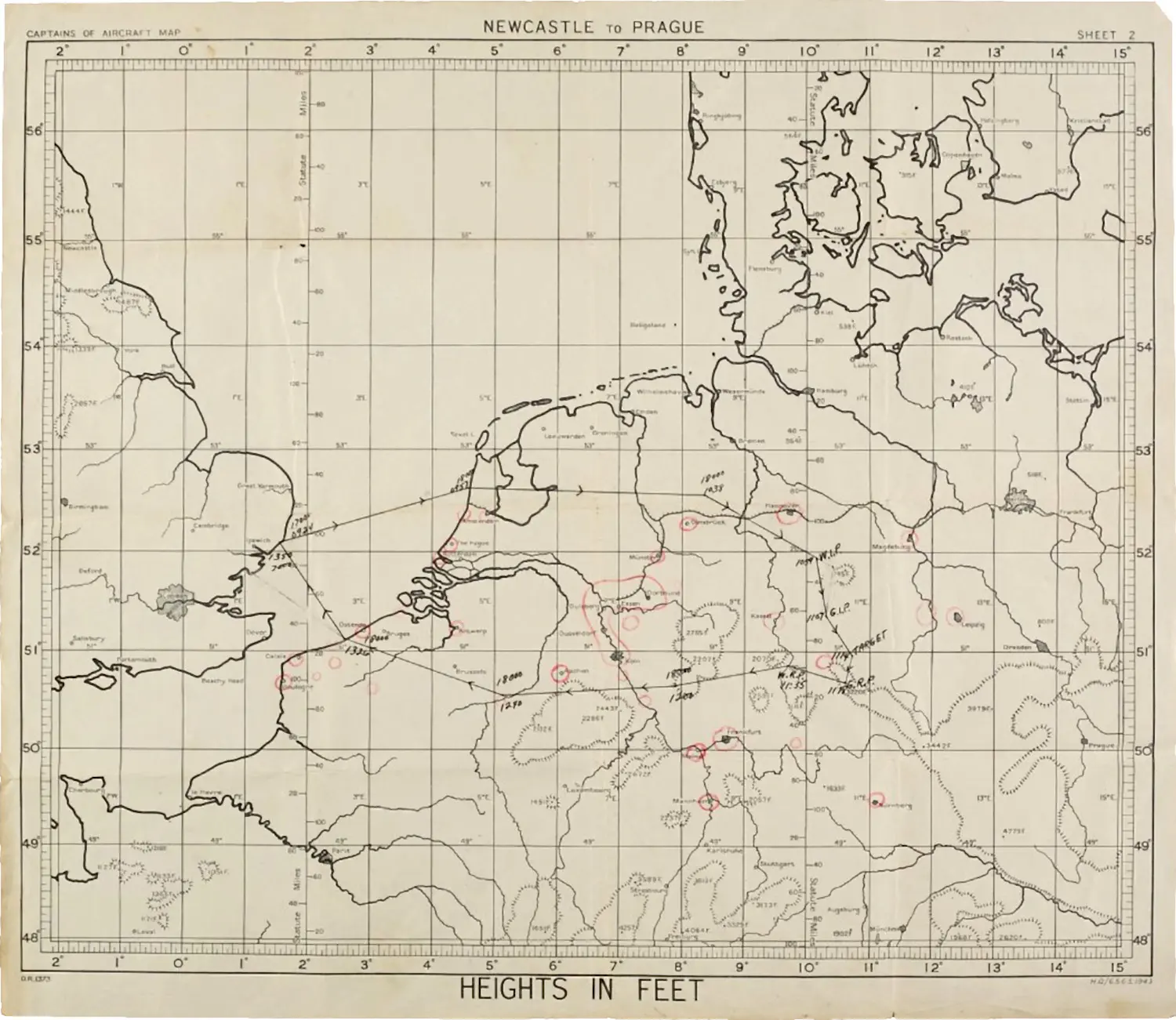
While the four squadrons of the 446th Bomb Group operated as a cohesive unit, each had its own identity and achievements. Each squadron maintained its own unique traditions and mascots, fostering a sense of camaraderie and healthy competition within the group. Two of the bombardment squadrons, the 706 BS and the 708 BS, flew more than 60 consecutive missions without loss.
704th Bombardment Squadron: Known for its skilled pilots, the 704th often led group formations. They were particularly noted for their precision during the D-Day operations.
705th Bombardment Squadron: This squadron gained recognition for its low-level bombing expertise, which was crucial in several tactical support missions.
706th Bombardment Squadron: The 706th was known for its exceptional navigation skills, often guiding the group accurately to targets in poor weather conditions.
707th Bombardment Squadron: This squadron distinguished itself with its gunnery skills, achieving a high number of enemy fighter kills during combat missions.
The 446th Bomb Group’s last combat mission was flown on April 25, 1945. After the German surrender, the group flew transport missions, bringing home American soldiers as part of Operation Magic Carpet. The 446th had clocked up 273 combat missions during which they delivered 16,800 tons of bombs. Total losses amounted to 58 aircraft in action, and 28 due to other operational causes
In June and July 1945, the 446th were redeployed to the United States in preparation for a move to the Pacific Theatre. The surrender of Japan made this move unnecessary and the group was inactivated on 28 August 1945.
In the spring of 1986 a new set of oak gates were hung at St Mary’s Church, Flixton, which stands close to the old airfield. These were bought as a result of donations by veterans of the 446th BG to replace those originally presented in 1945 by the Americans at Flixton. A small memorial plaque carries the inscription, “These gates were presented in memory of the men of the 446th Bombardment Group, USAAF, who gave their lives in the defence of freedom, 1941-1945“.
Achievements and Legacy
Over the course of their service, the 446th Bomb Group flew 273 combat missions, dropping over 16,800 tons of bombs on enemy targets. They lost 58 aircraft in combat, a testament to both the dangers they faced and their skill in evading enemy defenses. The group was awarded the Distinguished Unit Citation for its performance during an extremely hazardous mission against strategic targets in Bavaria on April 25, 1945. Despite fierce enemy resistance and difficult weather conditions, the group pressed home their attack with great accuracy. In addition to the unit citation, many individual members of the 446th received decorations for valor, including Distinguished Flying Crosses, Air Medals, and Purple Hearts.
The 446th Bomb Group’s service during World War II exemplifies the courage, skill, and dedication of the American airmen who flew strategic bombing missions over Nazi-occupied Europe. From their base in Bungay, these young men flew into some of the most heavily defended airspace in history, facing flak, fighters, and treacherous weather to strike at the heart of the enemy’s war machine. The group’s contributions to operations like Big Week, D-Day, and the oil campaign played a crucial role in the Allied victory. The accuracy of their bombing, the mutual support of their tight formations, and the bravery of individual aircrew members all combined to make the 446th an effective and respected unit within the Eighth Air Force.
Today, the legacy of the Bungay Buckaroos serves as a reminder of the sacrifices made by a generation of young men who took to the skies in defense of freedom. Their story is an integral part of the larger narrative of World War II and the development of strategic air power.
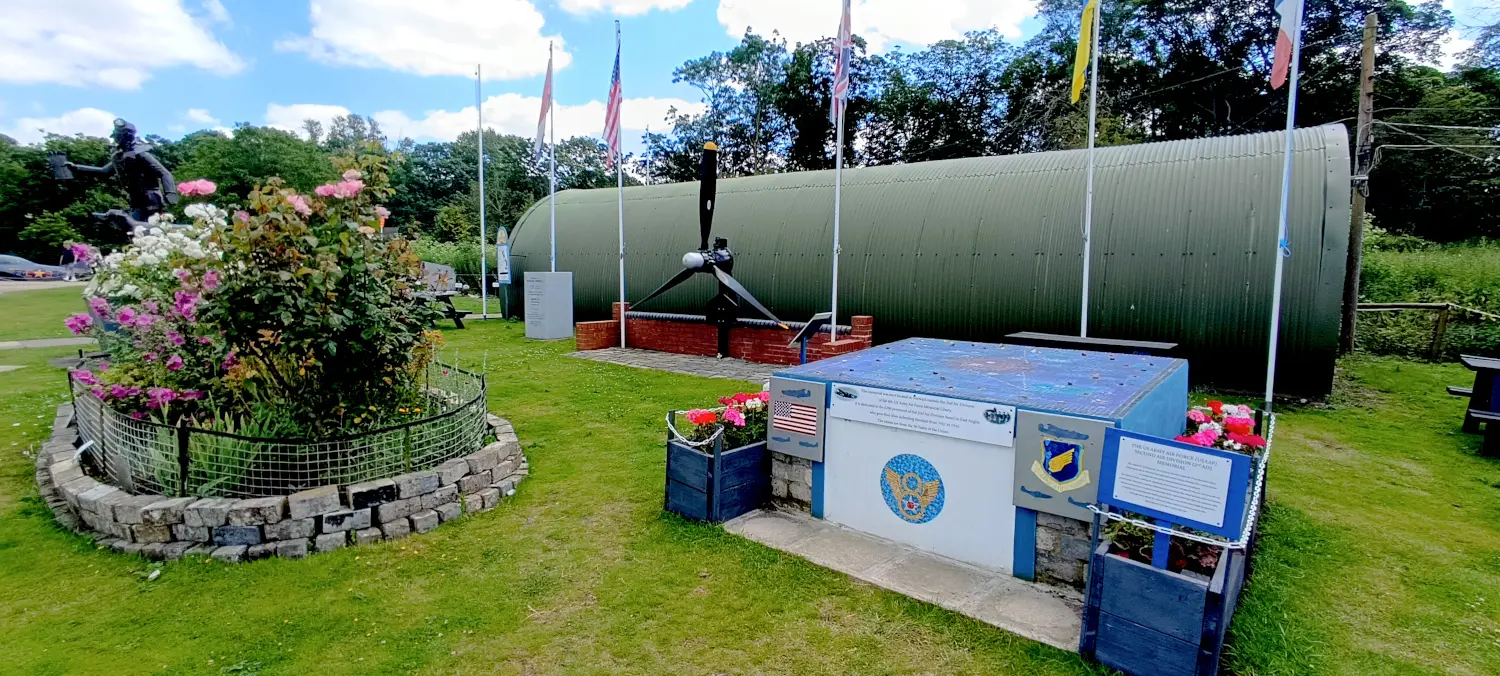
This memorial (above) is dedicated to the memory of the 456 airmen killed in action and to those serving at Flixton from 1943 – 1945, unveiled by Bill Davenport, President of the 446th Bomb Group Association in 1993 during a Group reunion. It comprises a three blade Hamilton Standard propeller, of the type used by Liberators. It features a superb cast bronze plaque featuring a Liberator and Eighth Air Force badge which reads:
“To the memory of all those who gave their lives or served with the 446th Bomb Group based at Flixton, Bungay, 1943 – 1945. 20th Combat Wing, 2nd Air Division”.
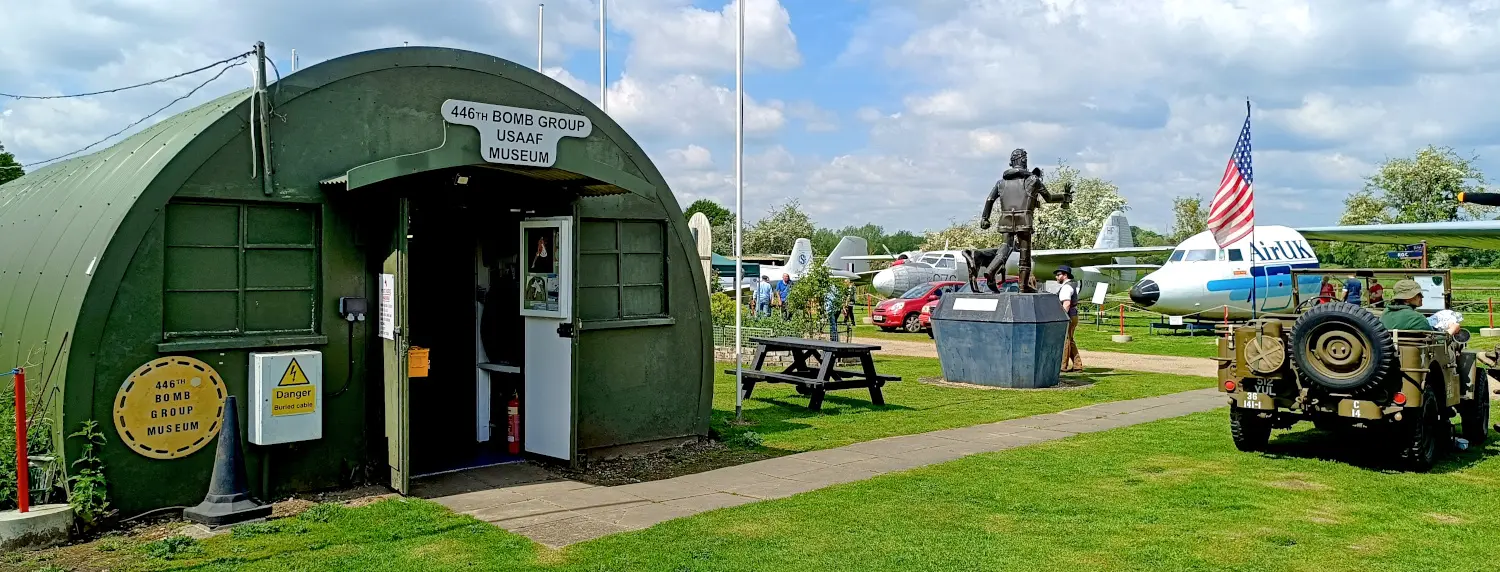
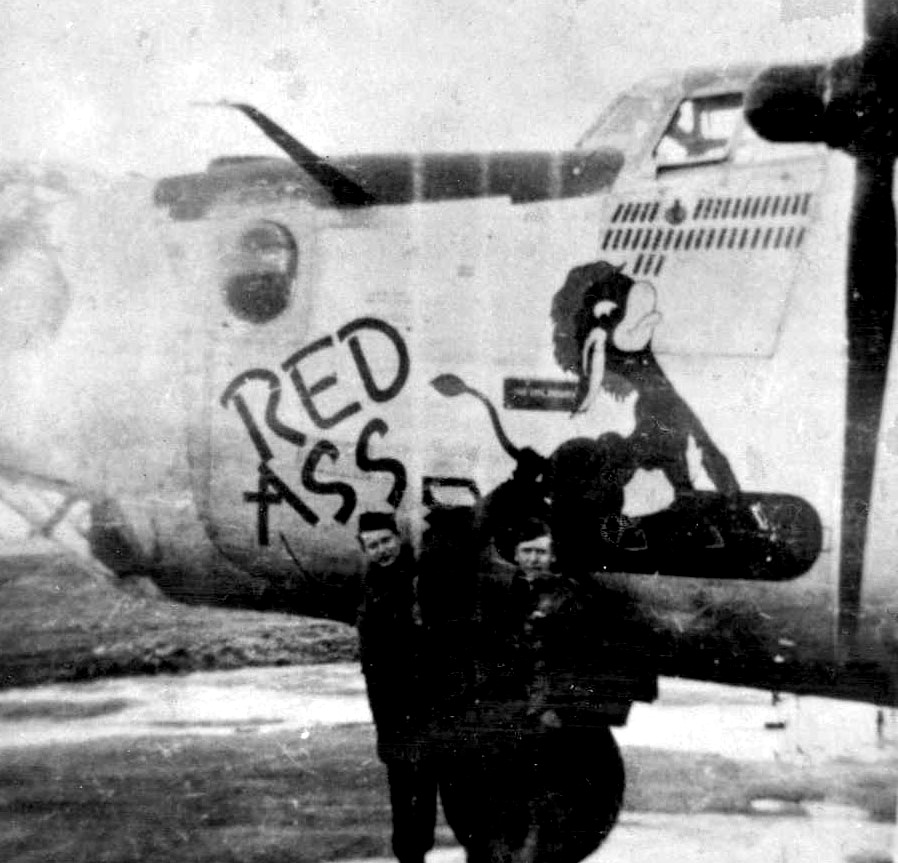
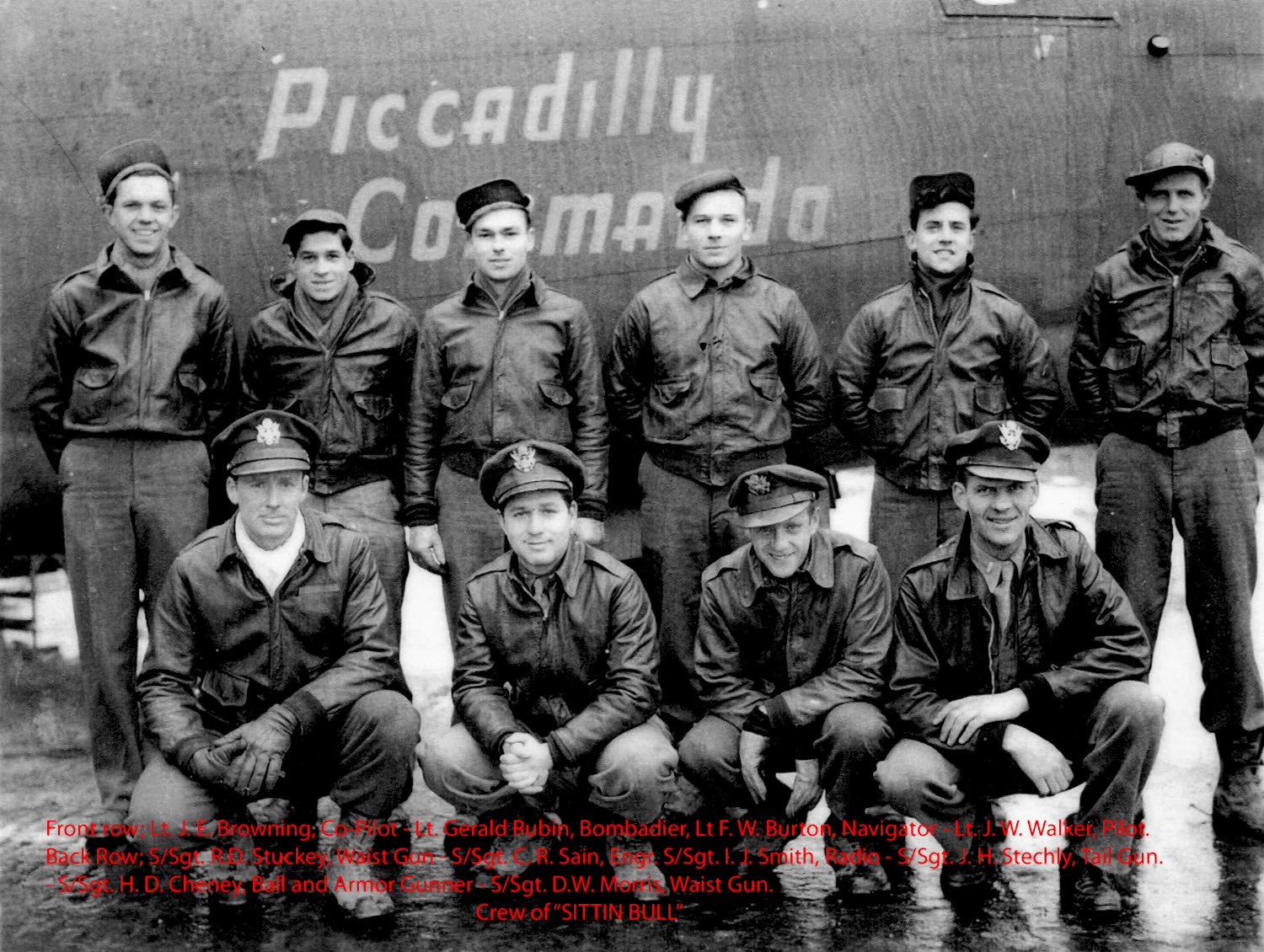
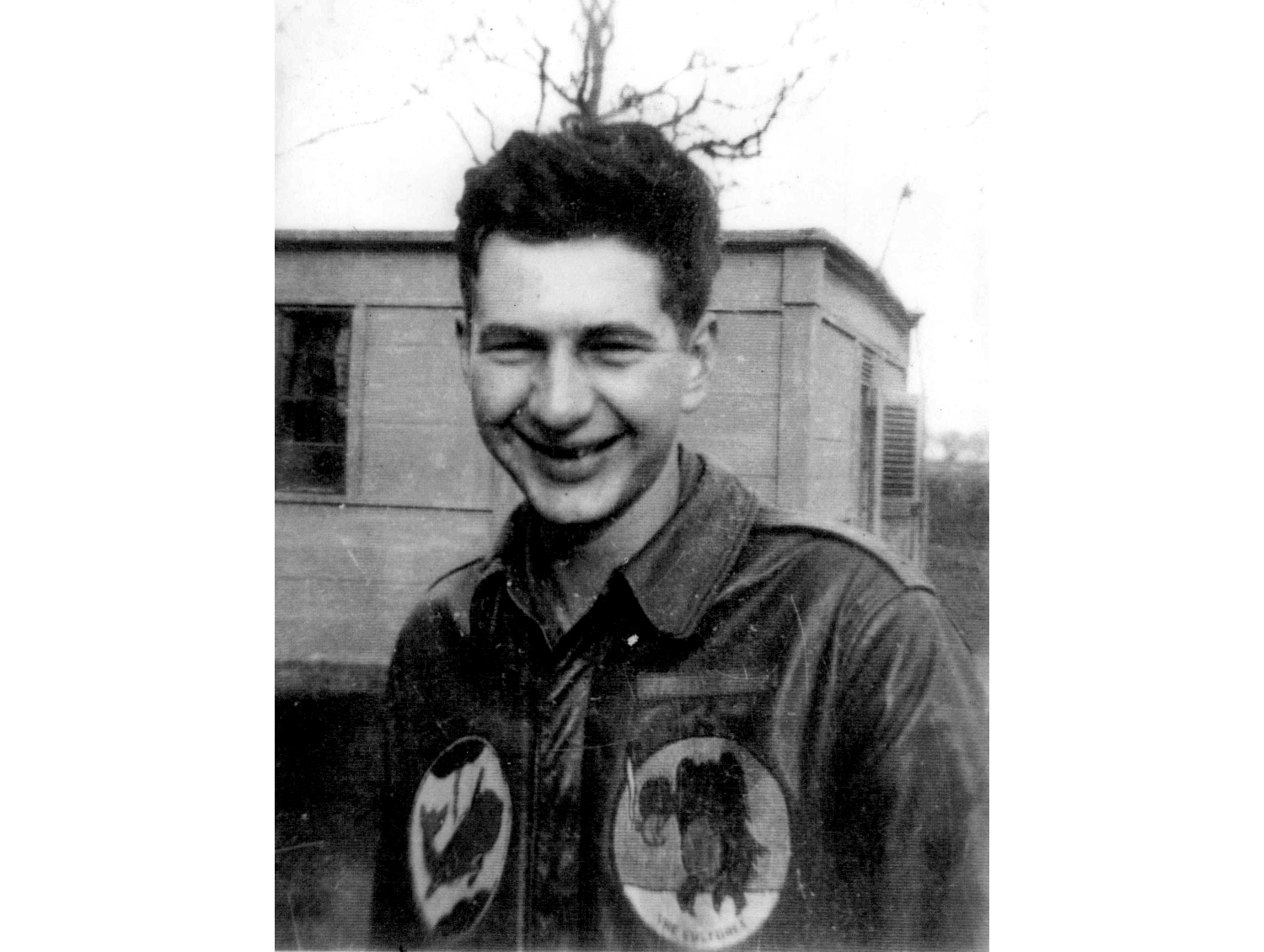
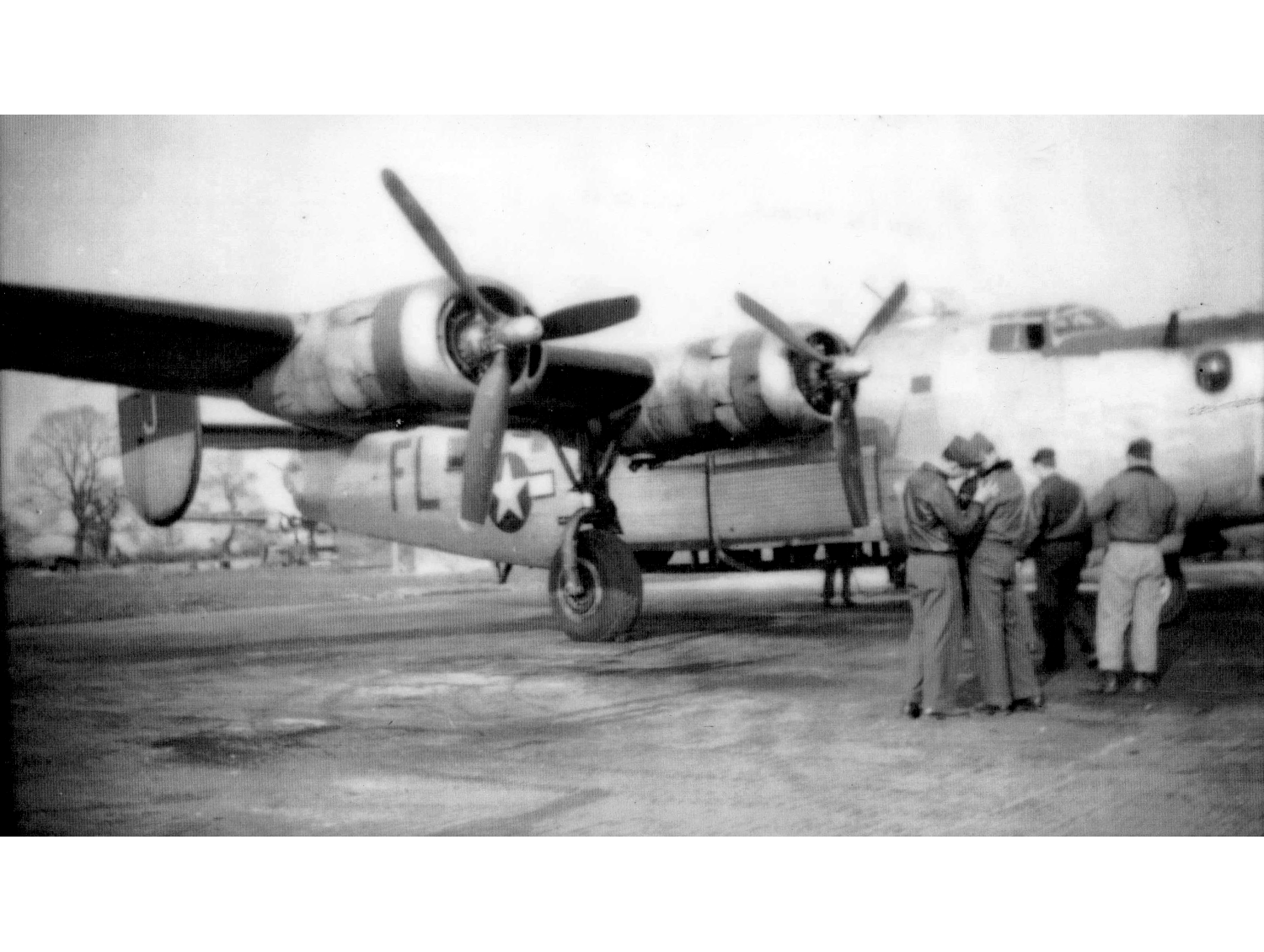
The Albert Krassman 446th BG Photograph Collection
Consolidated B-24 Liberator
The Consolidated B-24 Liberator was one of the most prolific and versatile heavy bombers of World War II. Widely used by Allied forces, including the 446th Bomb Group, the B-24 played a crucial role in the strategic bombing campaign against Nazi Germany.
Piloting a B-24 Liberator was a challenging and often grueling experience. The aircraft was known for its distinctive shape, with a high wing and twin tail, earning it nicknames like “The Flying Box Car” and “The Flying Coffin.” The B-24’s cockpit was spacious by World War II bomber standards, but it was still a cramped environment for long missions. The pilot and co-pilot sat side by side, with a good view over the aircraft’s nose. The control yoke was large and required significant physical effort to maneuver the aircraft, especially during combat situations or in turbulent weather.
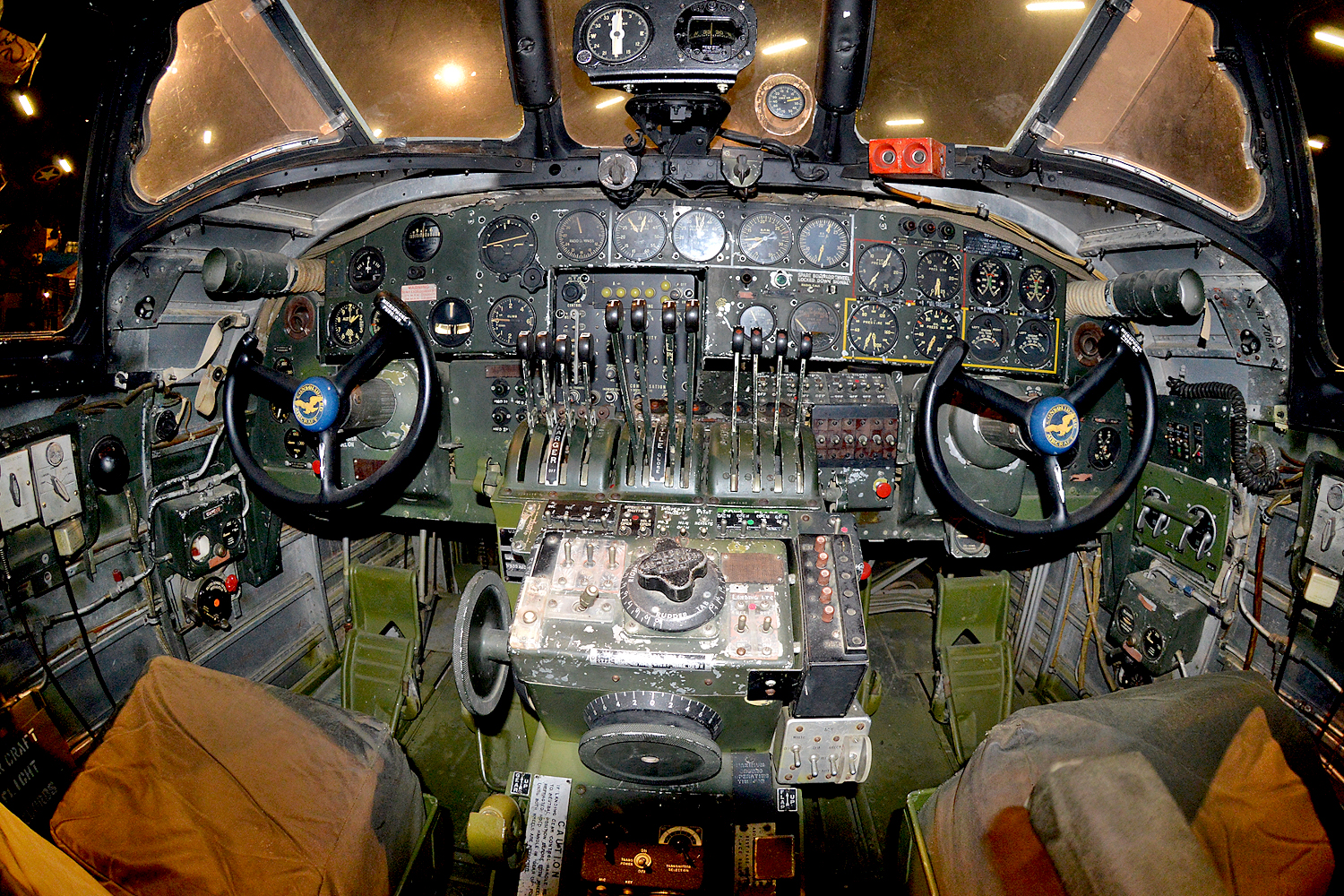
Taking off in a fully loaded B-24 was a nerve-wracking experience. The aircraft required a long runway and was notoriously difficult to control during the initial climb. Landing was equally challenging, with pilots having to manage the aircraft’s tendency to float above the runway due to ground effect. Once airborne, the B-24 was known for its long range and high cruise speed, attributes that made it valuable for long-distance bombing missions.
However, it was less forgiving to fly than its counterpart, the B-17 Flying Fortress. The B-24 was more susceptible to battle damage and had a lower service ceiling, making it more vulnerable to anti-aircraft fire.
For crews of the 446th Bomb Group, flying in formation was a critical skill. The B-24’s boxy shape made it challenging to maintain tight formations, crucial for mutual defense against enemy fighters. Pilots had to constantly adjust throttles and trim to keep position, a task made more difficult by turbulence, battle damage, or evasive maneuvers.
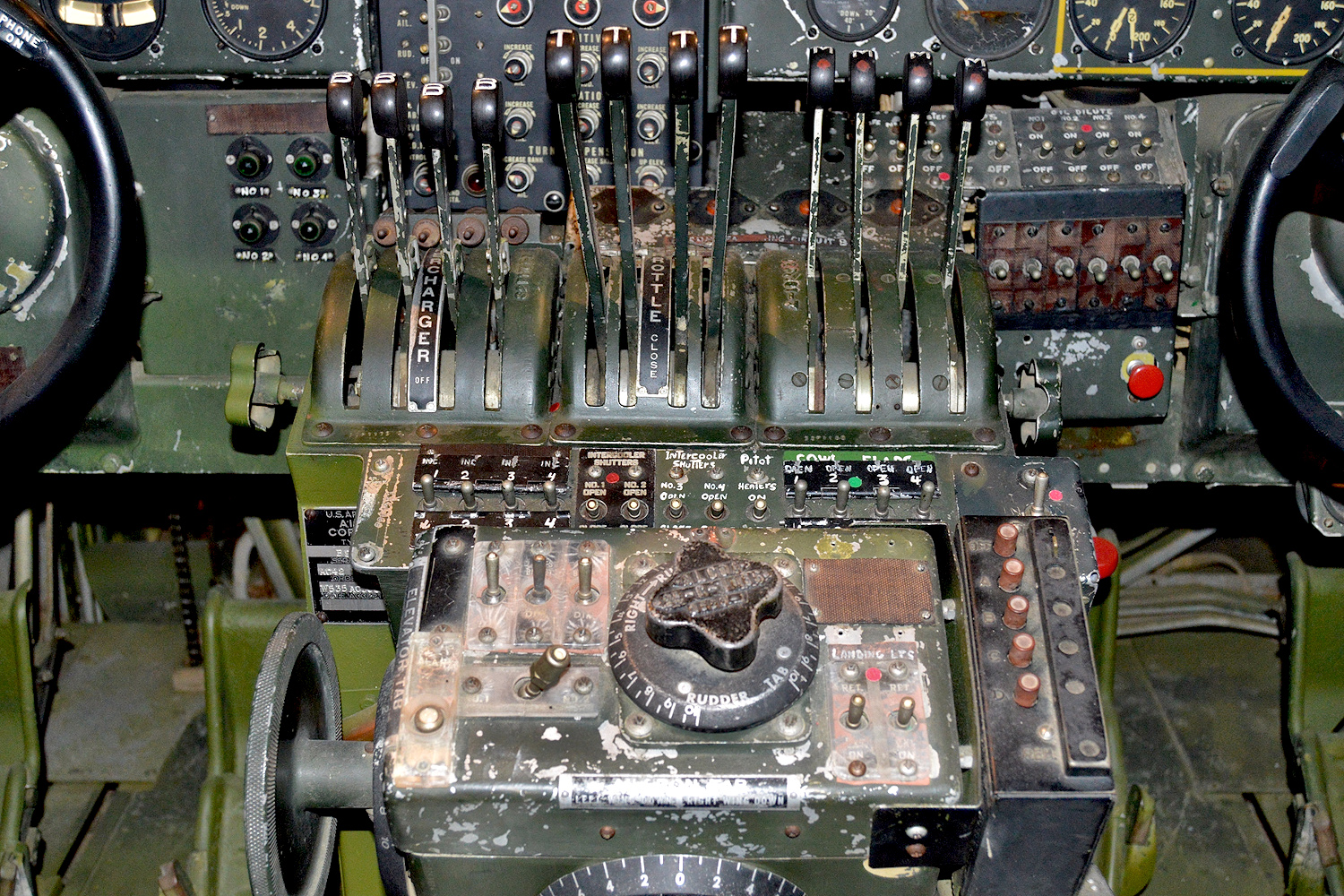
During combat, flying the B-24 required nerves of steel. Pilots had to maintain steady course and speed during bomb runs, even under intense enemy fire. The aircraft’s vulnerability to damage meant that crews often had to nurse wounded planes back to base, sometimes on fewer than four engines.
Long-range Missions: The B-24’s excellent range allowed the 446th to participate in deep penetration raids into Germany, including missions to Berlin and targets in Eastern Europe.
Payload Capacity: The Liberator’s large bomb bay enabled the group to deliver significant payloads, crucial for strategic bombing missions.
Defensive Armament: While challenging to fly in formation, the B-24’s array of .50 caliber machine guns provided formidable defense against enemy fighters.
Vulnerability: The 446th experienced firsthand the B-24’s vulnerability to battle damage. Many crews had to struggle with damaged aircraft to return to base.
Crew Coordination: Operating the B-24 required seamless coordination among the 10-man crew. The 446th’s success was a testament to their teamwork and training.
Weather Challenges: The group often faced severe weather conditions over Europe. The B-24’s handling characteristics made flying through turbulence and icing conditions particularly demanding.
Despite its challenges, the B-24 Liberator served the 446th Bomb Group well throughout their combat operations. The aircraft’s range, payload, and speed made it an effective tool in the strategic bombing campaign. For the crews of the 446th, flying the B-24 was more than just operating an aircraft; it was a test of skill, courage, and endurance that defined their wartime experience. The legacy of the B-24 Liberator and the men who flew it, including those of the 446th Bomb Group, remains an important chapter in aviation and military history, showcasing the critical role of strategic bombing in World War II.