Goldfinch
Amphibian
Manufacturer:
Goldfinch
Model No:
161
Registration No:
n/a
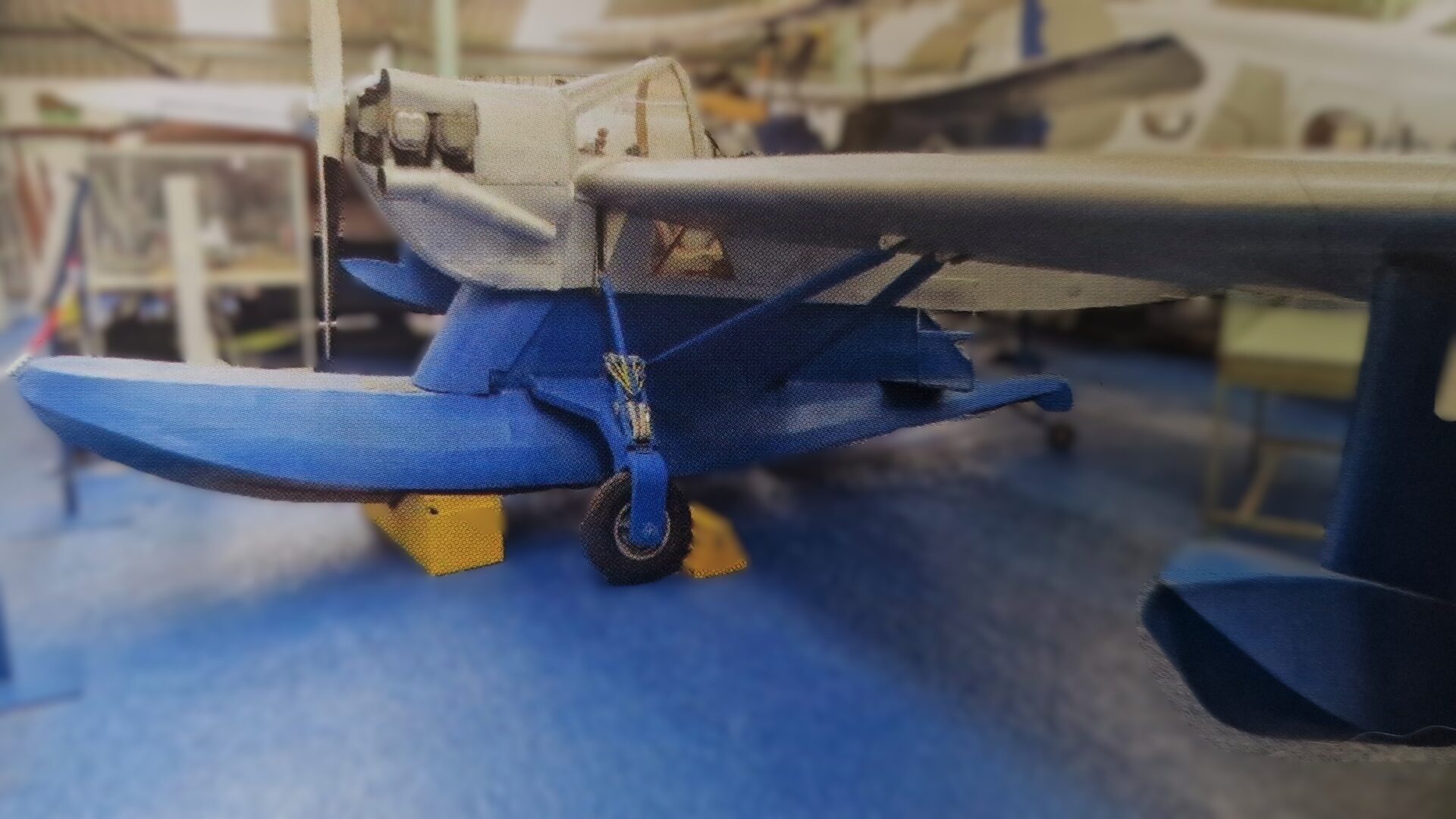
This unusual prototype aircraft does not have an official name. We have simply used the surname of the designer/builder Bill Goldfinch and its type. The number "161", however, is what Bill always called the aircraft. During WW2 Bill was captured and, following a failed escape attempt, transferred to Colditz where he was key in the building of the Colditz Cock.
Avro
Anson
Manufacturer:
Avro
Model No:
C.19
Registration No:
VL349
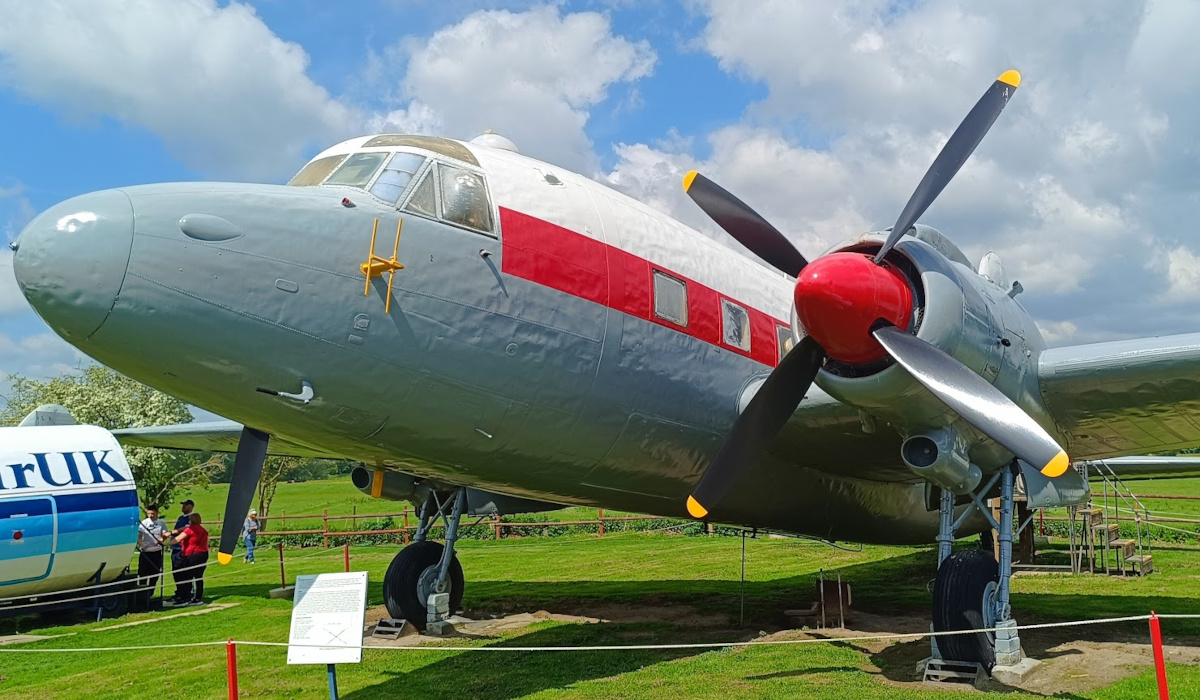
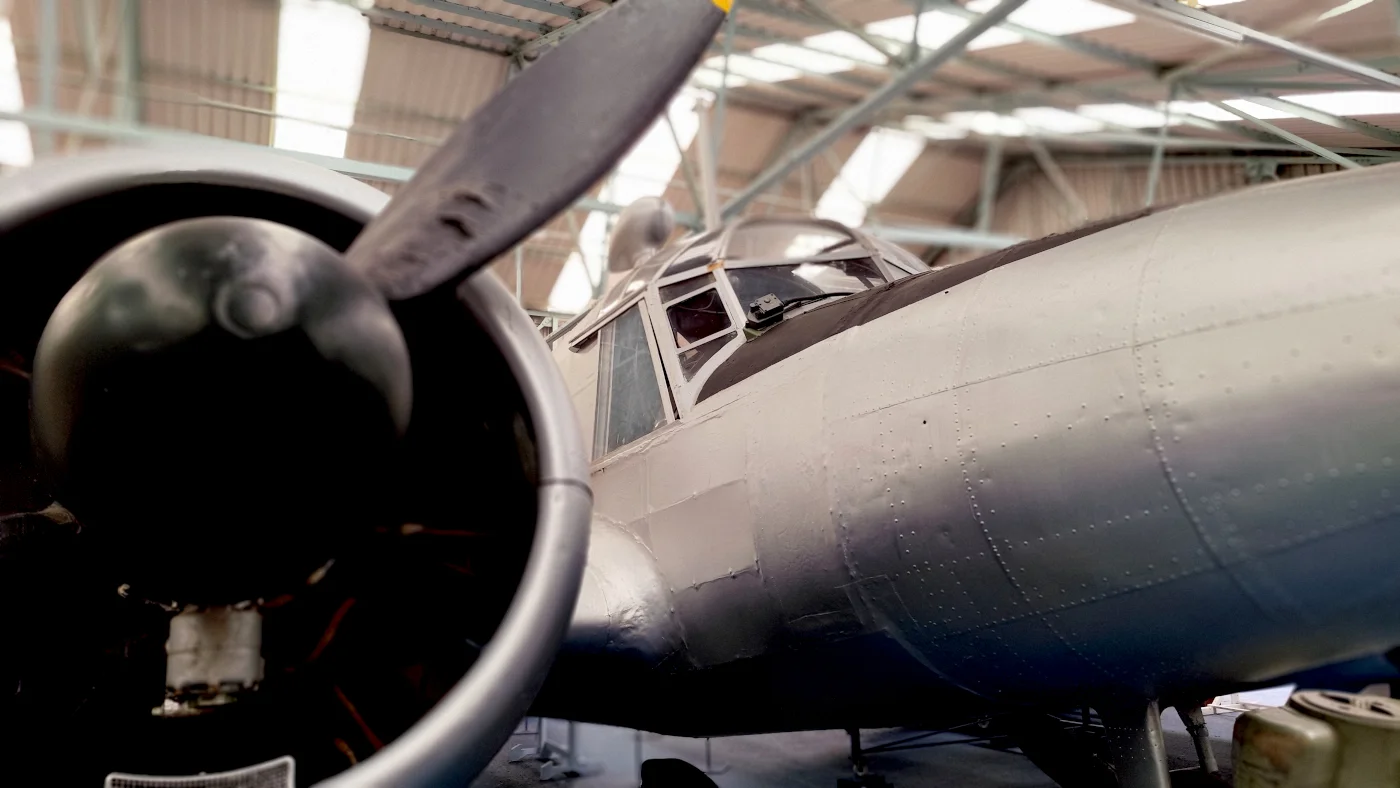
The Avro Anson was a military development of the Avro 652 6-seat commercial aircraft and the prototype made its maiden flight in march 1935. This aircraft was delivered for service on the 2nd January 1947 and retired in 1968. The Anson was purchased by the museum in 1974 and marked the first airframe purchased by the museum. It required a full rebuild before being able to be displayed.
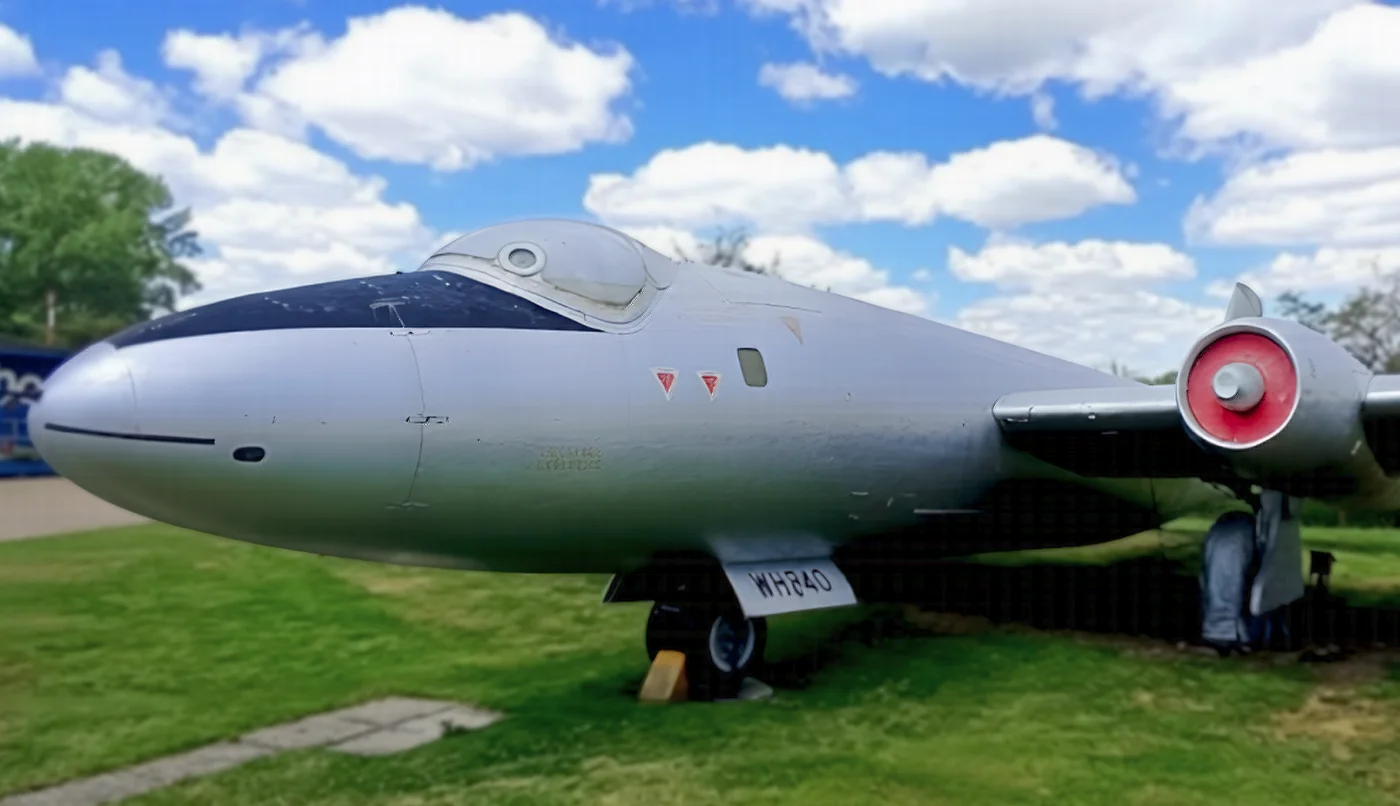
English Electric
Canberra
Manufacturer:
English Electric
Model No:
T.4
Registration No:
WH840
Canberra T.4 WH840 was one of the RAF’s dedicated twin-seat training variants of the legendary English Electric Canberra — Britain’s first jet-powered bomber and one of its most successful post-war aircraft. The T.4 version was developed to train pilots and navigators transitioning to the Canberra B.2 and later marks.
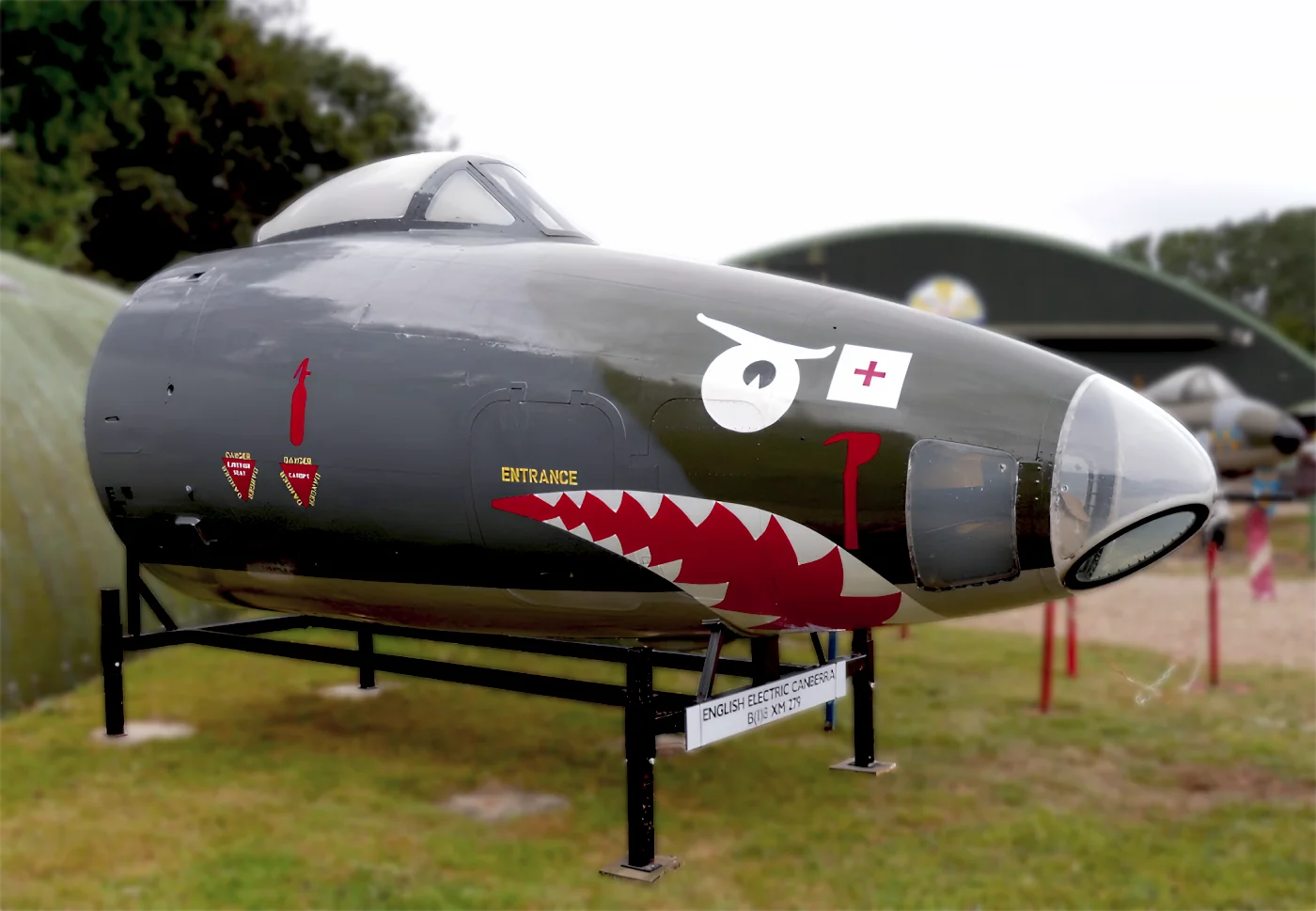
English Electric
Canberra
Manufacturer:
English Electric
Model No:
B(I).8
Registration No:
XM279
By the early 1950s, it was seen that the high altitude, unarmed jet bomber would become vulnerable to ground-to-air missiles so a special Interdictor version was called for. An entirely new nose fuselage was designed with a fighter-style, off-set cockpit to provide good all-round vision, and a navigator/bomb-aimer position was moved forward of the pilot. A gunpack was fitted in the rear of the bomb bay, and under-wing pylons carried bombs or rocket launchers.
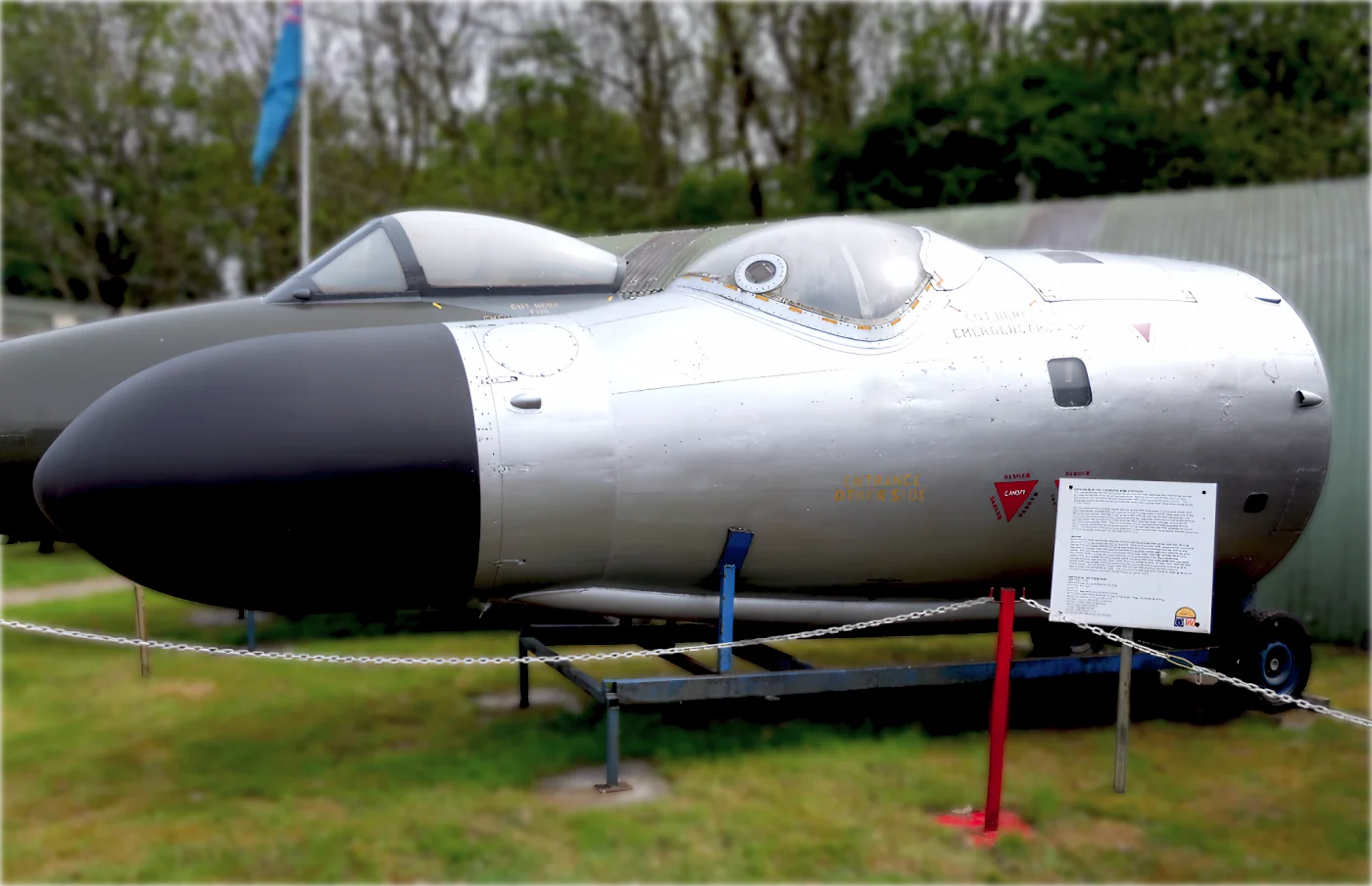
English Electric
Canberra
Manufacturer:
English Electric
Model No:
B.2/6
Registration No:
WG789
The Canberra was the first jet bomber to serve in the RAF, and was also the first jet aircraft to make an Atlantic crossing without refuelling. The first production B.Mk 2 version was delivered to 101 Squadron at Binbrook in May 1951 and replaced the Avro Lincoln. This mark was built in greater quantities than any other later variant, and many were based in the Anglia region.
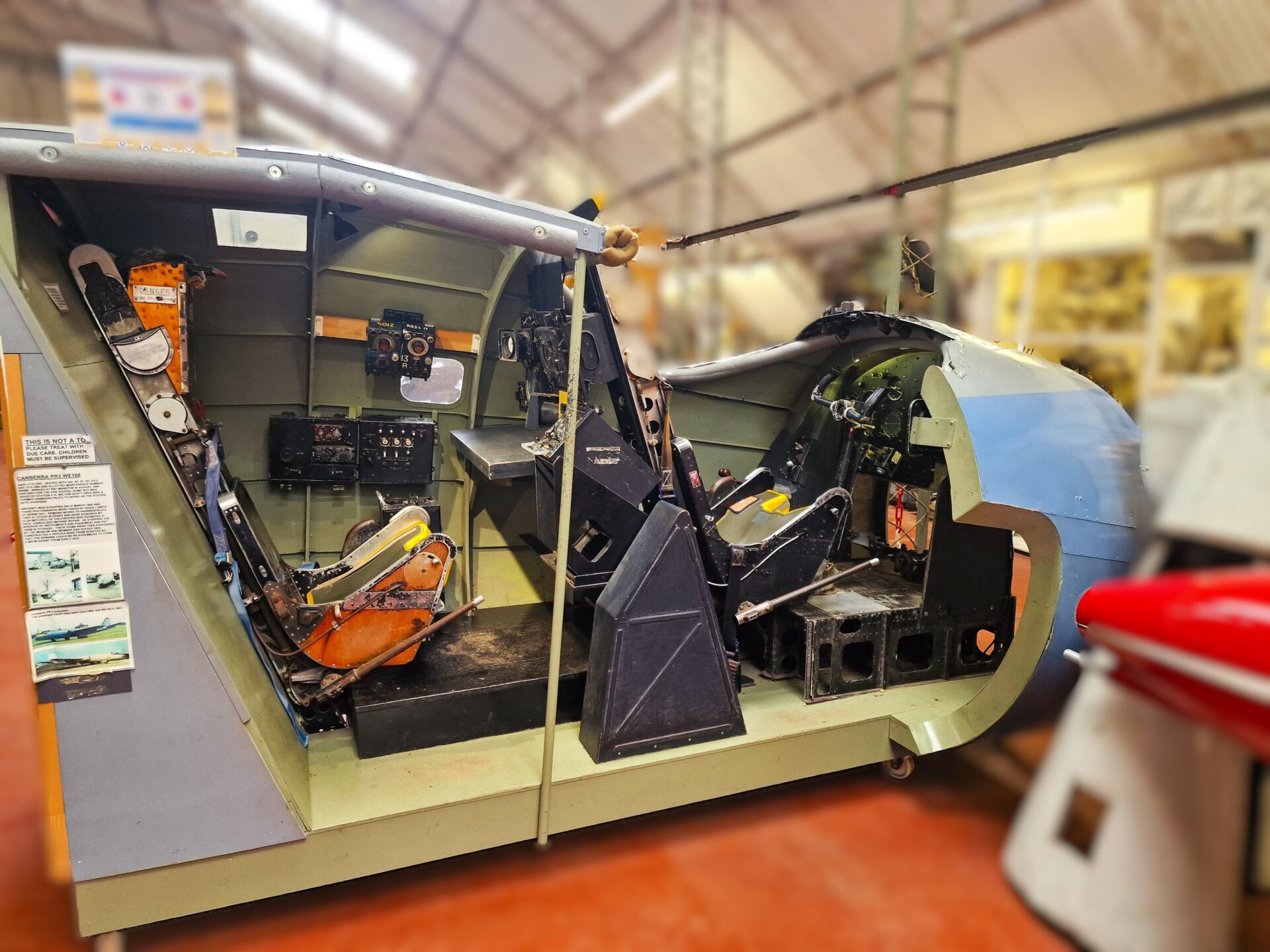
English Electric
Canberra
Manufacturer:
English Electric
Model No:
PR.3 (cockpit recreation)
Registration No:
WE168
WE168 was scrapped in 1990 and the interior stripped of instruments and equipment. The salvaged items were bought by Flixton and a replica nose built to display them.
Colditz
Cock
Manufacturer:
Colditz
Model No:
n/a
Registration No:
n/a
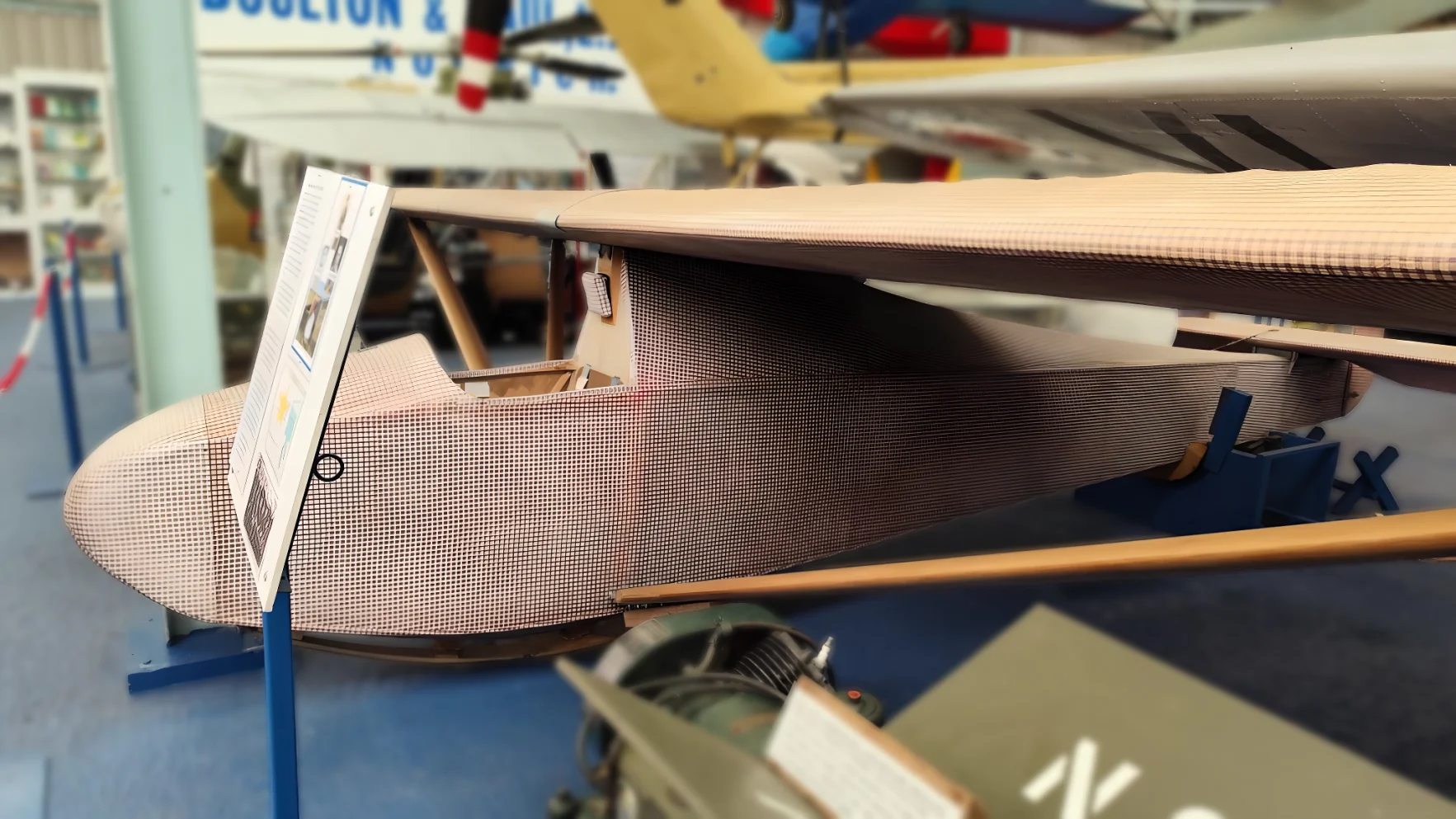
The Colditz Cock, as it was named, was built in a concealed loft, the plan being to launch it from a rooftop wooden track with a weighted bathtub catapult arrangement. 55 years after the end of the war, Channel 4 Television commissioned the building of a replica for its television series "Escape from Colditz".
De Havilland Canada
DHC-1 Chipmunk
Manufacturer:
De Havilland Canada
Model No:
T.10
Registration No:
WB627
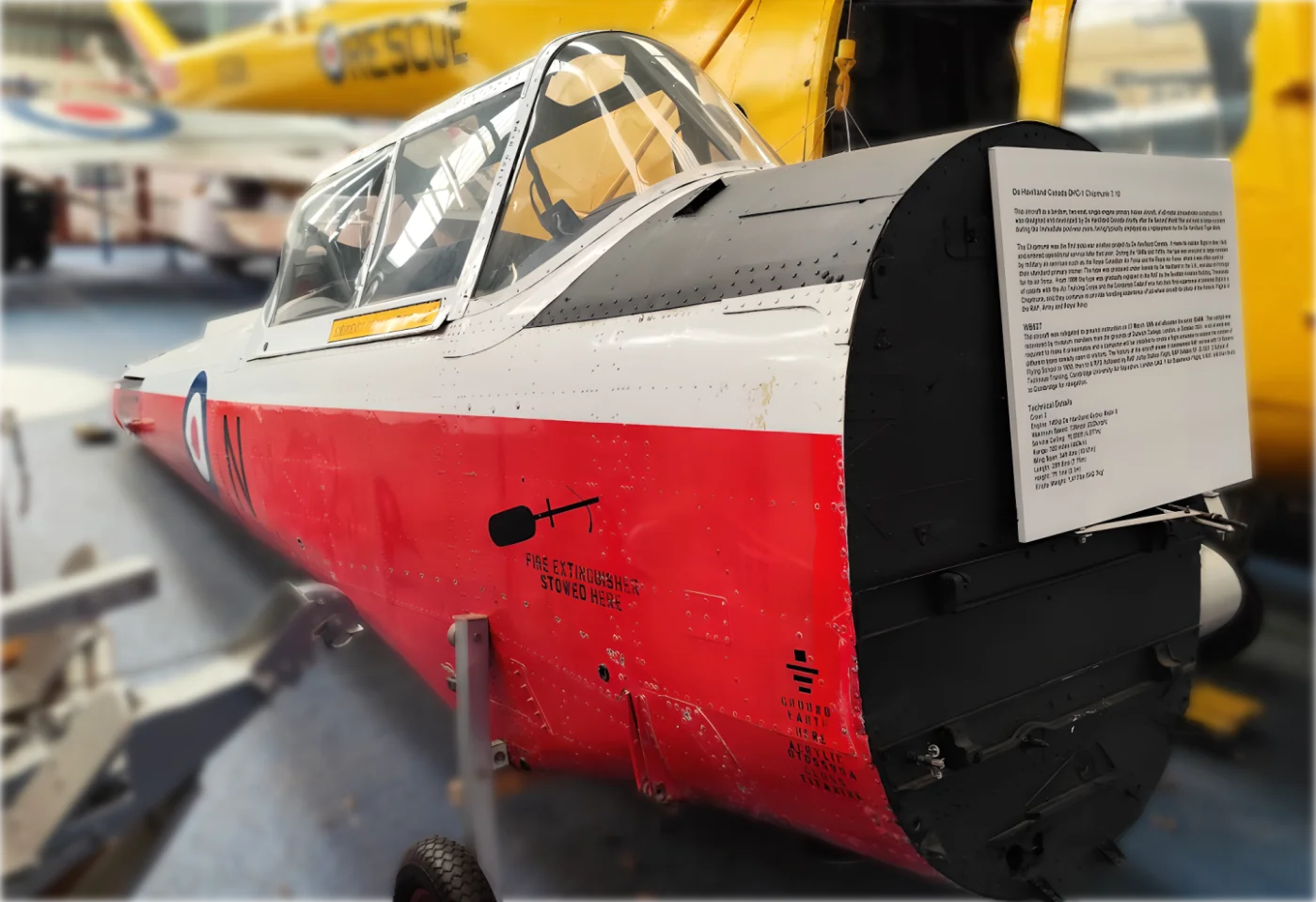
This aircraft is a tandem, two-seat, single-engine primary trainer aircraft, of all-metal stressed-skin construction. It was designed and developed by De Havilland Canada shortly after the Second World War and sold in large numbers during the immediate post-war years, being typically employed as a replacement for the De Havilland Tiger Moth.
Lovegrove
Discord
Manufacturer:
Lovegrove
Model No:
n/a
Registration No:
BAPC 306
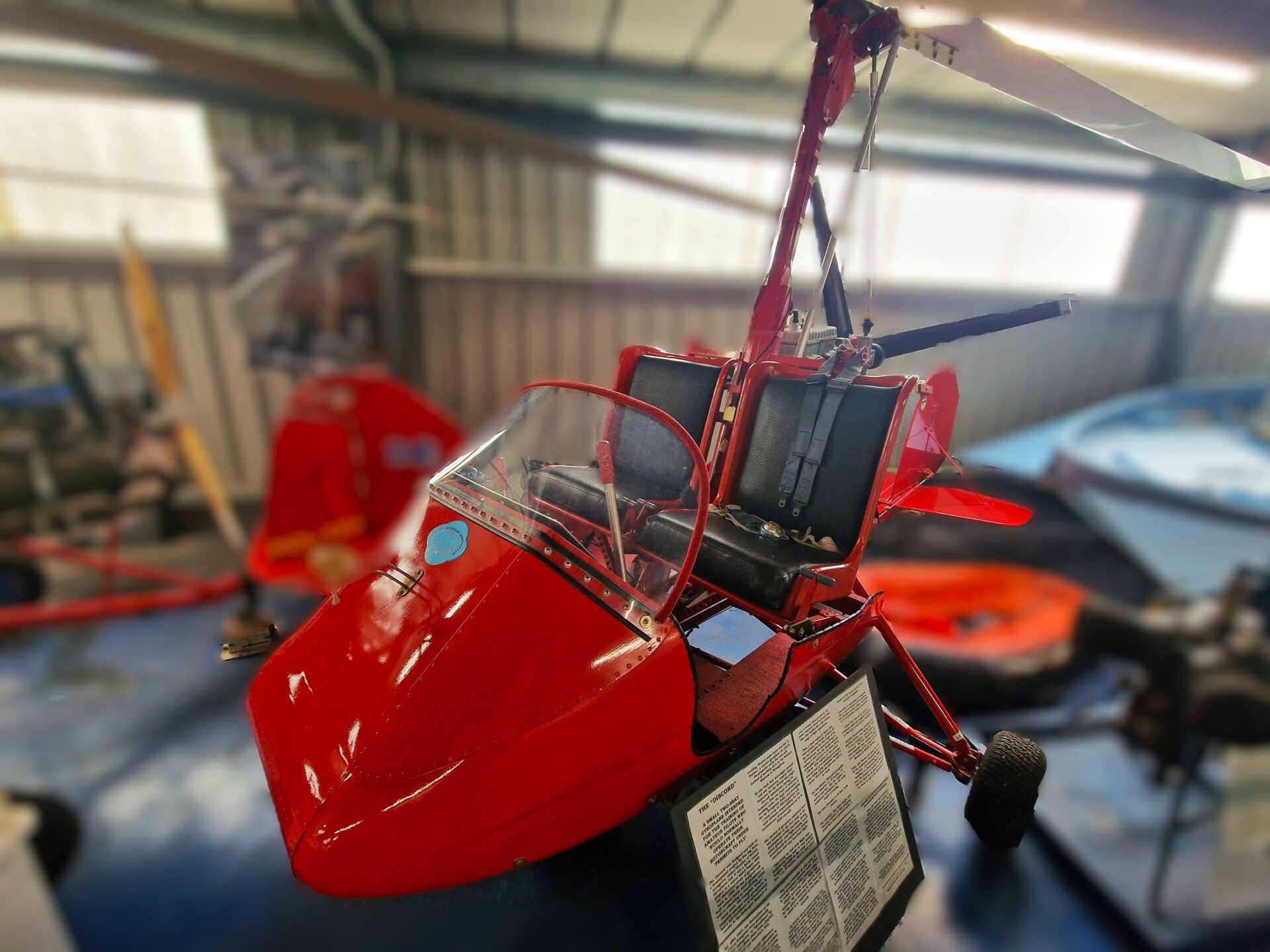
This small, two seat autogyro was a development machine intended to lead to a full manufacturing line. The project was abandoned due to costs and bureaucratic reasons.
Fairchild
F.24
Manufacturer:
Fairchild
Model No:
C8-F
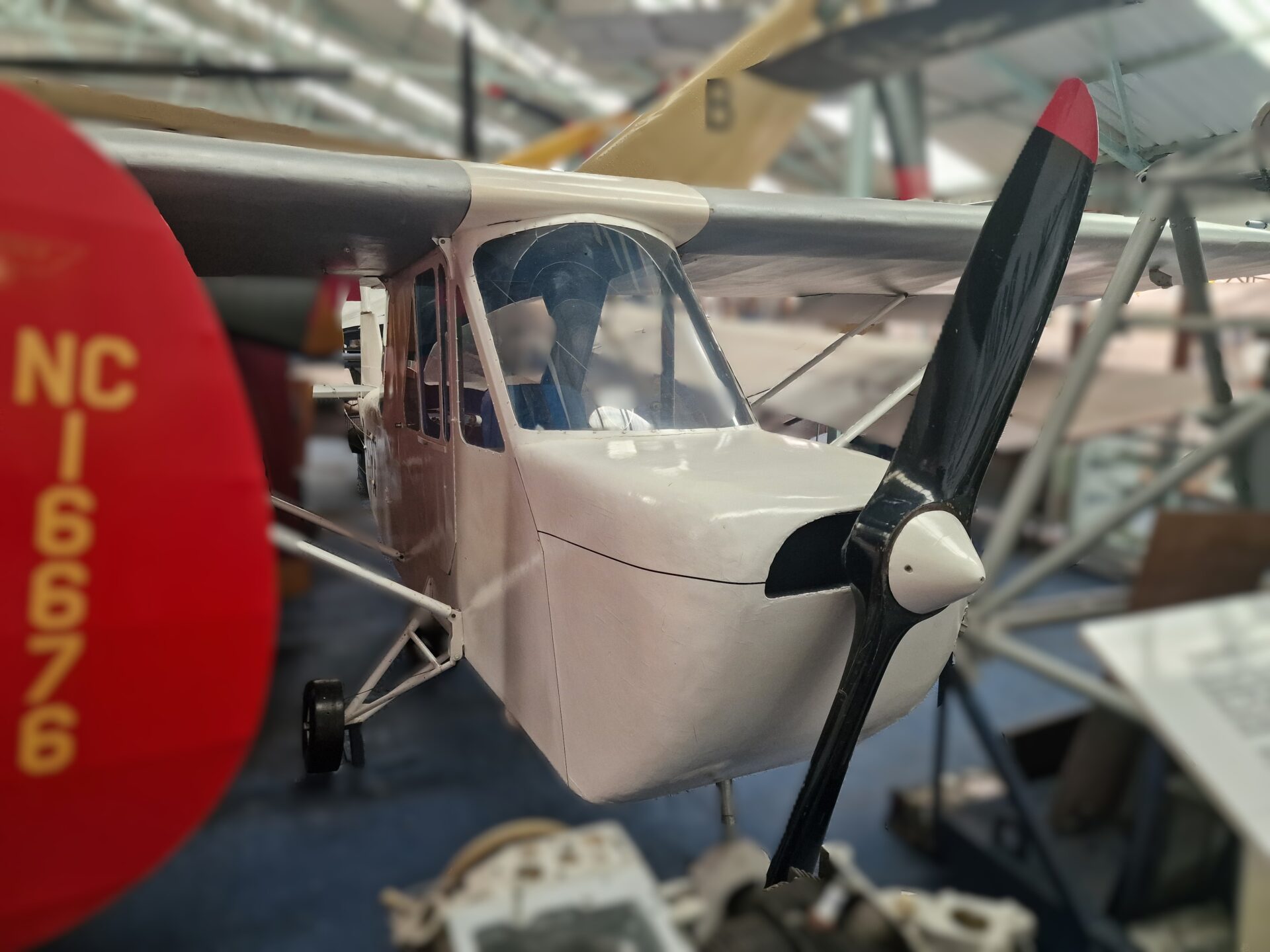
Registration No:
NC16676
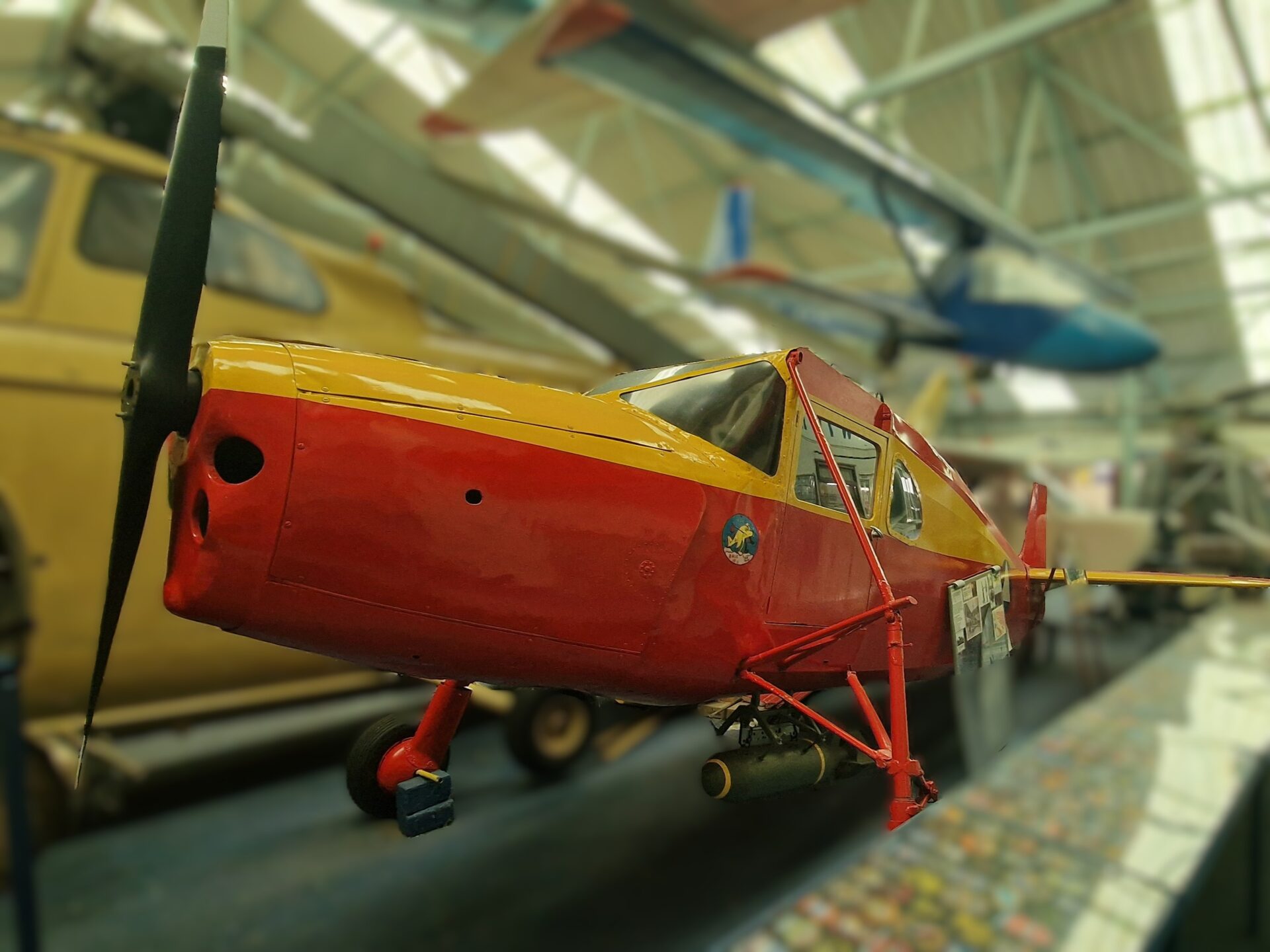
This aircraft was used for Costal Air Patrols by the Civil Air Patrol (C.A.P.) during the second world war. It was based at station 19. The airframe was donated to the museum in skeletal form in 2002 and restoration began in 2005.
Felixstowe
F.5
Manufacturer:
Felixstowe
Model No:
F.5
Registration No:
n/a
The F.5 was manufactured at Felixstowe using a series of sub-contractors including Phoenix Dynamo Manufacturing Company, Dick, Kerr & Co., and S.E. Saunders. The F.5 (the final flying boat designed by Commander John Porte) was the standard flying boat in service with the RAF following the signing of the Armistice in 1918. Although it looked similar to its predecessors (the F.2A, F.2C and F.3), the prototype F.5 was 10mph faster and had a new wing structure.
Fokker
Friendship
Manufacturer:
Fokker
Model No:
F.27-200
Registration No:
G-BDVS
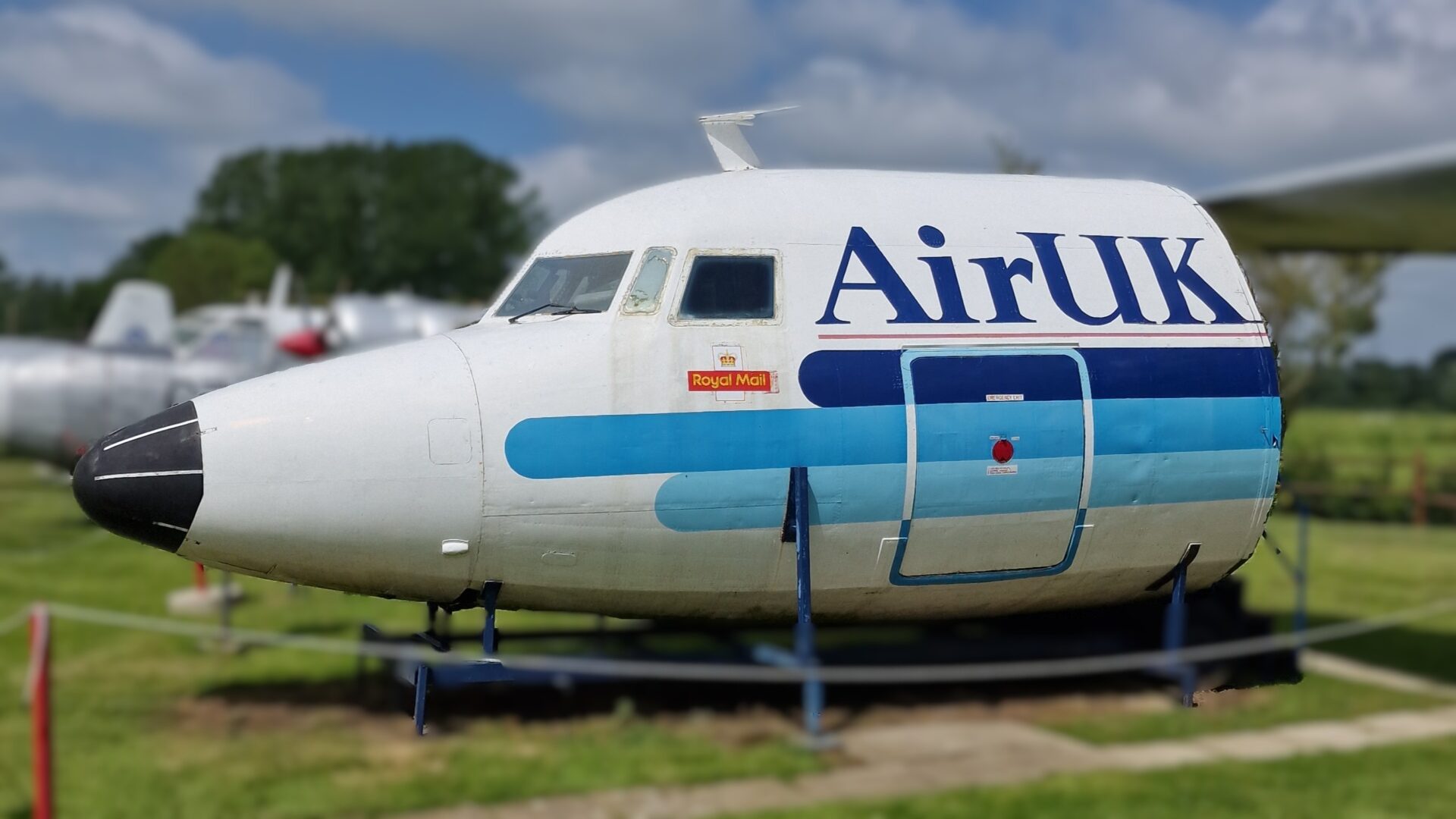
This aircraft, G-BDVS, used to serve with Air Anglia then Air UK from Norwich, usually on the Norwich to Amsterdam route. The cockpit section is complete with most instruments.
Folland
Gnat
Manufacturer:
Folland
Model No:
T.1 (cockpit procedures trainer)
Registration No:
n/a
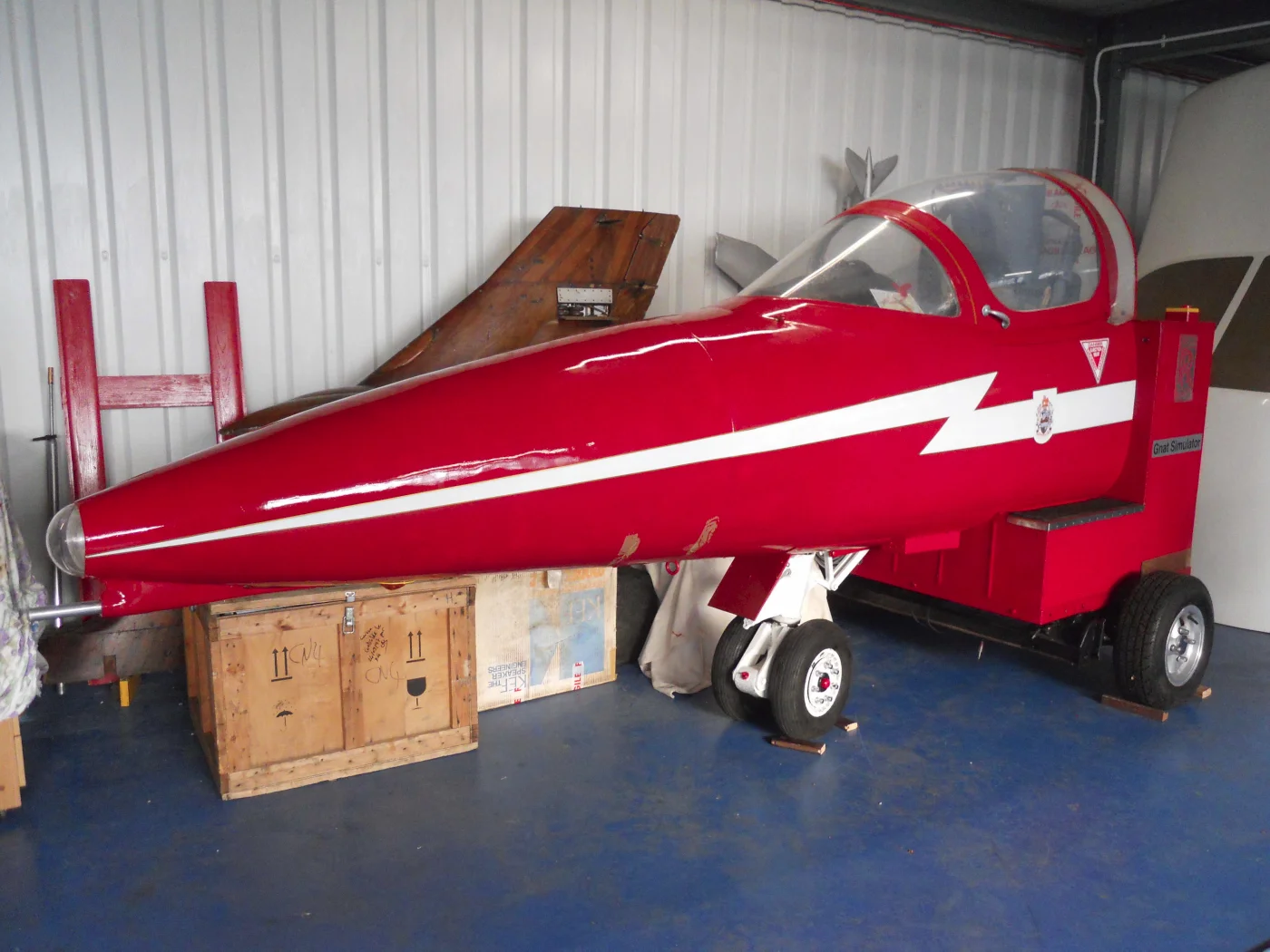
Our Gnat is a cockpit procedures trainer built by Boulton Paul to train pilots in the start up and emergency procedures. Do you think that you can start a cold war jet? This cockpit is on our aircraft tour and you can sit in the jet to get that authentic pilot experience.
Eurowing
Goldwing
Manufacturer:
Eurowing
Model No:
EW-91
Registration No:
G-MMWL
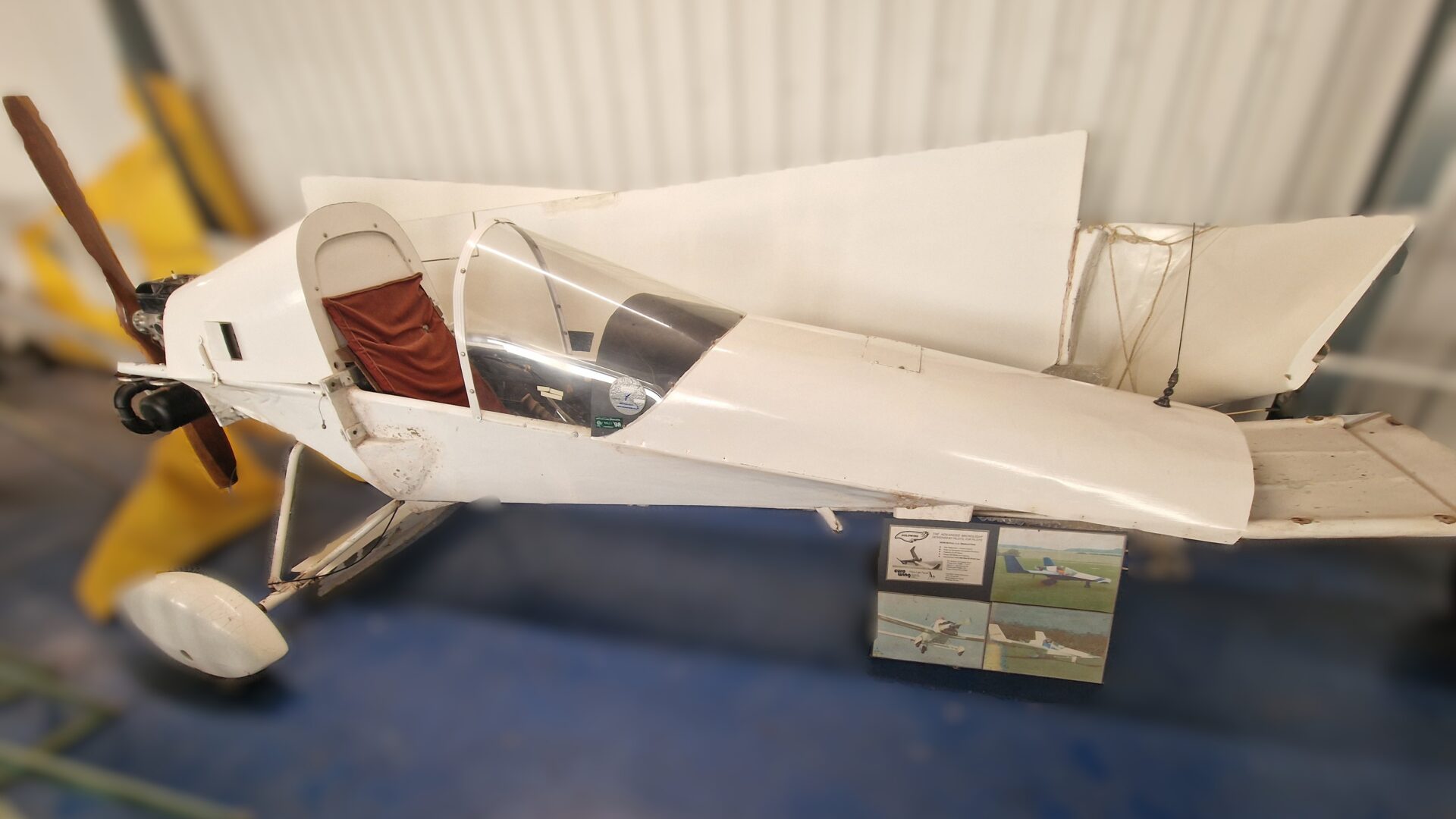
The Goldwing was a canard style microlight aircraft. The airframe was withdrawn permenantly from use in 2010 following a crash due to engine failure.
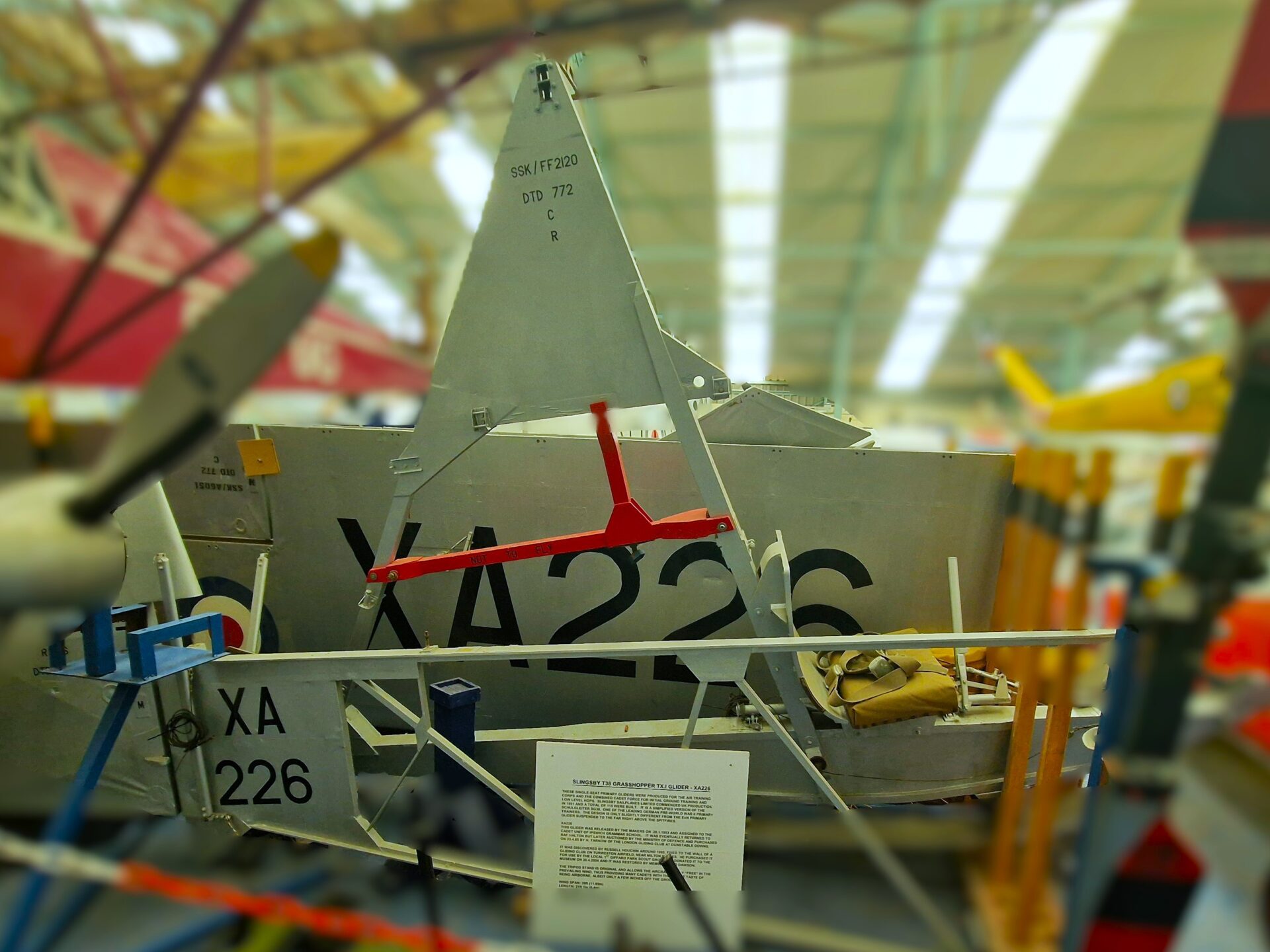
Slingsby
Grasshopper
Manufacturer:
Slingsby
Model No:
TX.1
Registration No:
XA226
The Grasshopper was designed to give shoert flights (hense the name) to allow new flight pupils to lear flight controls in a relatively safe way. Used by the Air Training Corps (ATC) branch of the RAF between 1952 and the early 1990s.
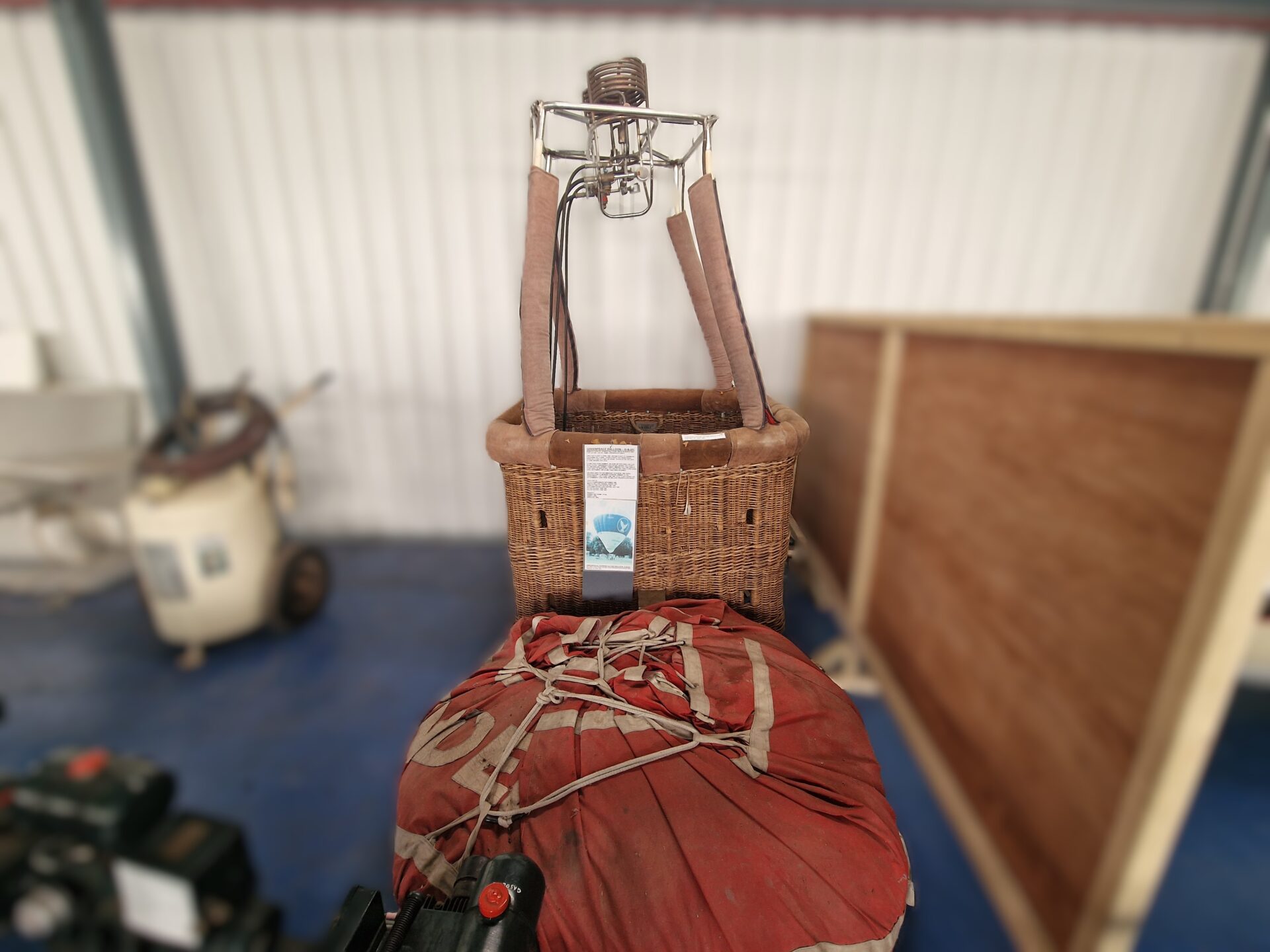
Thunder Balloons
Greenpeace Balloon
Manufacturer:
Thunder Balloons
Model No:
AX7-65Z
Registration No:
G-BJZC
First flown 14th April 1982. Completed 234 hours of flying before retirement in June 1998. Arrived at the museum in June 2004 on long term loan from the Balloon Presevation Group.
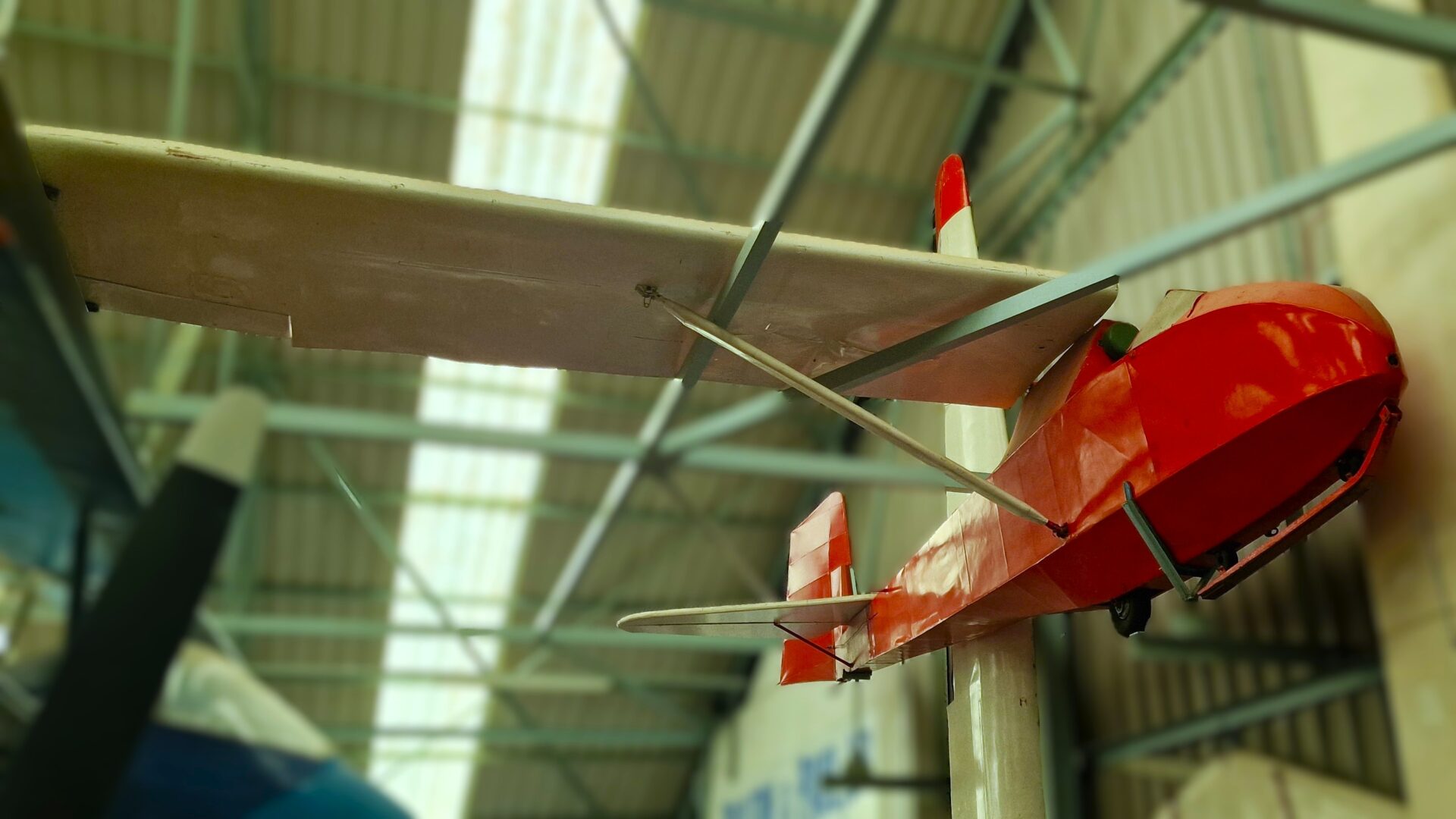
Schleicher
Grunau Baby
Manufacturer:
Schleicher
Model No:
3b
Registration No:
D-9142 / RAFGA.374 / BGA.2074 / BGA.2384
First registered in 1954, this Baby 3b soaring glider was built and flown in Germany. It was acquired by the Royal Air Force Gliding and Soaring Association (RAFGSA) in 1966. It then had several owners before being donated to the museum in July 2002.
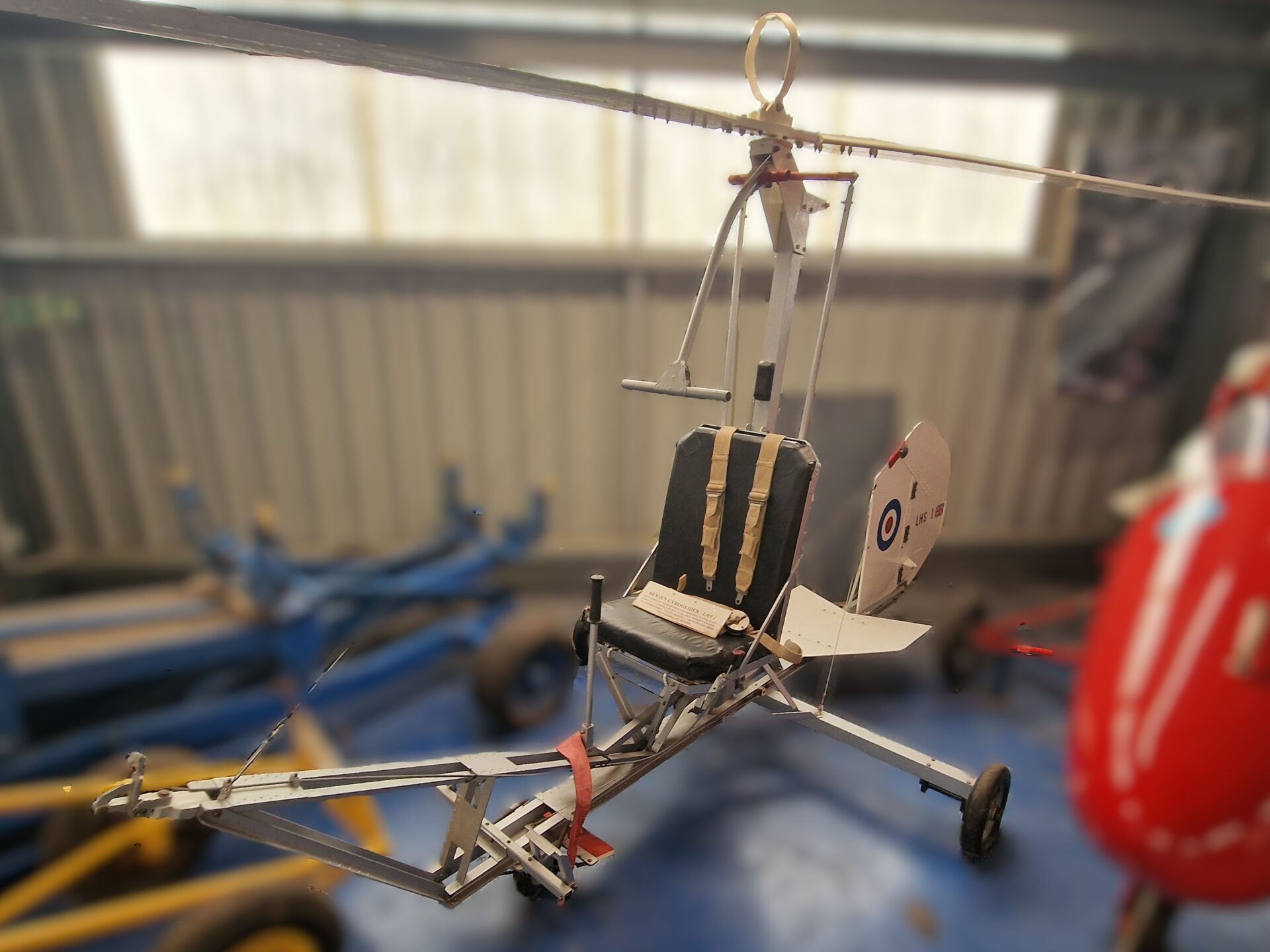
Benson
Gyroglider
Manufacturer:
Benson
Model No:
LHS-1
Registration No:
LHS1
Developed as a Gyrocopter and built from a kit, this example has no engine and was built as a glider to be towed behind a car.
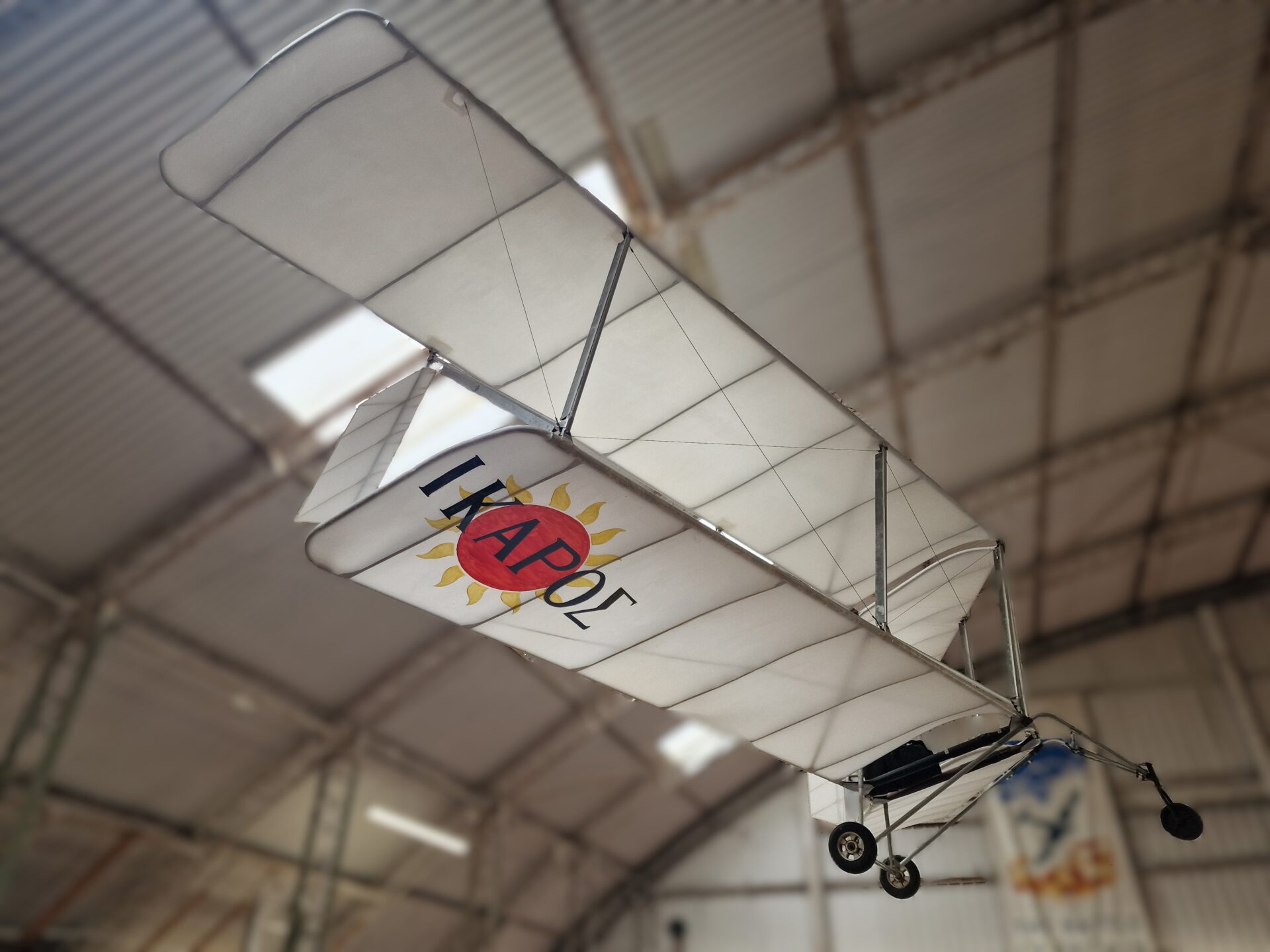
Kiceniuk
Hand Glider
Manufacturer:
Kiceniuk
Model No:
II
Registration No:
n/a
The Icarus II was a kit form hand glider from the USA in the early 1970s. Flixtons example had an engine added in 1975.
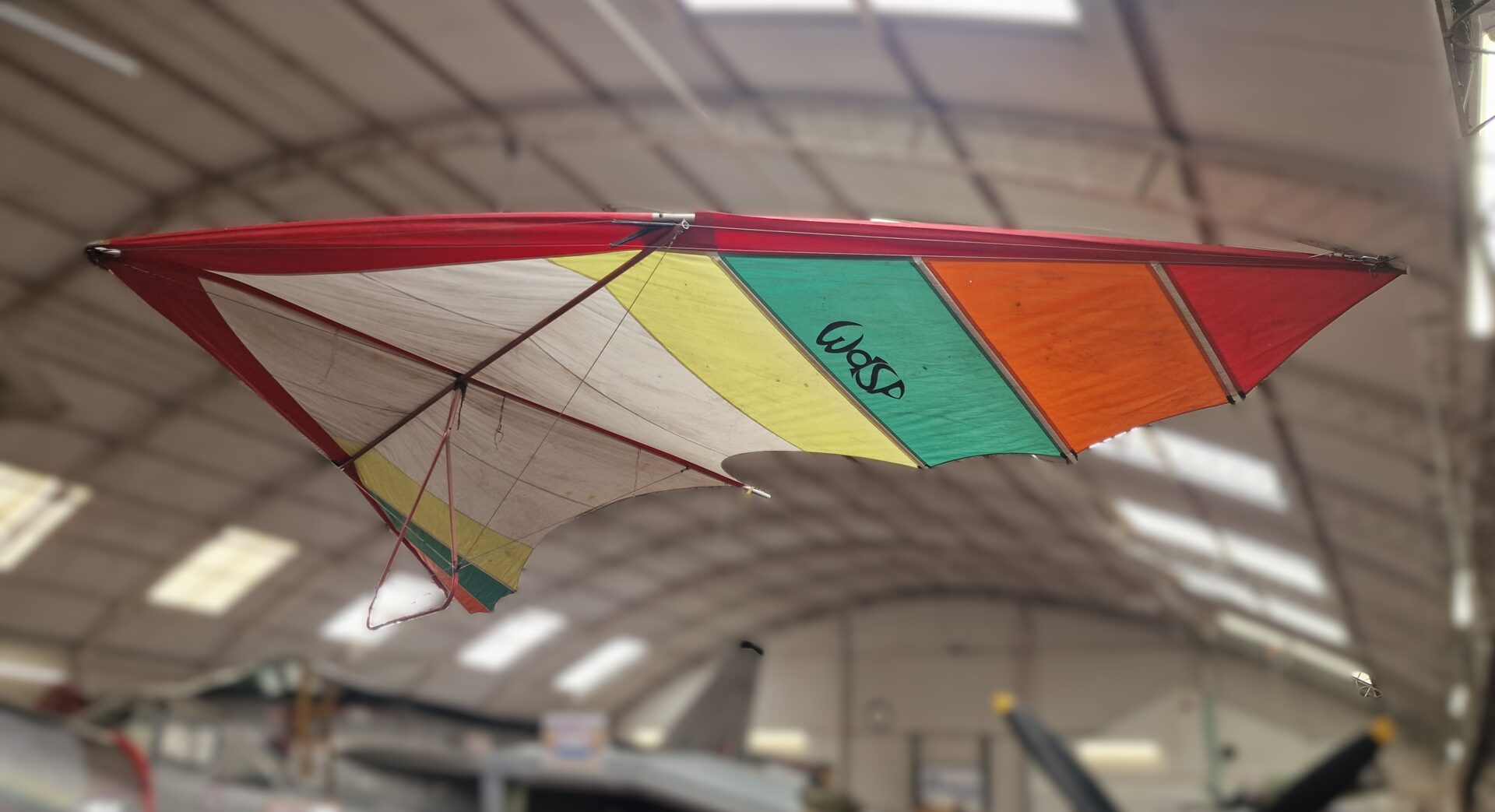
Haynes Brothers Wasp Company
Hand Glider
Manufacturer:
Haynes Brothers Wasp Company
Model No:
4
Registration No:
n/a
Manufactured in 1976 and 1977, this hand glider was aimed at intermediate to advanced pilots. A real competition hand glider, it was donated to the museum in 2002 by Mr. & Mrs. Hill of Southampton.
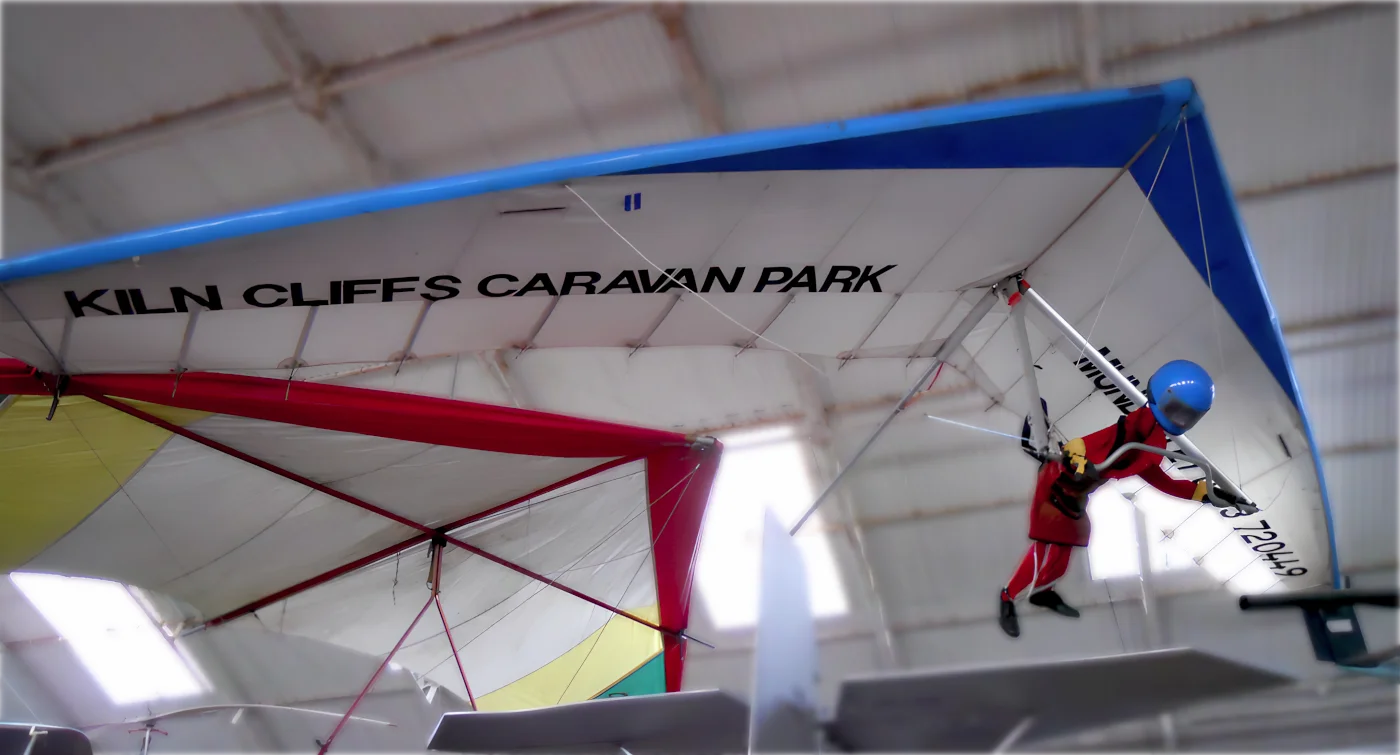
Antonov
Hang Glider
Manufacturer:
Antonov
Model No:
C.14
Registration No:
This was the first Russian hand glider in the UK when purchased in 1992 by Graeme Malone. It was bought by David McEwen in 1994 and he recorded 572 flights with the glider. In July 1995 he achieved a 5 hour 5 minute flight along the Norfolk coast and later the same month flew from Sculthorpe, Norfolk to Westhall, Suffolk, a distance of 46.73 miles. Last flight was in October 2001 after which it was donated to the museum.
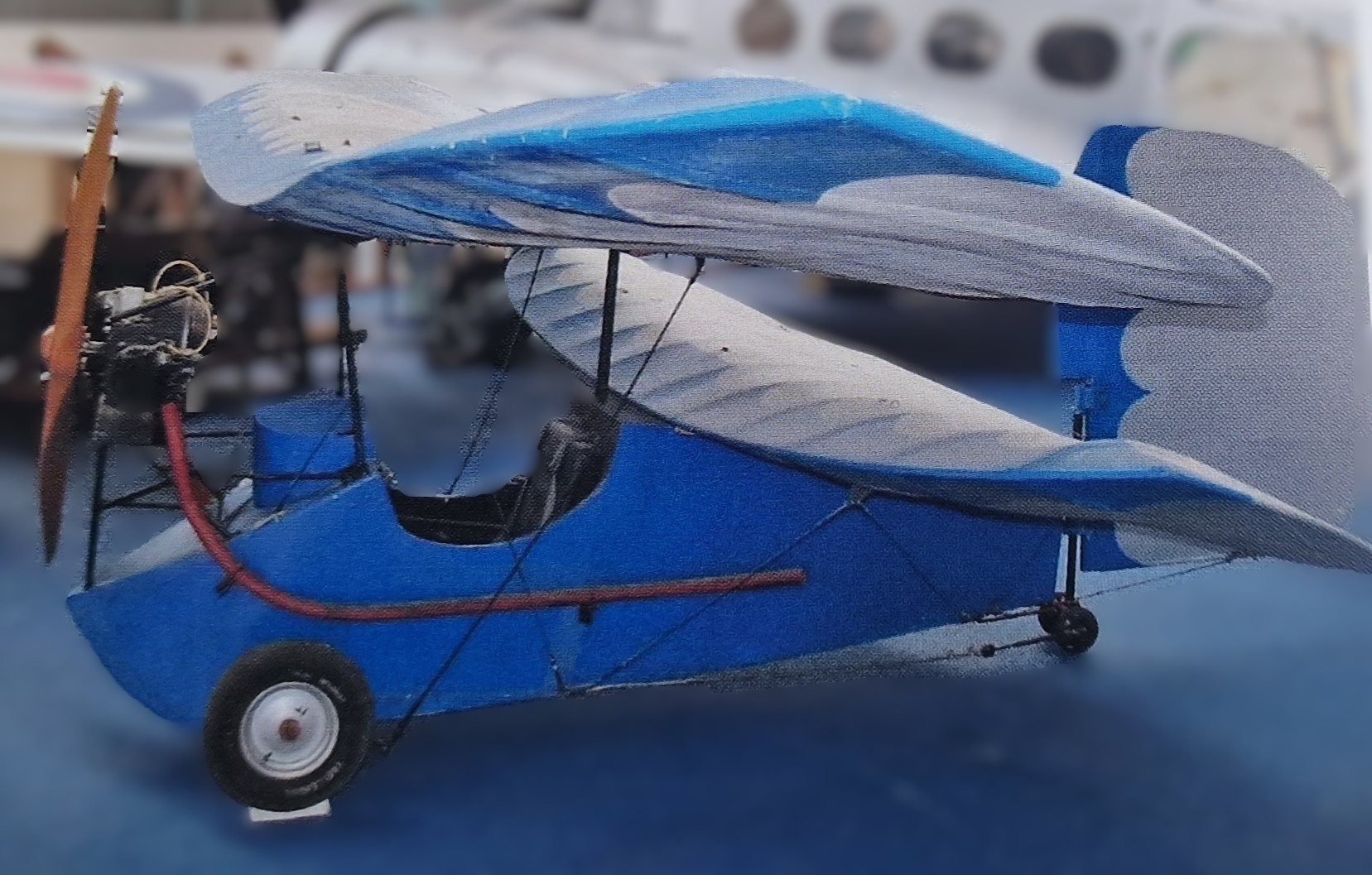
Mignet
HM.14
Manufacturer:
Mignet
Model No:
HM.14
Registration No:
BAPC 115
Designed by Frenchman Henri Mignet in 1933 the HM.14 Pou Du Ciel received much attention when shown at the 1935 Paris Aero Show. This aircraft was built in Porthcawl around 1936 by Captain George Pine, who established Pine's Airways Limited
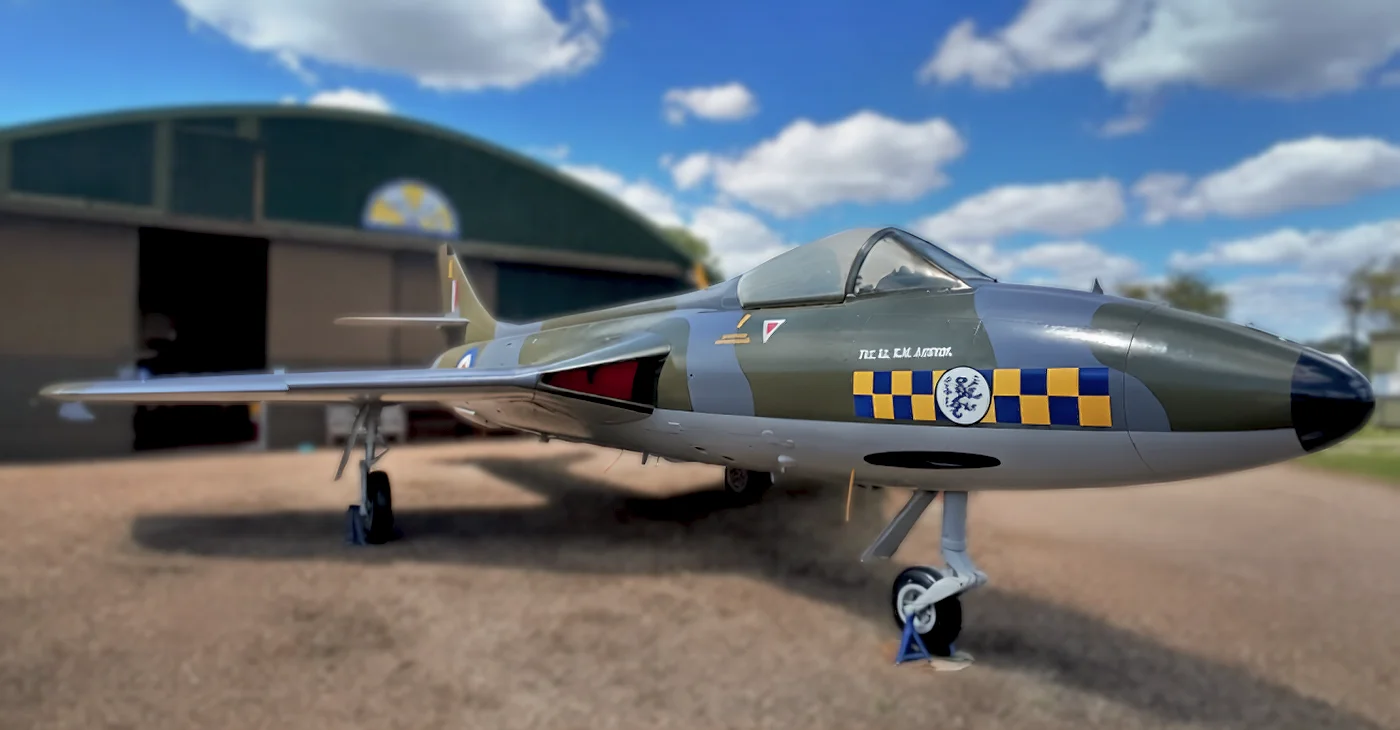
Hawker
Hunter
Manufacturer:
Hawker
Model No:
FGA.9
Registration No:
XG254
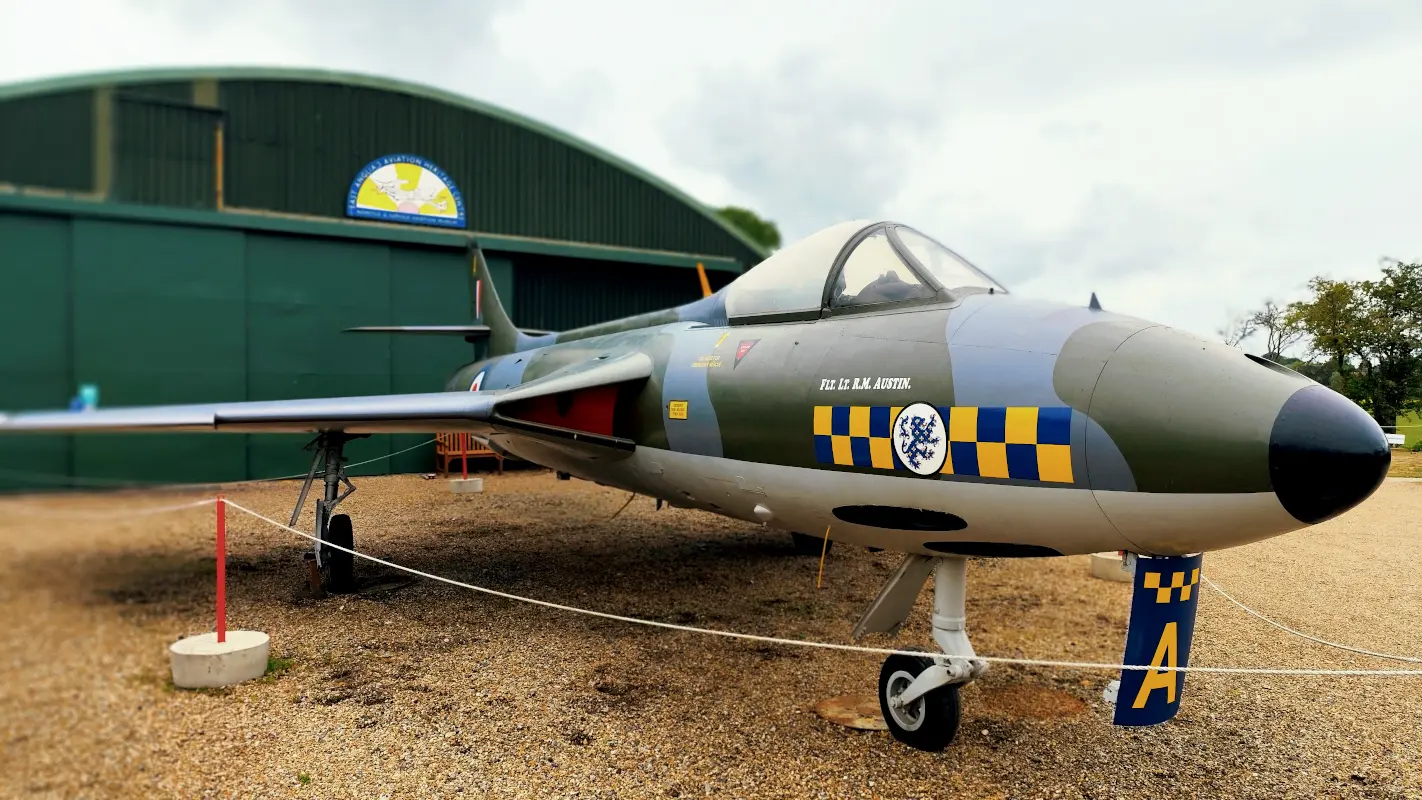
Built as an F.6, this aircraft was allocated in January 1957 to 54 Squadron at Odiham and converted to FGA.9 configuration in the July. The design progressed through various Marks but the F6 was generally regarded to be the "definitive" version. The airframe was purchased by Flixton's former Chairman. Ian Hancock, in 2002 and moved to Flixton for display.
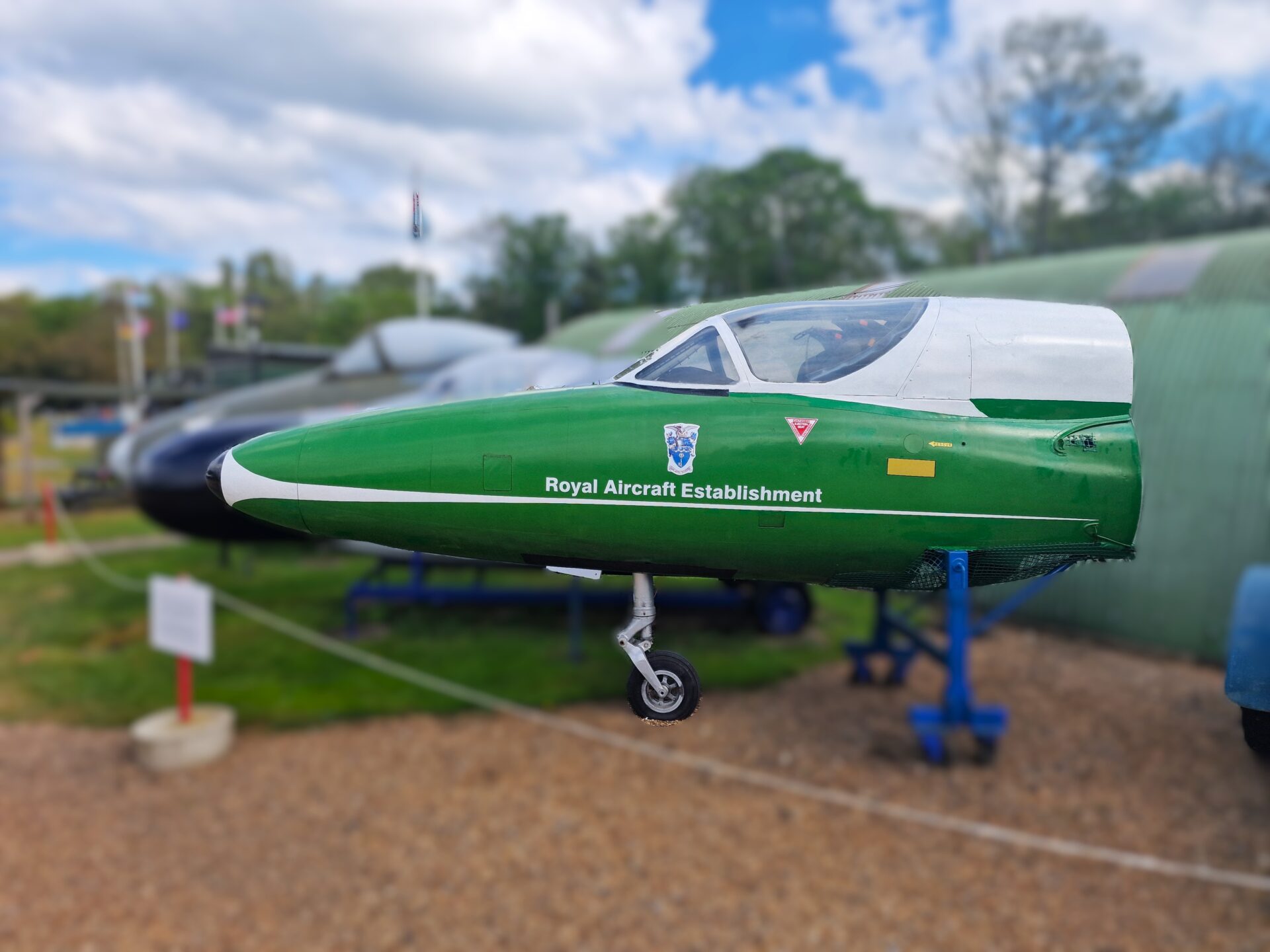
Hawker
Hunter
Manufacturer:
Hawker
Model No:
T.12 / T.53
Registration No:
XE531 / ET272
Although this twin seater Hunter is painted and displayed as XE531, a T.12 variant of the Royal Aircraft Establishment, it was actually a T.53 of the Royal Danish Air Force with serial number ET272. The cockpit was donated to the museum in 2015 by the Boulton and Paul Association.
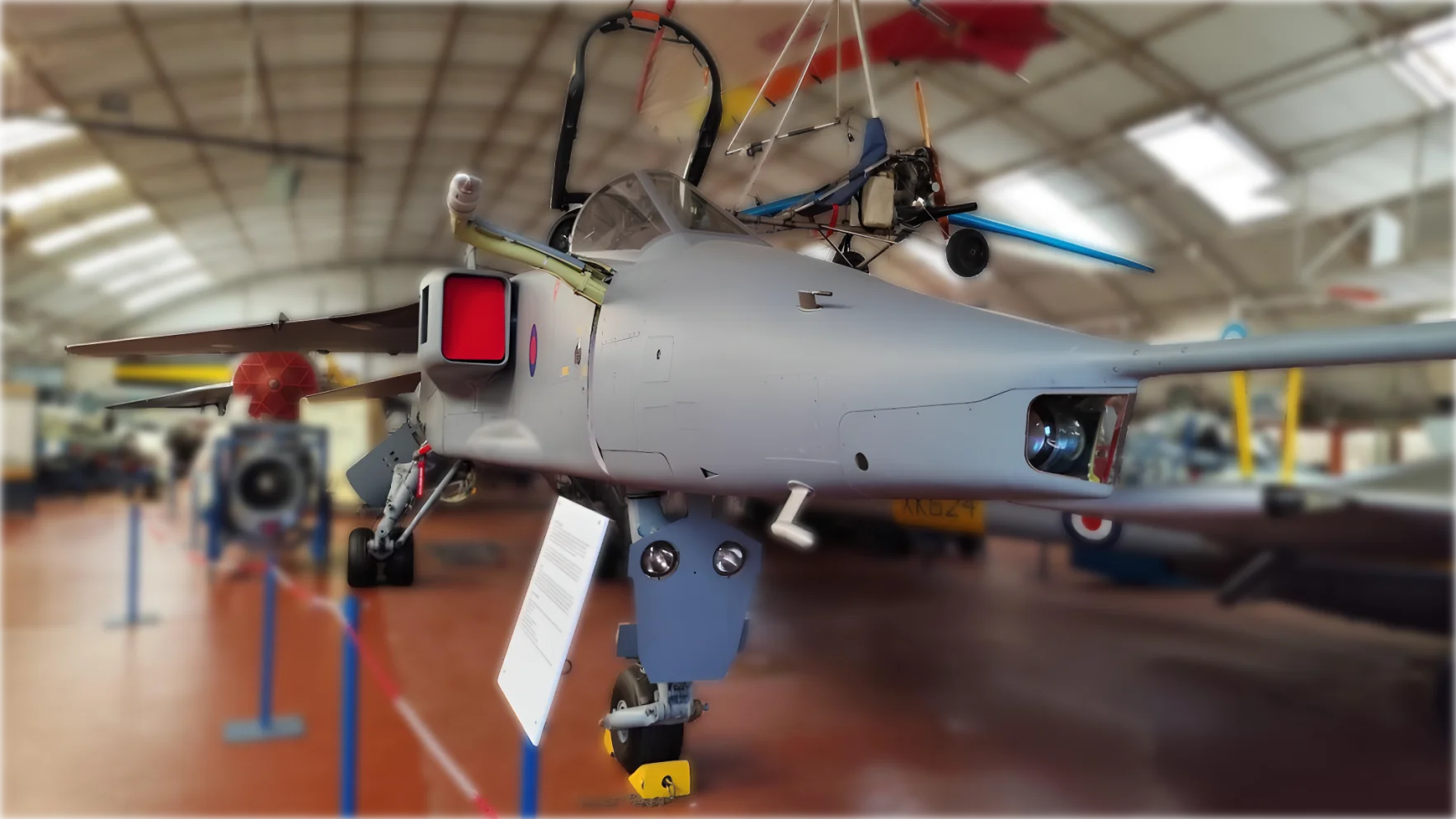
SEPECAT
Jaguar
Manufacturer:
SEPECAT
Model No:
GR.1B
Registration No:
XX108
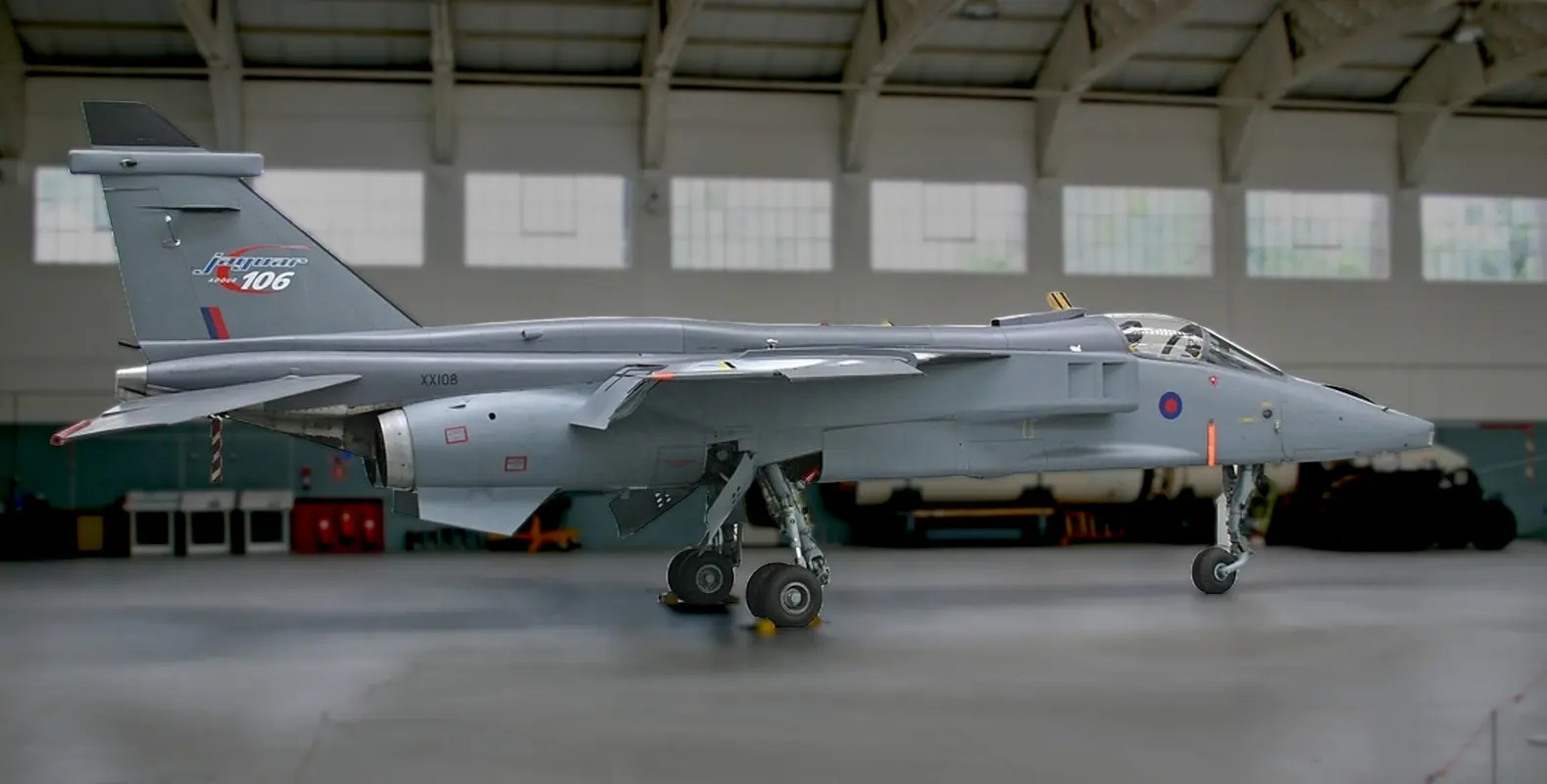
Our SEPECAT Jaguar XX108, the first production GR.1, first flew on October 12, 1972, and served as a key trials and international demonstrator airframe rather than in front-line squadrons. Used for weapons clearance, it appeared at the 1974 Farnborough and 1979 Paris Air Shows, later being upgraded to GR.1B.
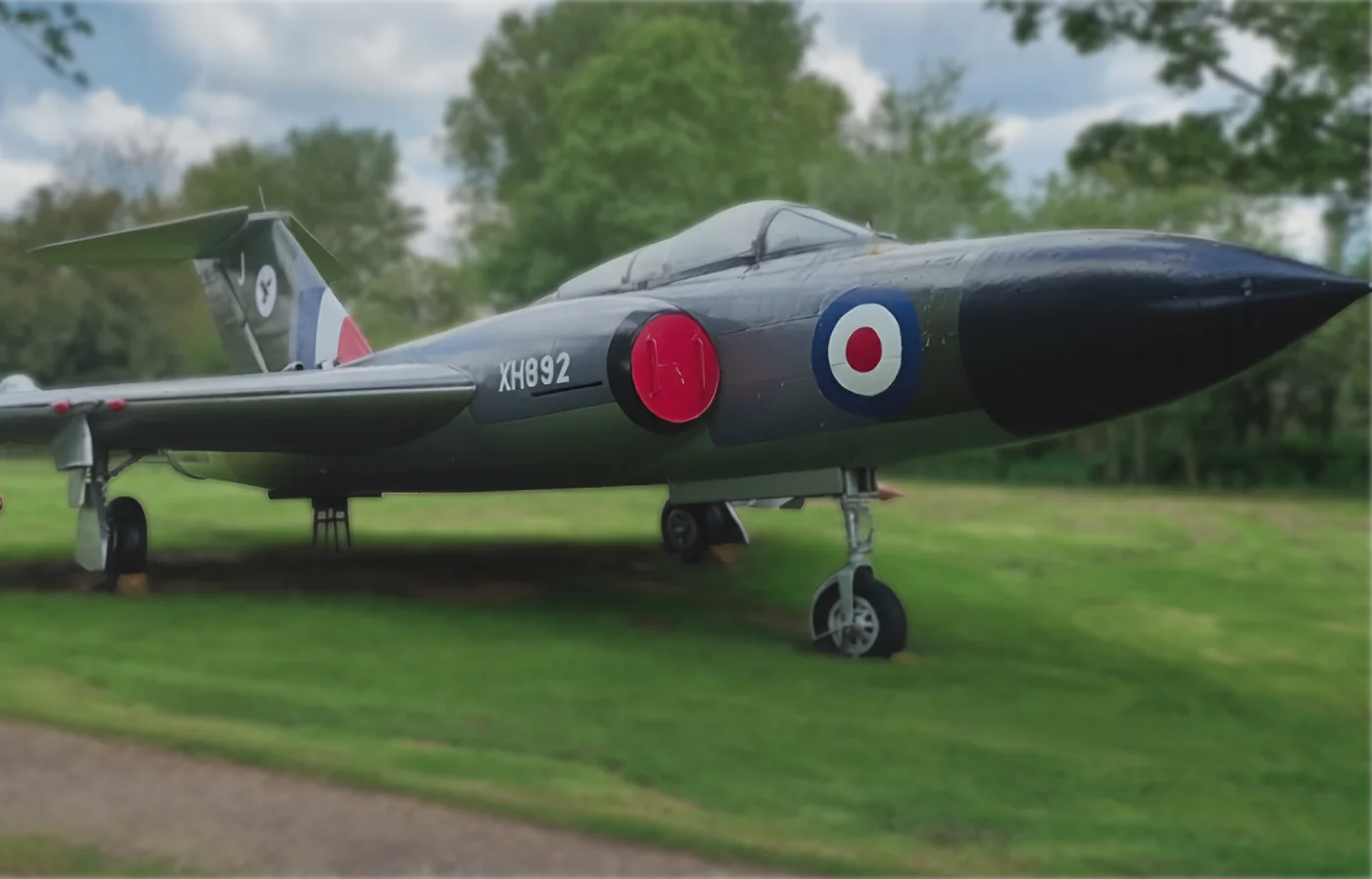
Gloster
Javelin
Manufacturer:
Gloster
Model No:
FAW.9R
Registration No:
XH892
Built originally as an R(AW).7, this aircraft was stored at 5MU Kemble from April 1958 to July 1959 before conversion to F(AW).9 (F/R) standard. It joined 23 Squadron at RAF Coltishall, Norfolk, in 1960 and flight refuelling was practiced by this unit with the Valiants of 214 Squadron at Marham.
Gowland
Jenny Wren
Manufacturer:
Gowland
Model No:
n/a
Registration No:
G-ASRF
The Gowland Jenny Wren is a one off home build aircraft built by G.W.G. 'Jack' Gowland. It was based on the Luton Minor. The aircraft crashed on take off in 1970 and was restored at Flixton before being exhibited here.
Hunting
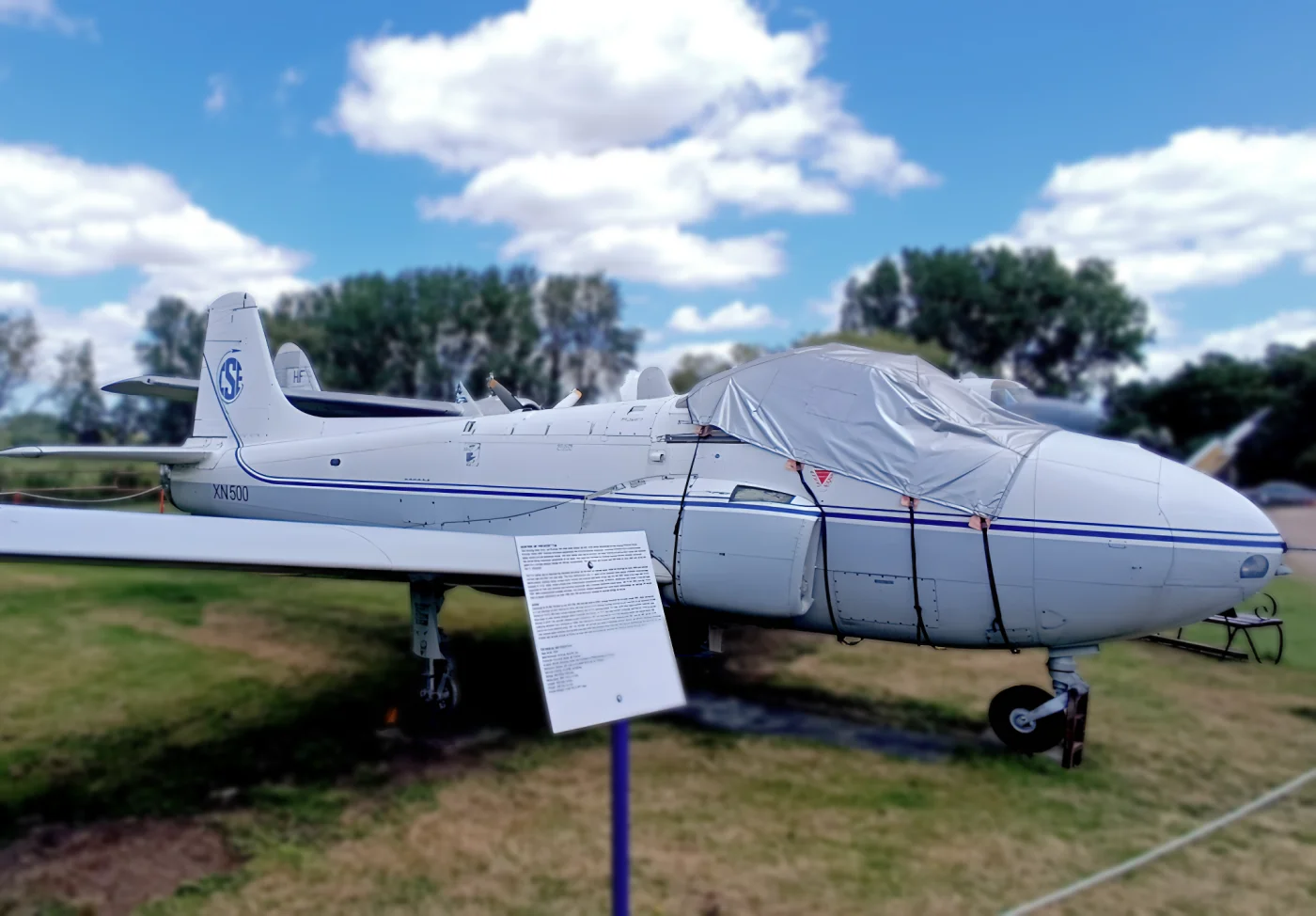
Jet Provost
Manufacturer:
Hunting
Model No:
T.3A
Registration No:
XN500
The Jet Provost T.3, which was to become the standard jet trainer for the RAF for several years, made its first flight in June 1958 and entered service with the RAF one year later. Some T.3 aircraft were upgraded to T.3A and received new avionics equipment, plus a revised instrument panel layout.
Luton Aircraft Ltd.
LA.5 Major
Manufacturer:
Luton Aircraft Ltd.
Model No:
LA-5A
Registration No:
G-APUG
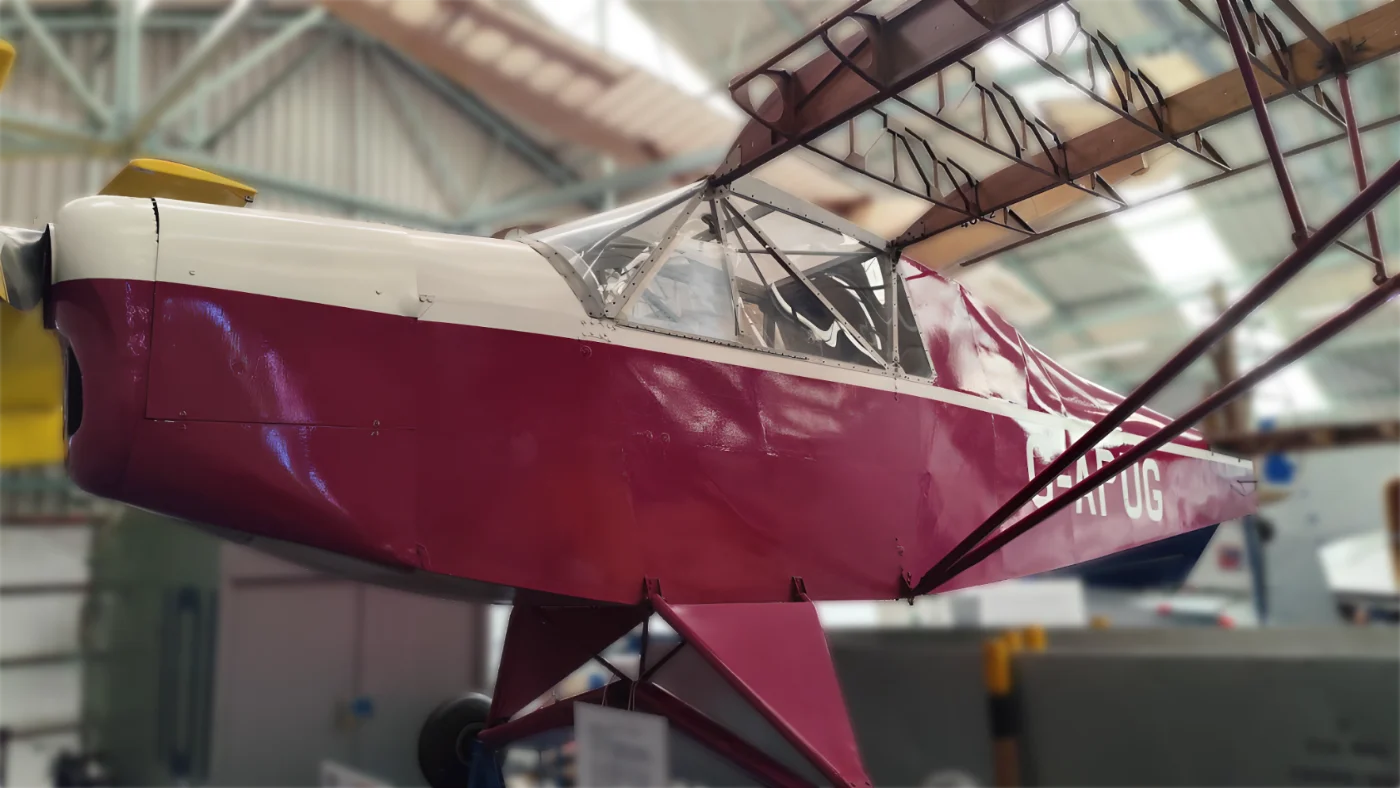
Luton Aircraft Ltd. built the LA-5A Major, and the prototype (Q-AFMU) flew in March 1939 but only a few were built by the outbreak of war. Construction of this aircraft commenced at in 1959 by L. D. Blyth but the airframe was sold twice and never completed. The last owner, Michael Powell, donated it to the museum as an incomplete build.
English Electric
Lightning
Manufacturer:
English Electric
Model No:
DB/F.1
Registration No:
XG329
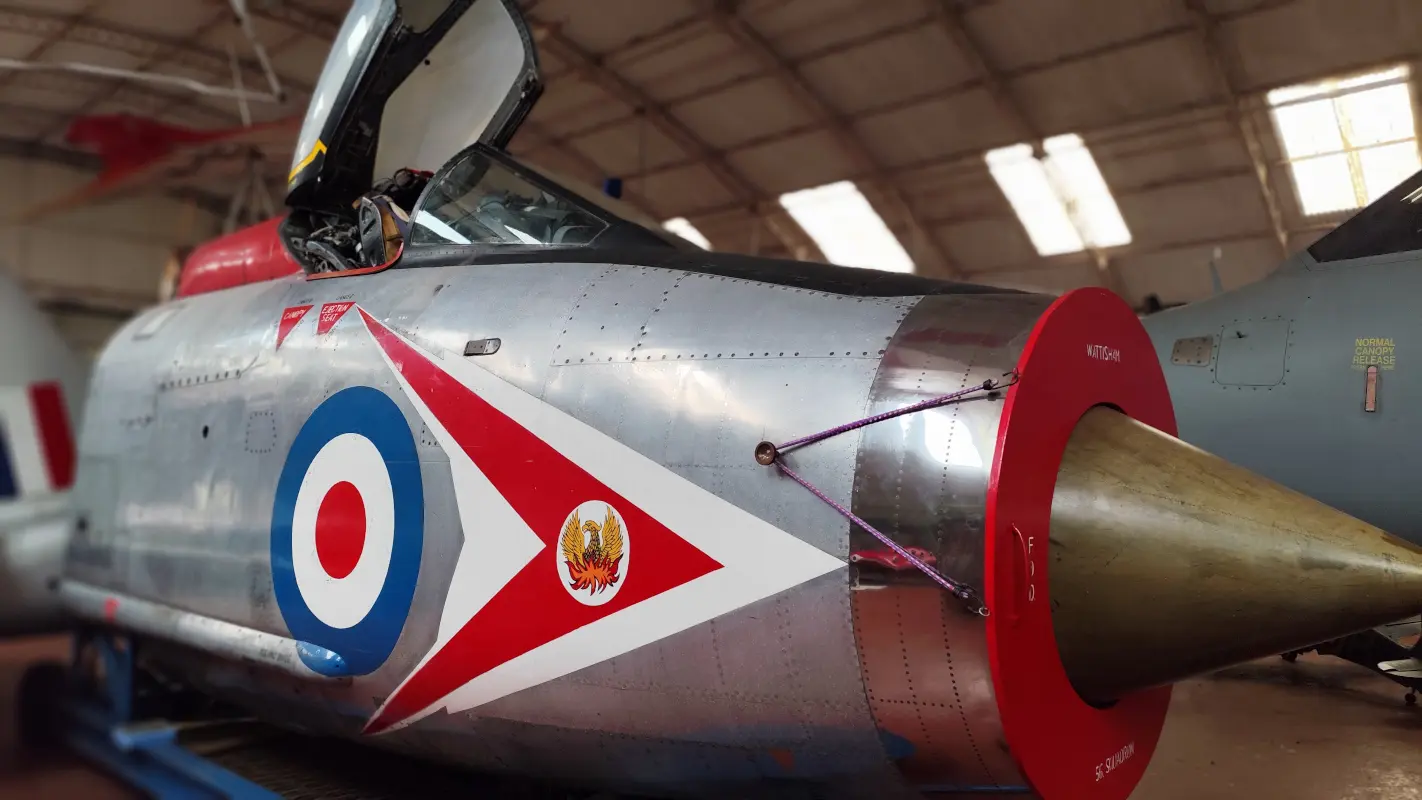
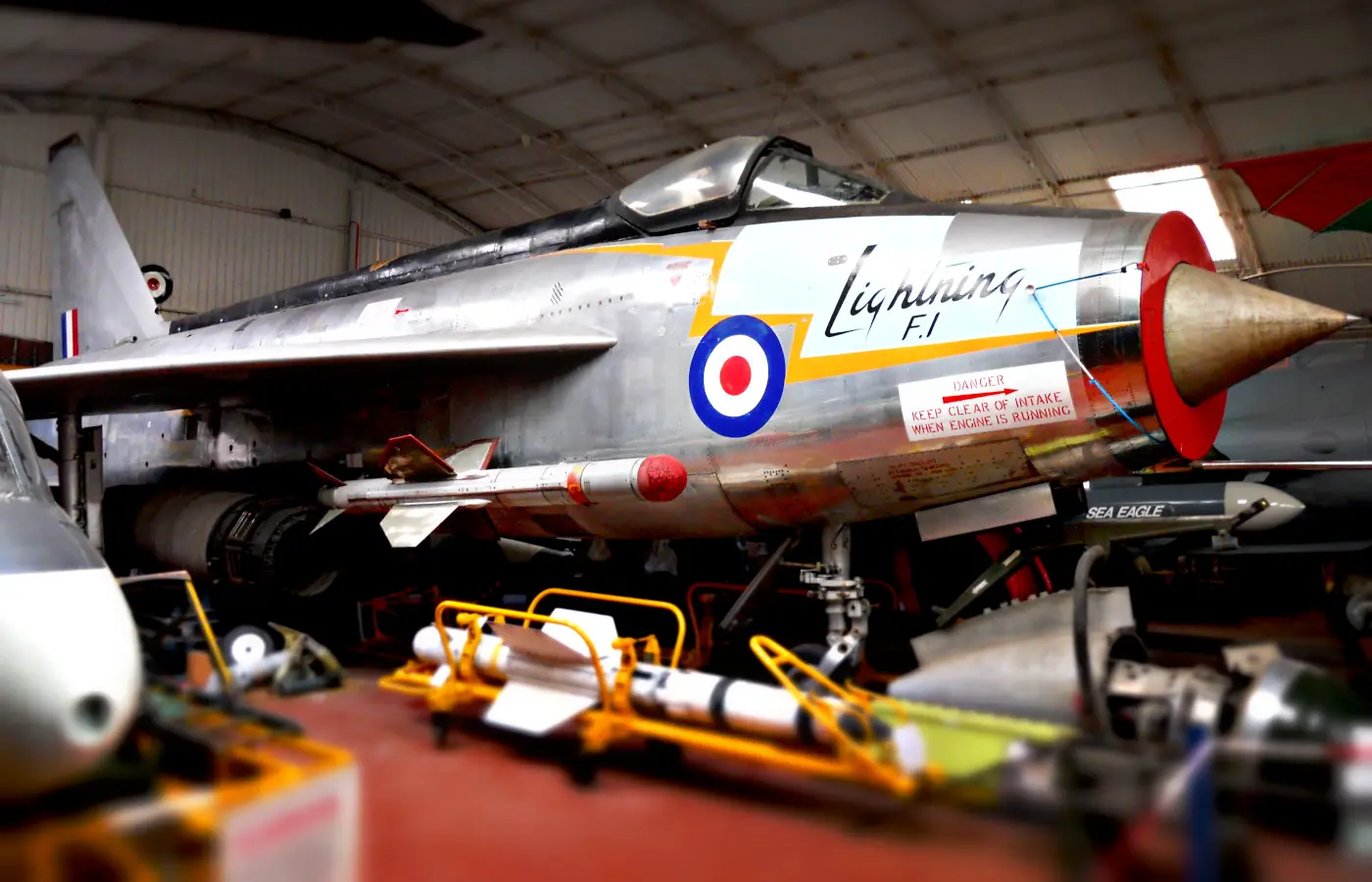
English Electric Lightning XG329 is a significant P.1B development aircraft, first flown in April, 1959. Used extensively for trials (cannon, missiles, and F.3 fins). At Boscombe Down, XG329 served as a TSR.2 chase plane. Retired in 1970. The airframe was bought by Flixton's former Chairman, Ian Hancock, in 1990 and moved to Flixton for display.
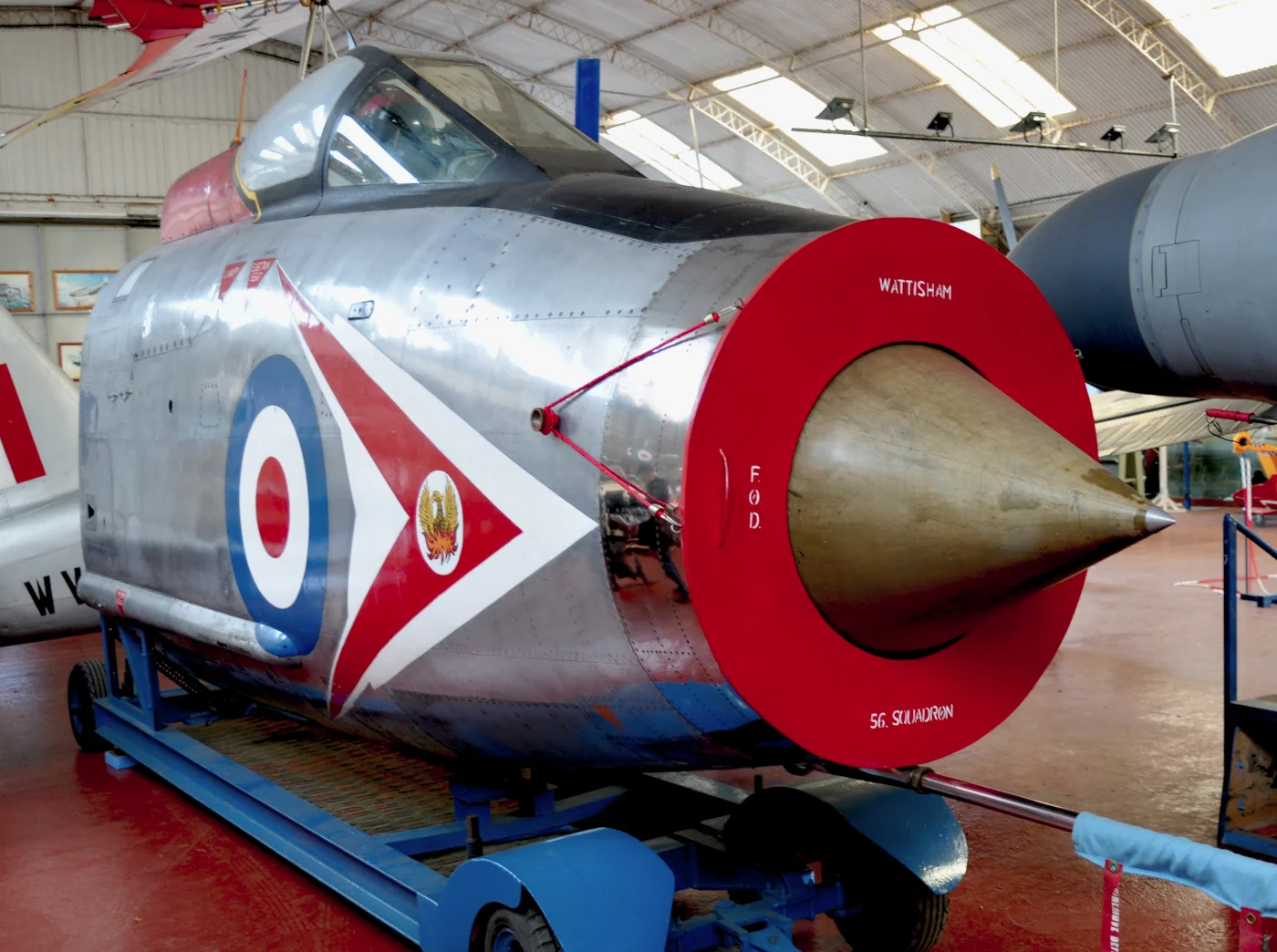
English Electric
Lightning
Manufacturer:
English Electric
Model No:
F.3
Registration No:
XP473
This aircraft, XP743 flew with several RAF Squadrons including 56 Squadron from RAF Wattisham in whose colopurs it is displayed. The cockpit section is almost complete and we are sourcing more instruments and controls regularly.
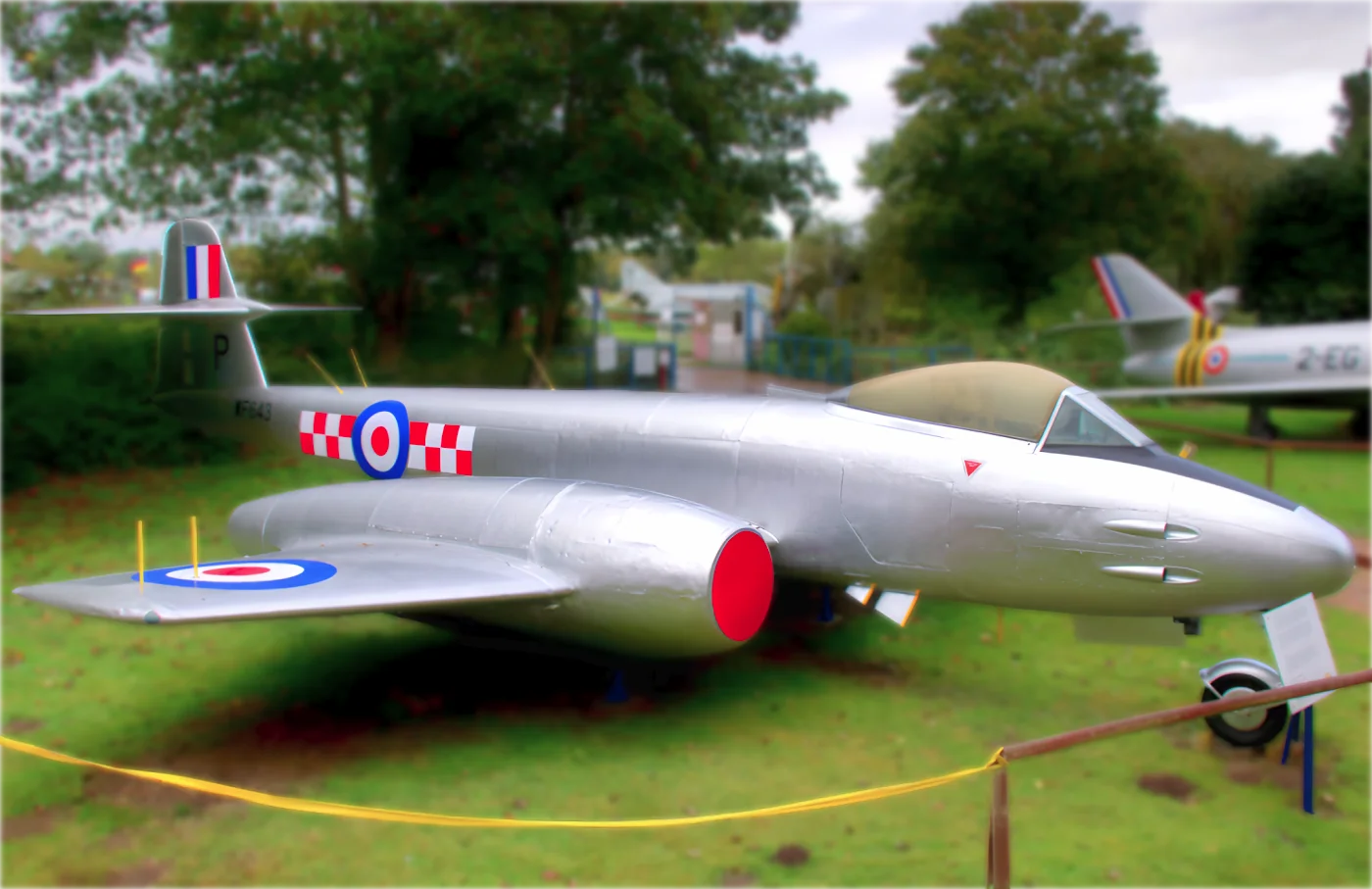
Gloster
Meteor
Manufacturer:
Gloster
Model No:
F(TT).8
Registration No:
WF643
Completed at Baginton by Armstrong Whitworth in 1951 this aircraft served with 56, 1 and 611 Squadrons before being transferred to the Middle East Air Force in 1960 where it was allocated to the Nicosia Flight until 1963. During this period it was flown by 43 Squadron as a “hack” and target-tug.
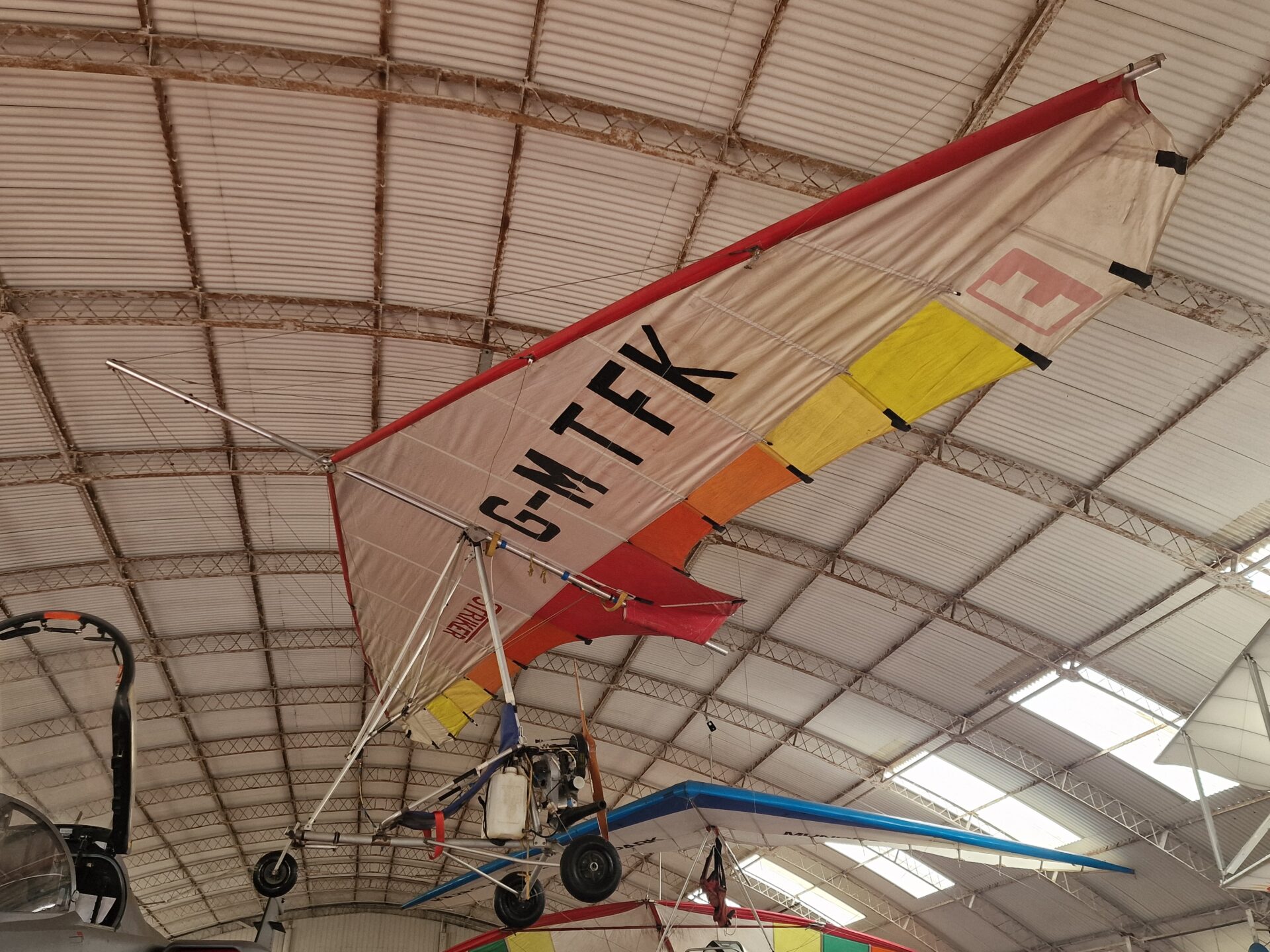
Solo
Microlight
Manufacturer:
Solo
Model No:
n/a
Registration No:
G-MTFK
Solo Striker/ Flexiform Microlight was a home built 250cc microlight. This example was the last aircraft to take off from Flixton airfield, piloted by Mr D. Moult.
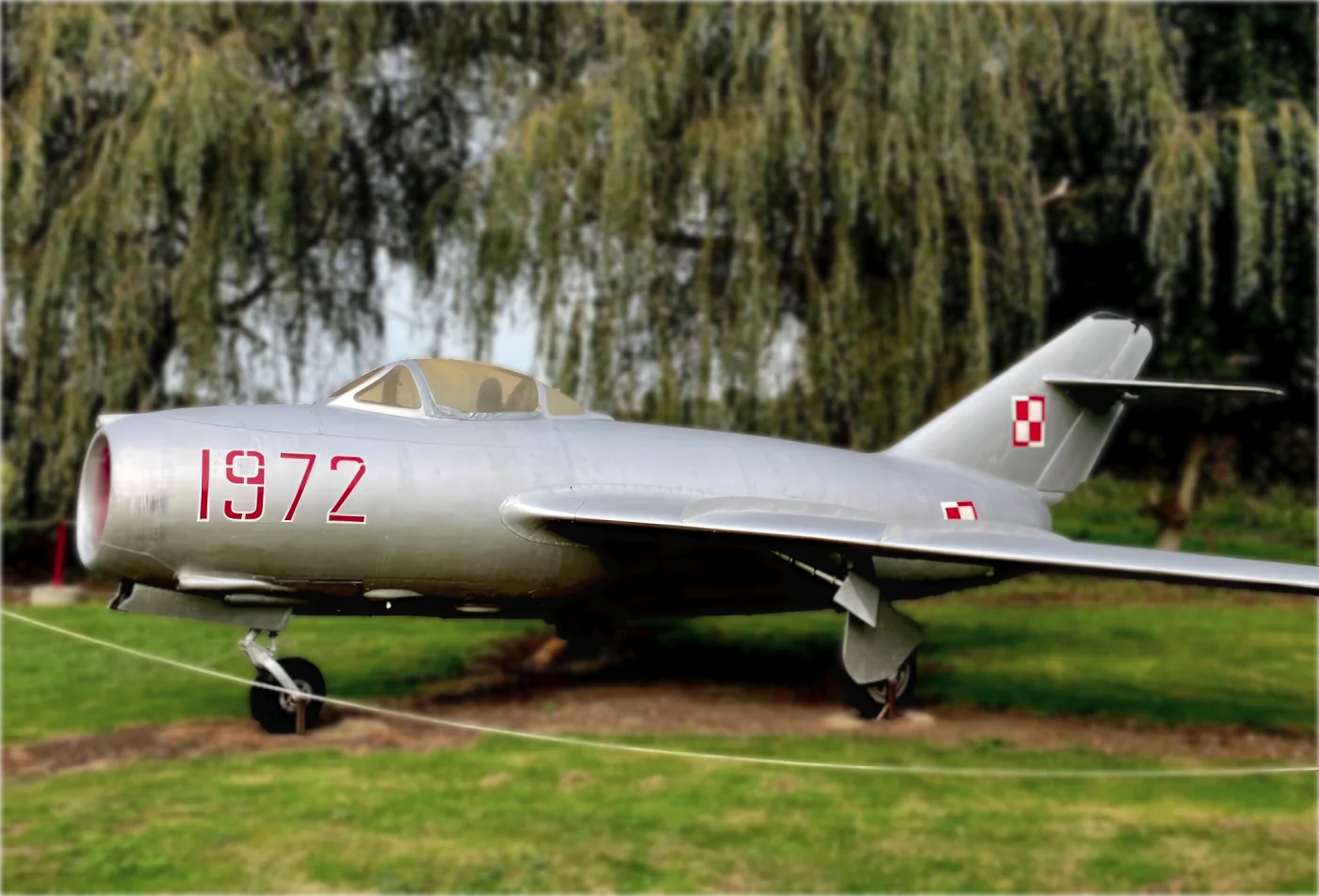
MIKOYAN-GUREVICH
Mig 15
Manufacturer:
MIKOYAN-GUREVICH
Model No:
15-BIS
Registration No:
623794
This aircraft (623794 c/n 5630022) first flew on 13/9/1956 and served from 6/10/1956 until 1968 with 1.SLP (No.1 Fighter Air Regiment) – Czech Air Force number 3794.
De Havilland
Mosquito
Manufacturer:
De Havilland
Model No:
NF
Registration No:
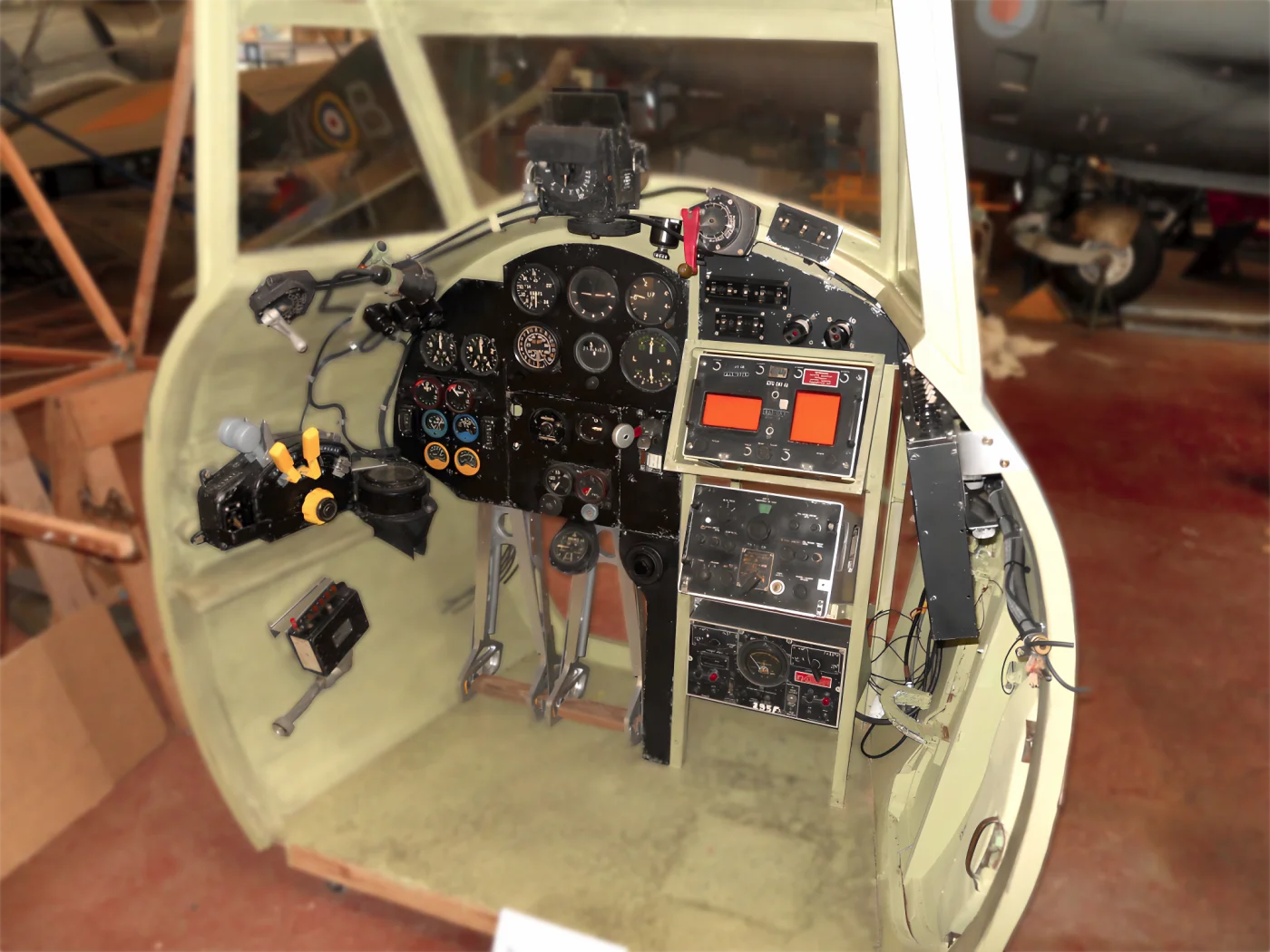
This is a mock up containing mostly original equipment to represent a night fighter / intruder variant of the Mosquito.
Dassault
Mystere IVA
Manufacturer:
Dassault
Model No:
IVA
Registration No:
79/2-EG
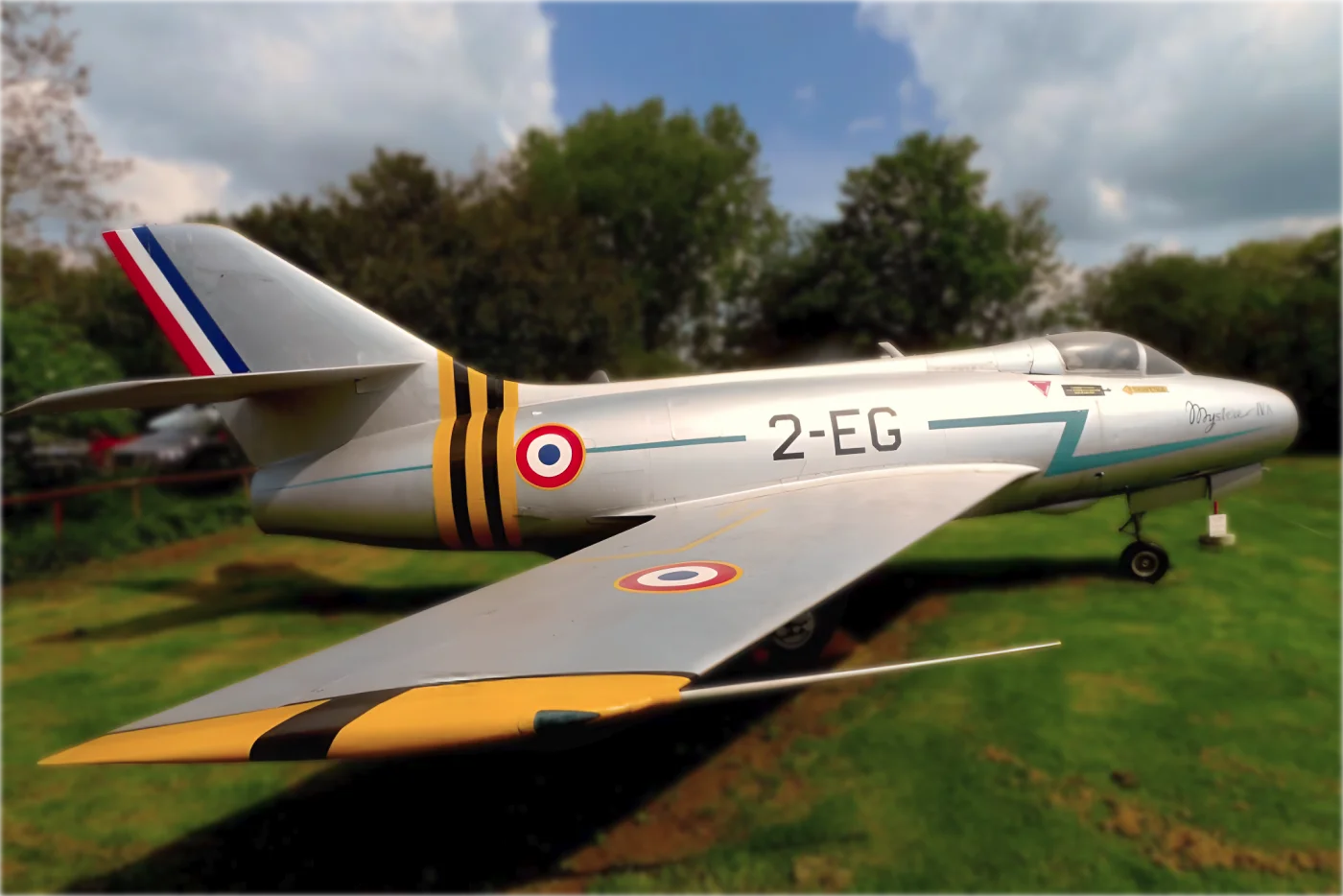
79/2-EG was originally assigned to 5 Escadre de Chasse at Orange, France. It retired in 1978 and returned to RAF Sculthopre, Norfolk and was later presented to the museum on long term loan.
Boulton & Paul
Overstand
Manufacturer:
Boulton & Paul
Model No:
P.75 (replica)
Registration No:
K4556
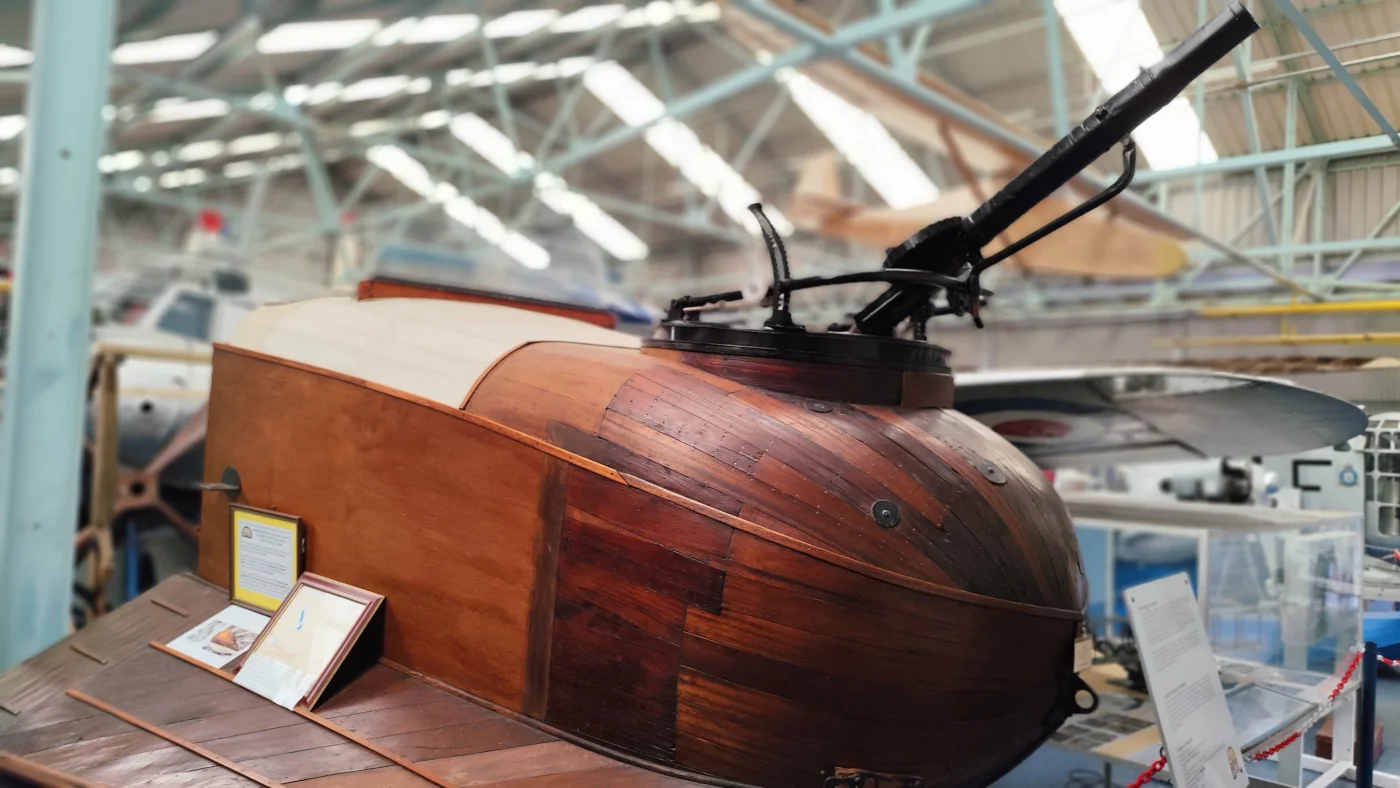
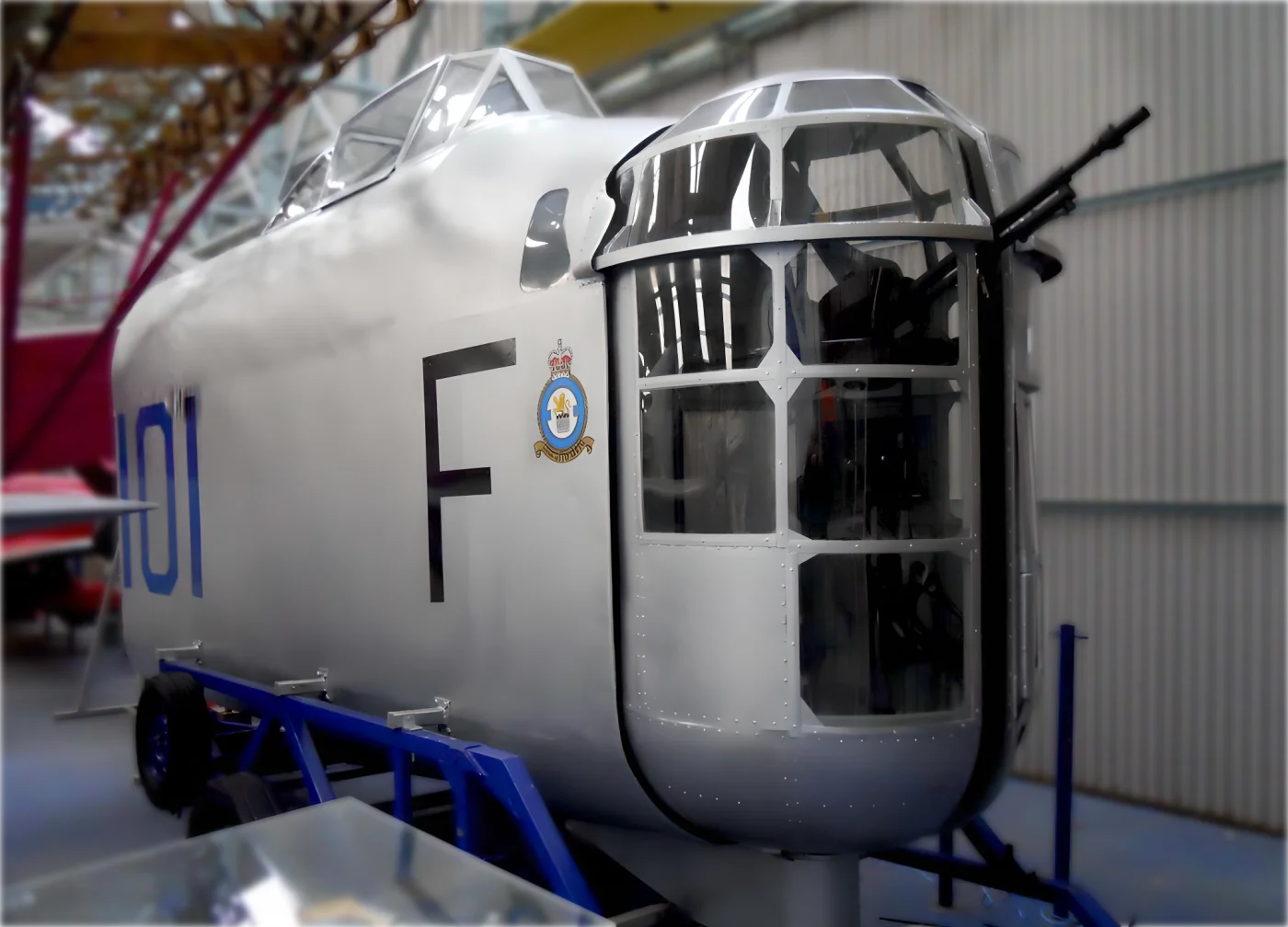
This full scale reconstruction represents the nose section of an Overstrand bomber complete with the worlds first power operated gun turret and the last Boulton and Paul aircraft to be manufactured in Norwich. This type entered service with the RAF in 1934. This replica was donated to the museum in 2015 by the Boulton and Paul Association.
Boulton and Paul
P.6
Manufacturer:
Boulton and Paul
Model No:
P6
Registration No:
X25/K-124/ G-EAPD/ BAPC 274
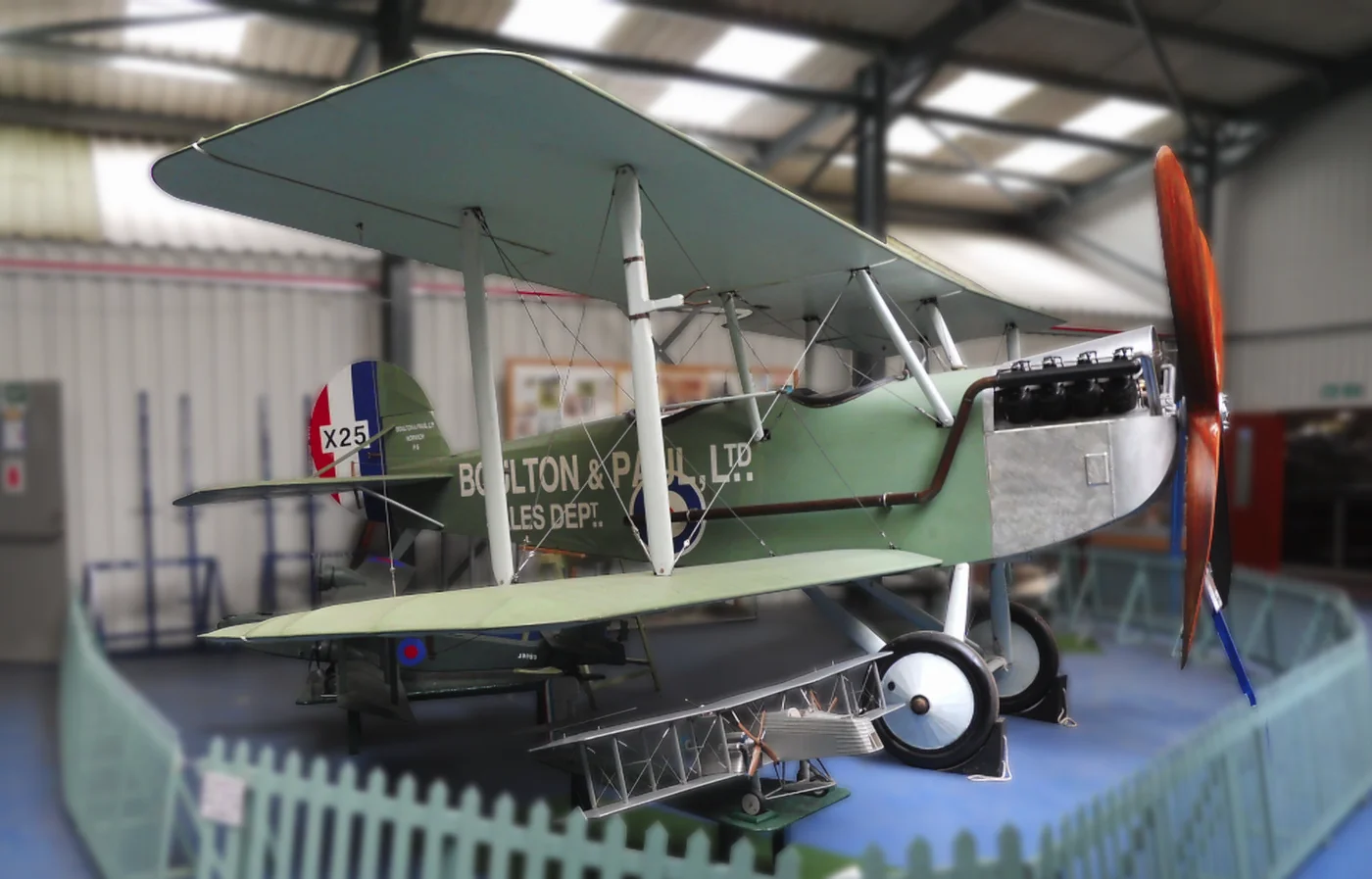
This static reproduction of the B&P P.6 experimental biplane was built by members of the Boulton Paul Association of Wolverhampton to mark the earlier origins of the company. It was the centre-piece attraction of the Smiths Actuation Systems' exhibition stand at the 2003 Paris Air Show.
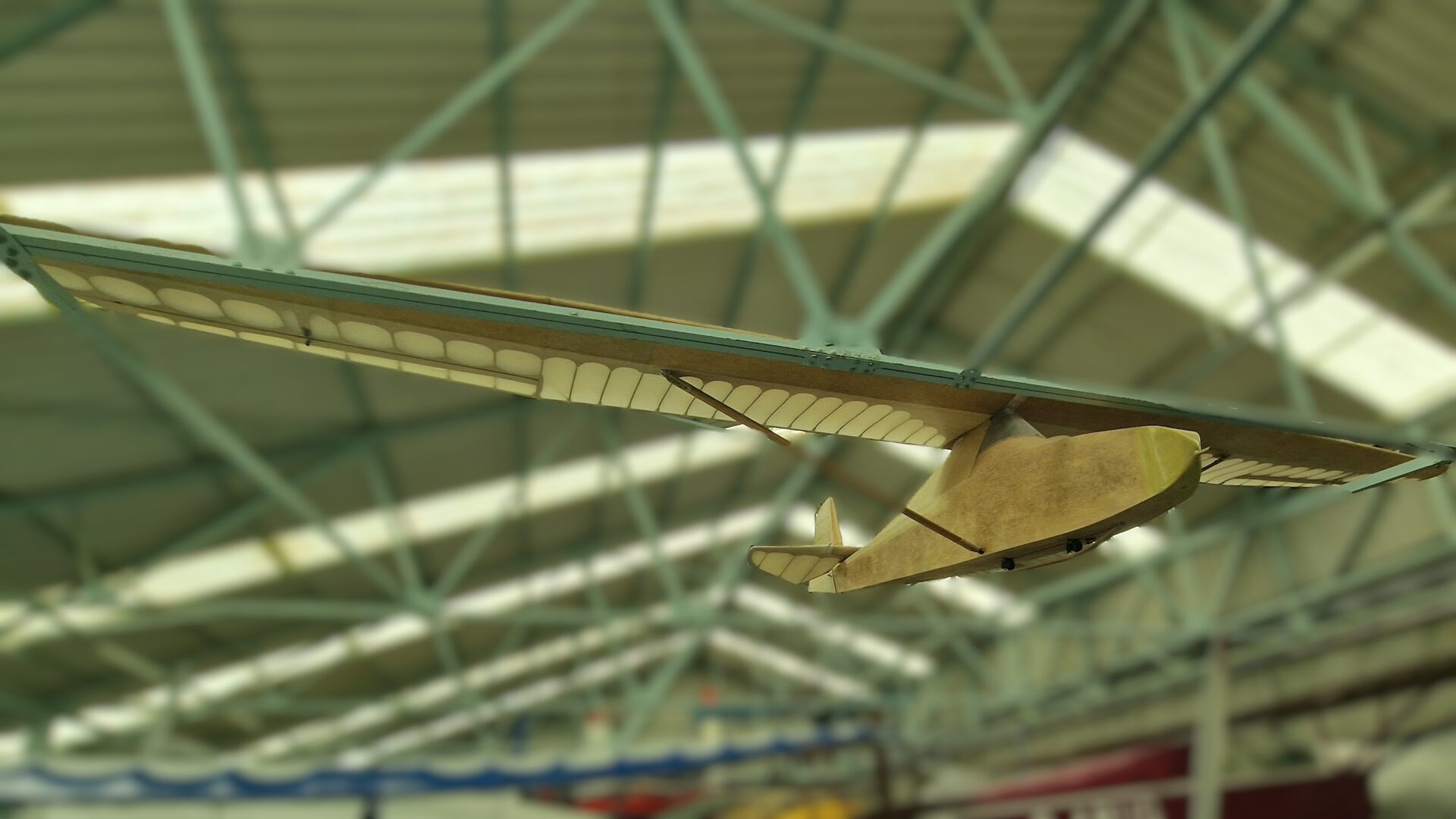
Penrose
Pegasus
Manufacturer:
Penrose
Model No:
2
Registration No:
n/a
This is a 25 foot wingspan Pegasus 2, built by the late John Lee, who also built the Lightwing Rooster and Colditz Cock gliders seen elsewhere in the museum.
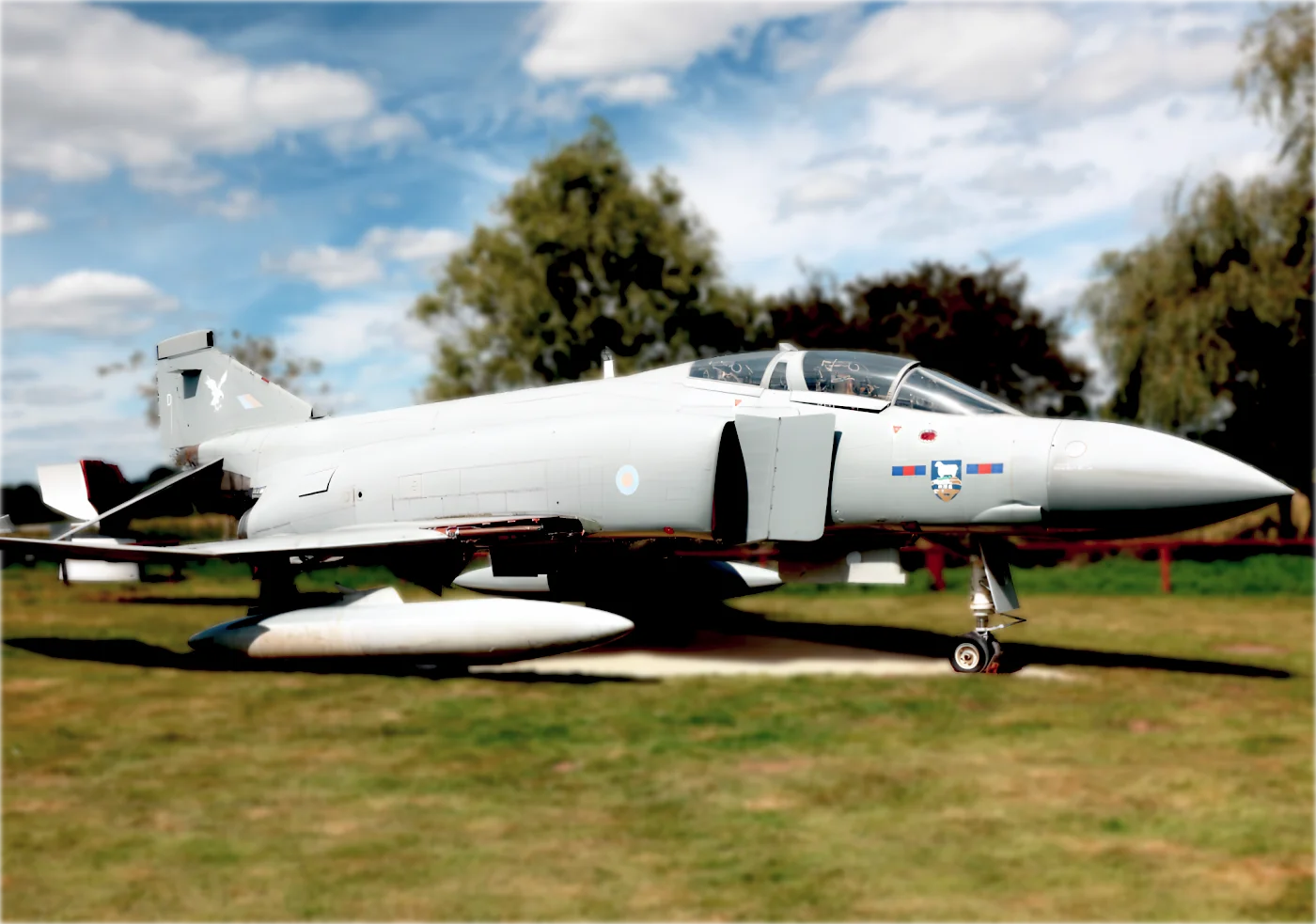
McDonnell Douglas
Phantom
Manufacturer:
McDonnell Douglas
Model No:
FGR.2
Registration No:
XV497
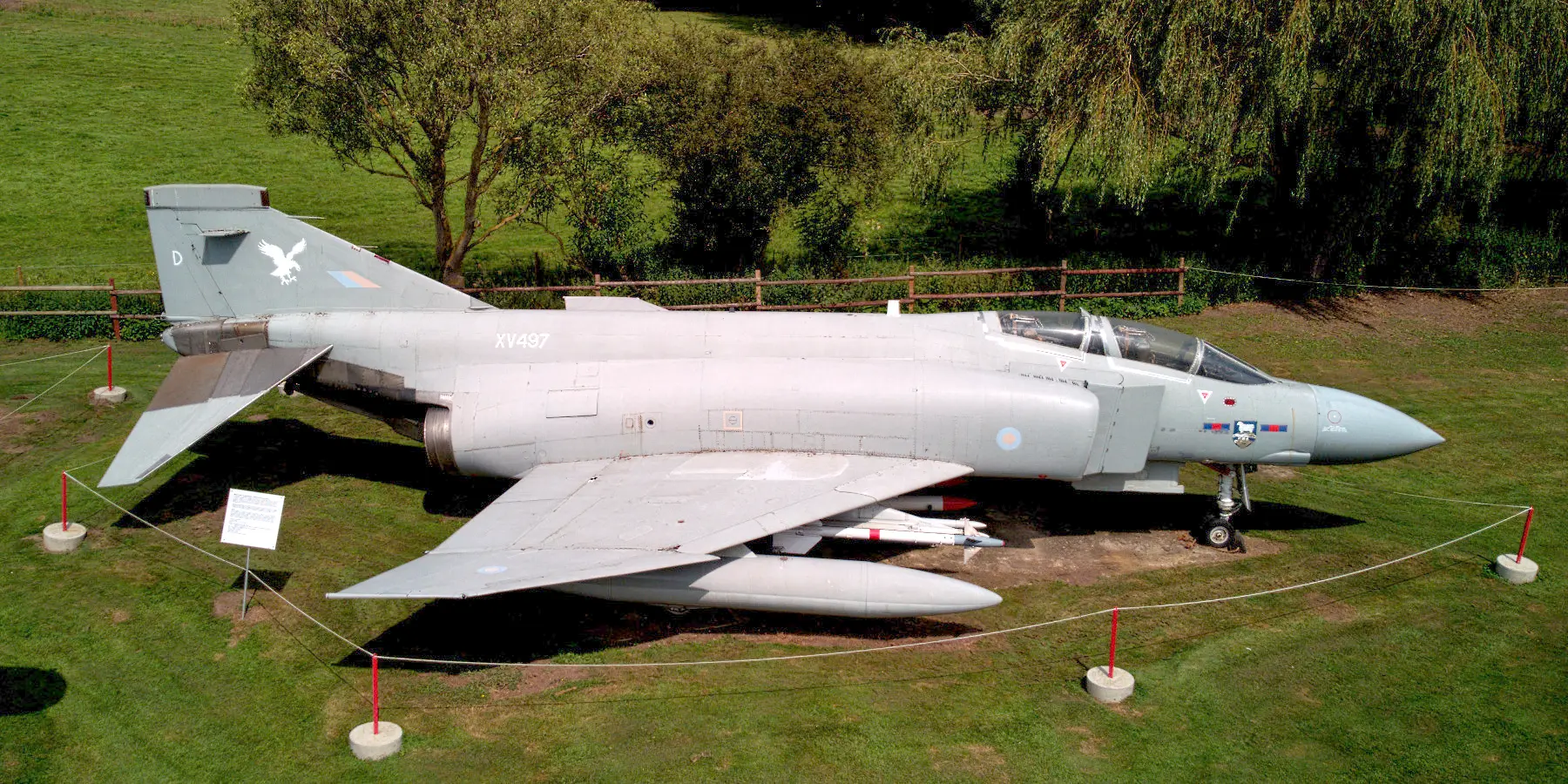
McDonnell Douglas Phantom FGR.2, serial number XV497, had a distinguished 22-year career with the Royal Air Force (RAF) from 1970 to 1992, serving in various tactical, reconnaissance, and air-defense roles including a deployment to the Falkland Islands.
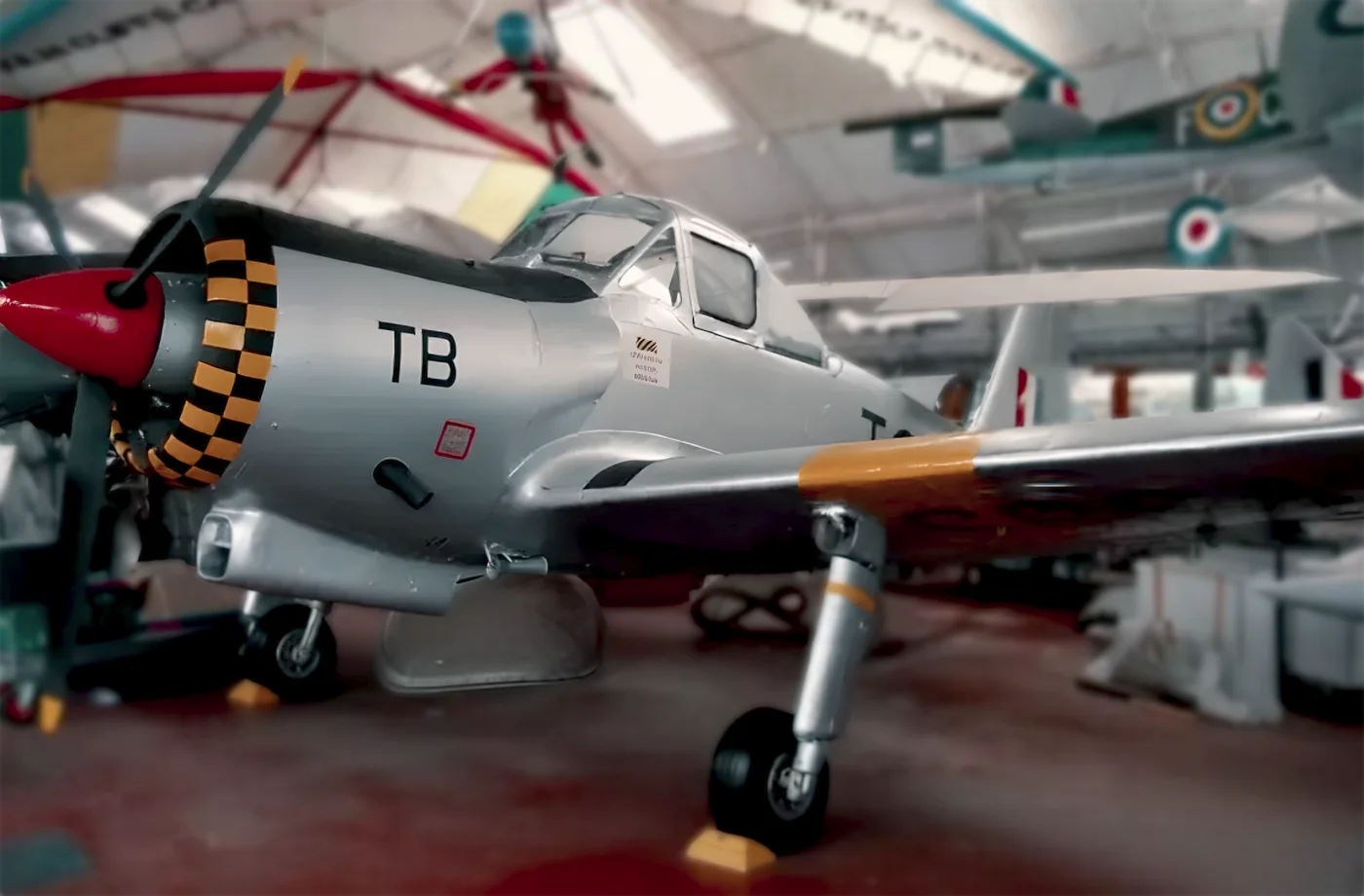
Percival
Provost
Manufacturer:
Percival
Model No:
T.1
Registration No:
WV605
Percival Provost T.1 WV605 is a preserved Royal Air Force basic trainer, manufactured in the early 1950s. WV605 represents the final piston-engined trainer used by the RAF. It served as a standard basic trainer for the RAF from 1953 until being phased out by 1961. The Provost was a key aircraft in the 1950s, replacing the Percival Prentice and paving the way for the Jet Provost.
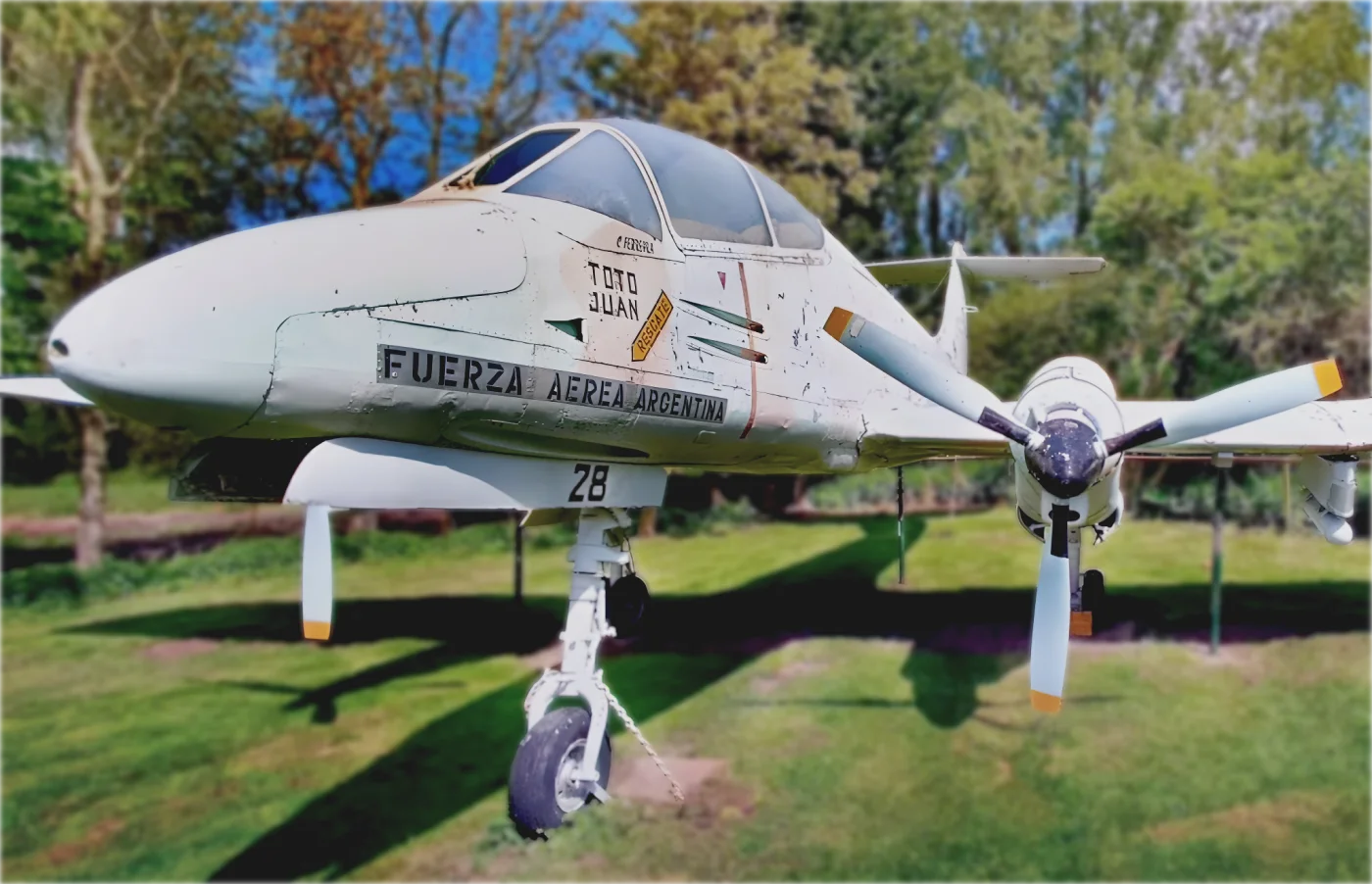
Fábrica Militar de Aviones (FMA)
Pucará
Manufacturer:
Fábrica Militar de Aviones (FMA)
Model No:
FMA 1A-58A 'Toto Juan'
Registration No:
A-528
Built 1979, the aircraft served with the Argentine Air Force 3rd & 9th Air Brigade. During the Falklands War in 1982, It was flown by Commodore (ret.) Miguel Navarro, commander of the Pucará Airmobile squadron.
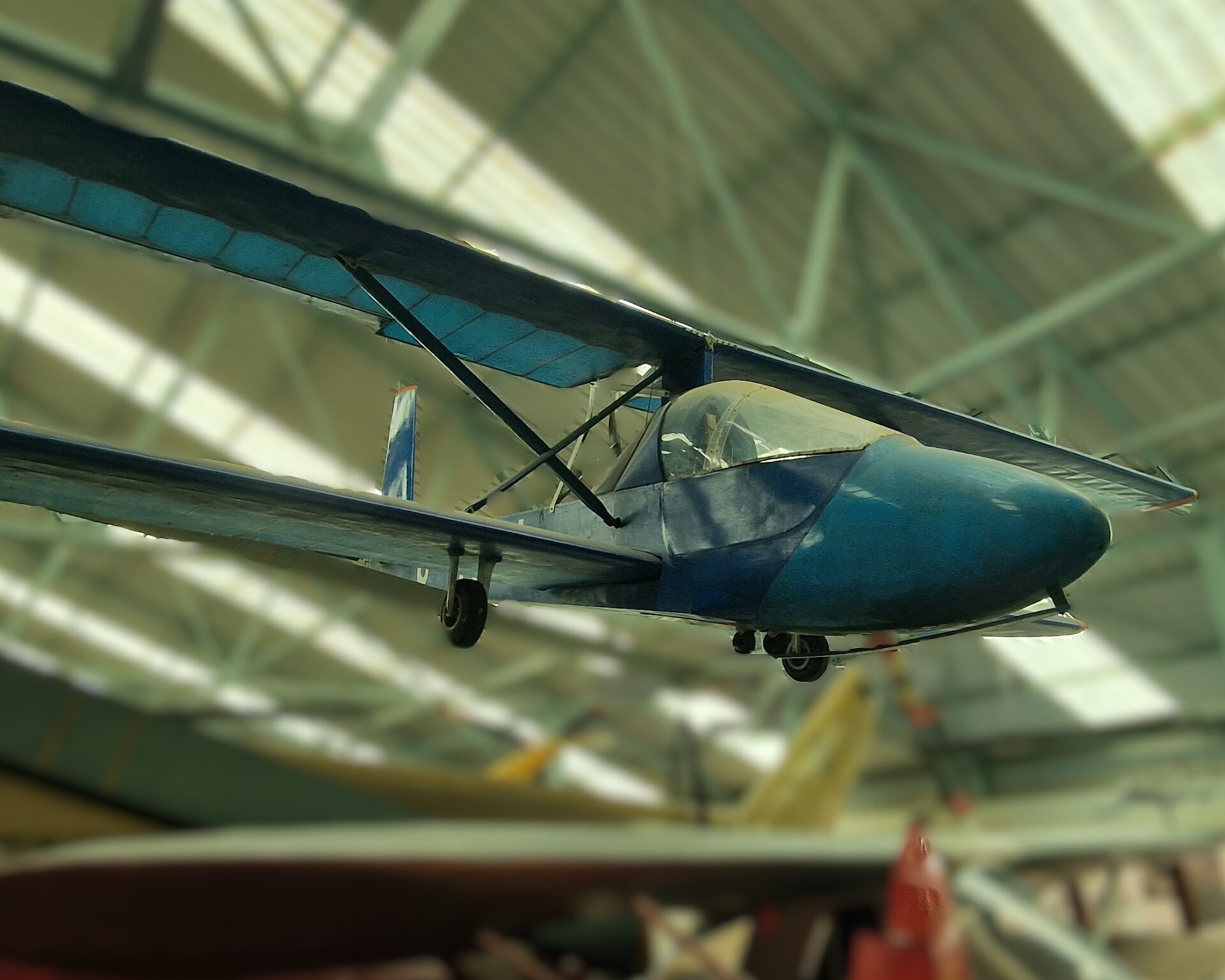
Lightwing
Rooster
Manufacturer:
Lightwing
Model No:
1
Registration No:
n/a
The Lightwing Rooster 1 / Series 4 microlight was built by John Lee of Littlehampton. It was his forth design and selfbuild. The airframe was donated to the museum in 2004 by his widow.
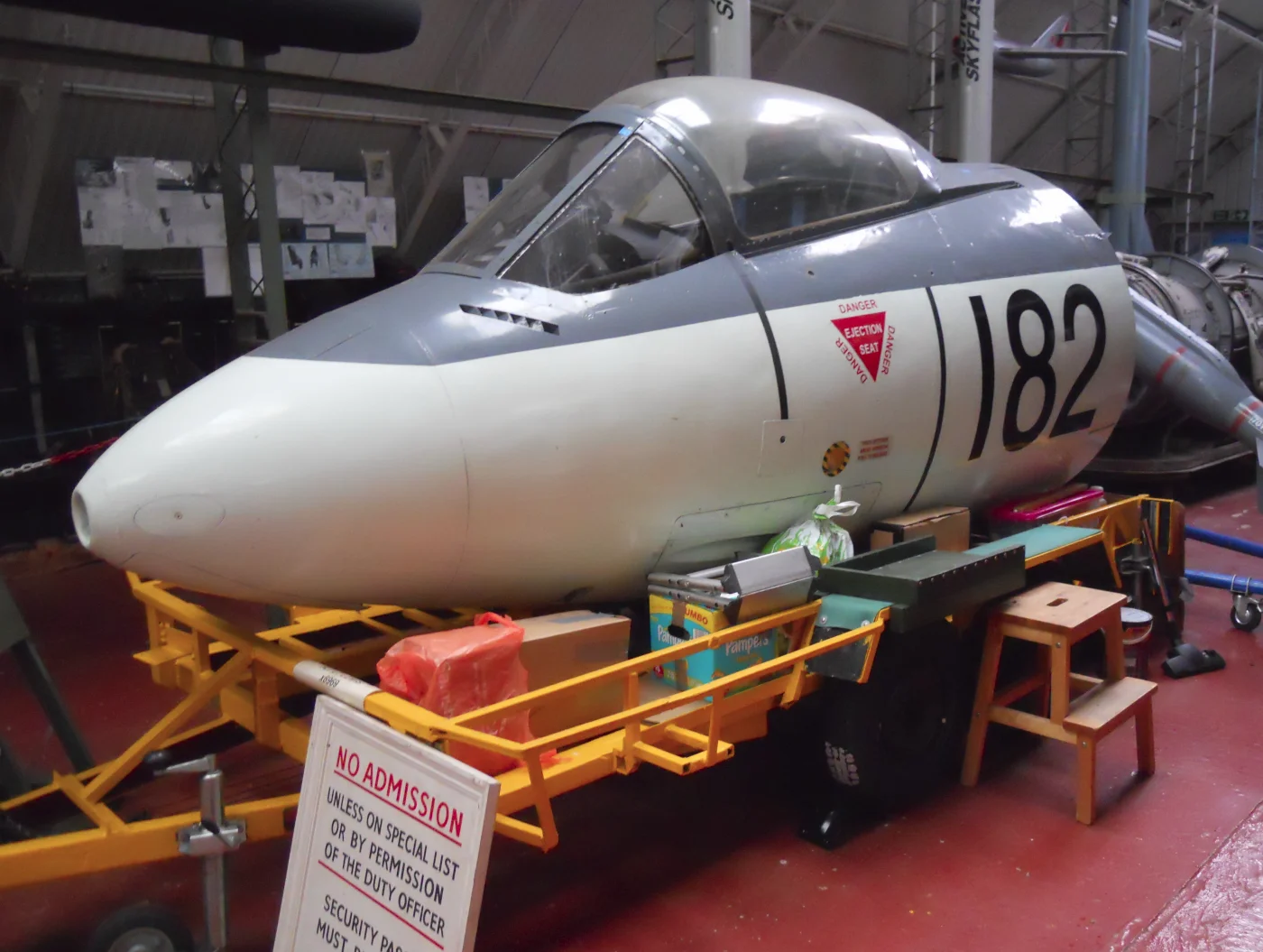
Hawker
Sea Hawk
Manufacturer:
Hawker
Model No:
FGA.6
Registration No:
WV838
The Sea Hawk was used by the Fleet Air Arm in the early cold war period. Many similarities can be seen with Hawker’s later Hunter used by the RAF.
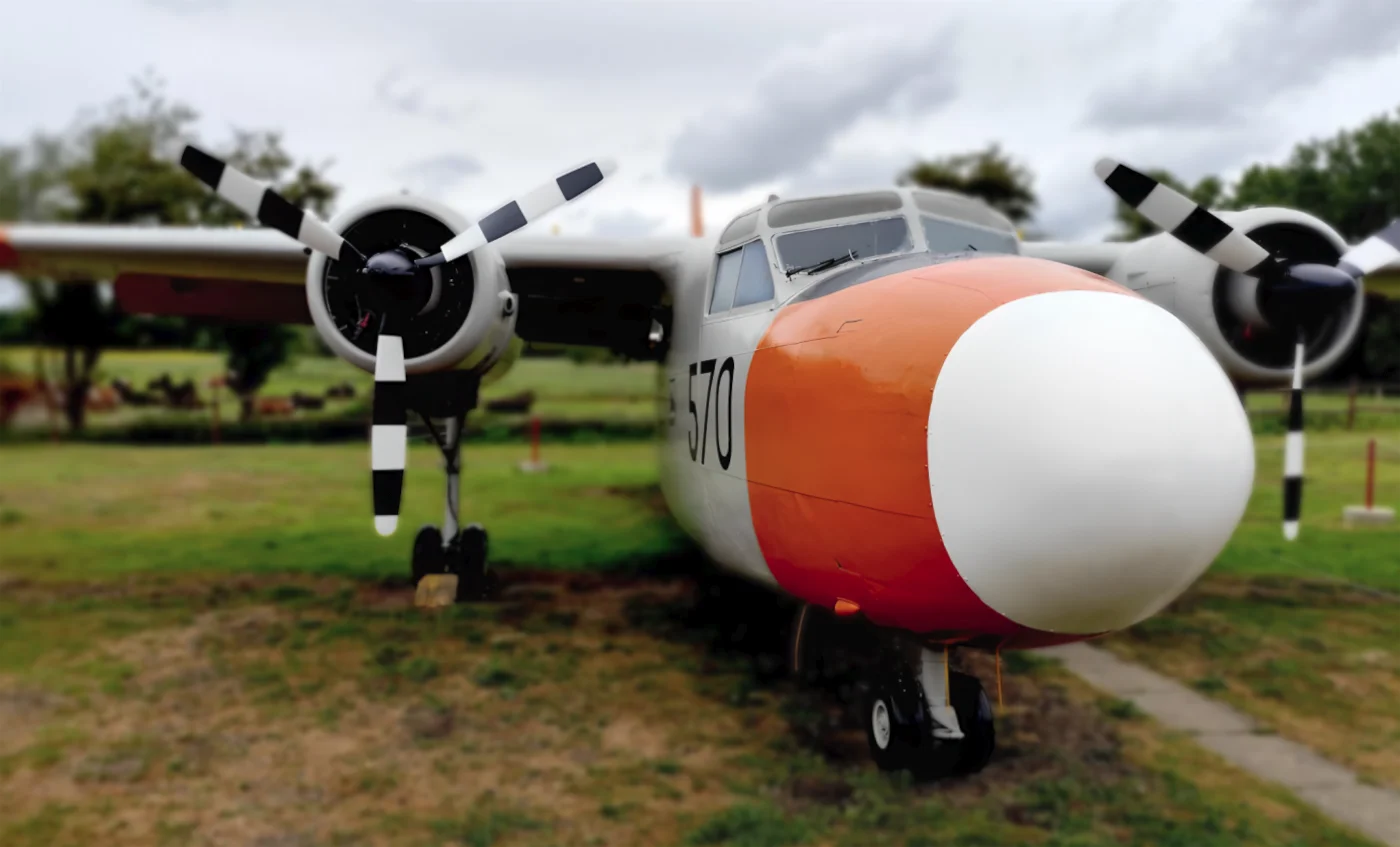
Hunting Percival
Sea Prince
Manufacturer:
Hunting Percival
Model No:
T.1
Registration No:
WF128
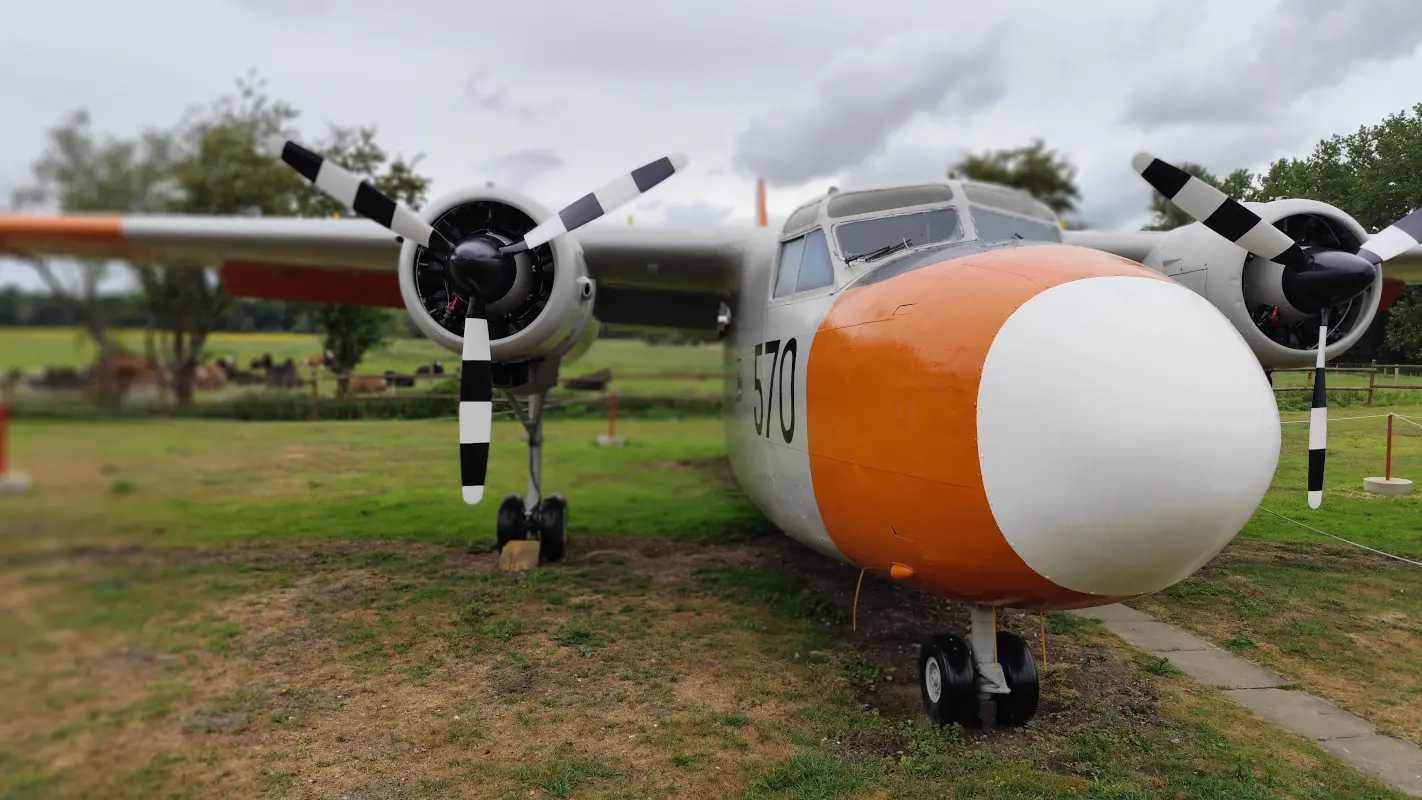
Sea Prince WF128 was one of the Royal Navy’s dedicated multi-engine trainers, operated by the Fleet Air Arm in the post-war period. Assigned to Royal Naval Air Station (RNAS) Culdrose, 750 Squadron, WF128 served until retirement in 1976. Later used as a maintenance airframe at RAF Honnington, WF128 arrived at the museum in 1981.
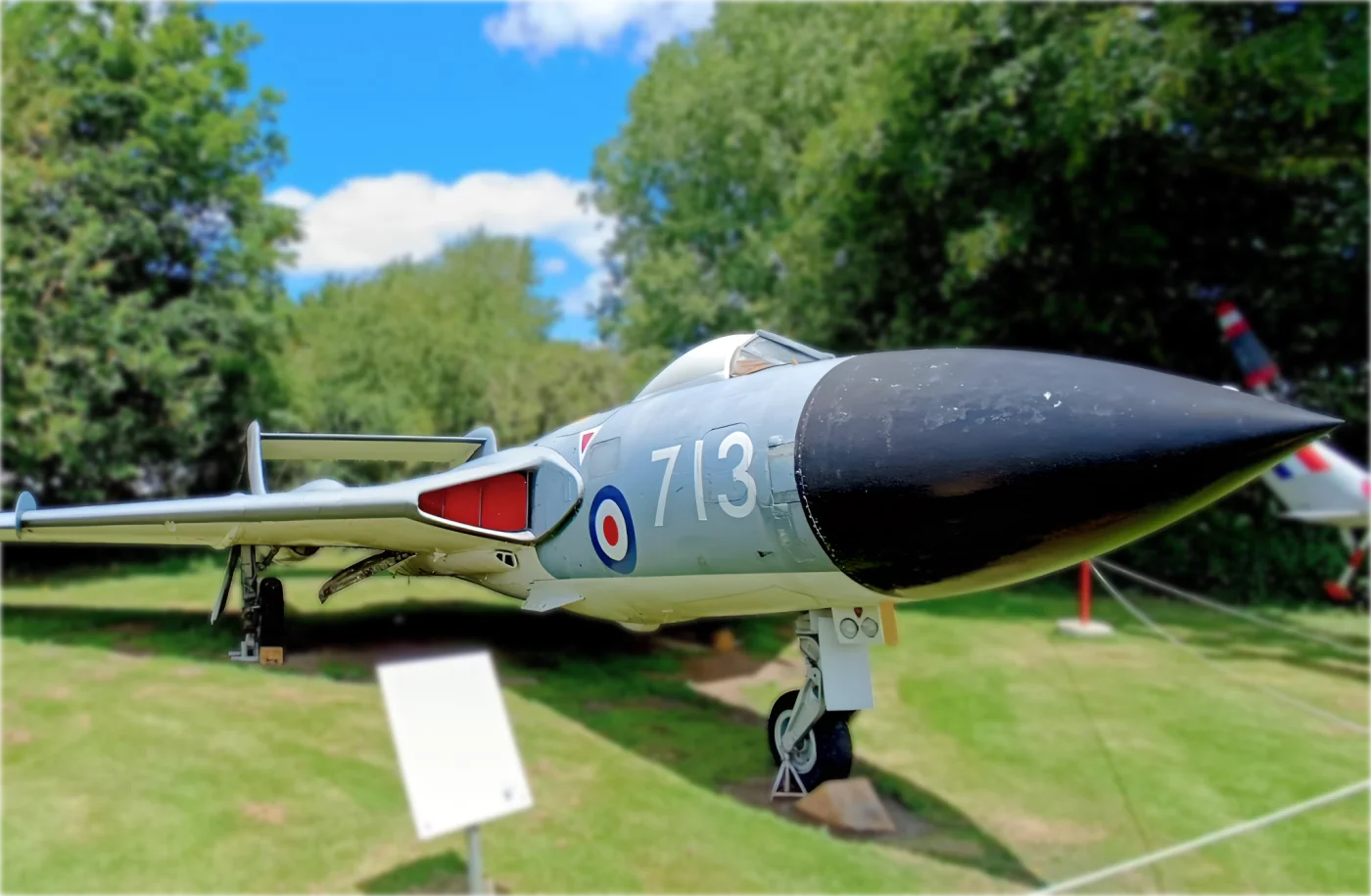
De Havilland
Sea Vixen
Manufacturer:
De Havilland
Model No:
FAW.1
Registration No:
XJ482
This was the ninth production aircraft built at Christchurch and went to 700Y Flight at Yeovilton in November 1958. The aircraft returned to the factory in February 1959 and was prepared for cold chamber tests, it was delivered to Vickers, then to 7668 Flight at Yeovilton. It was sometimes lead aircraft in the stations aerobatic team “Fred’s Five” until February 1967.
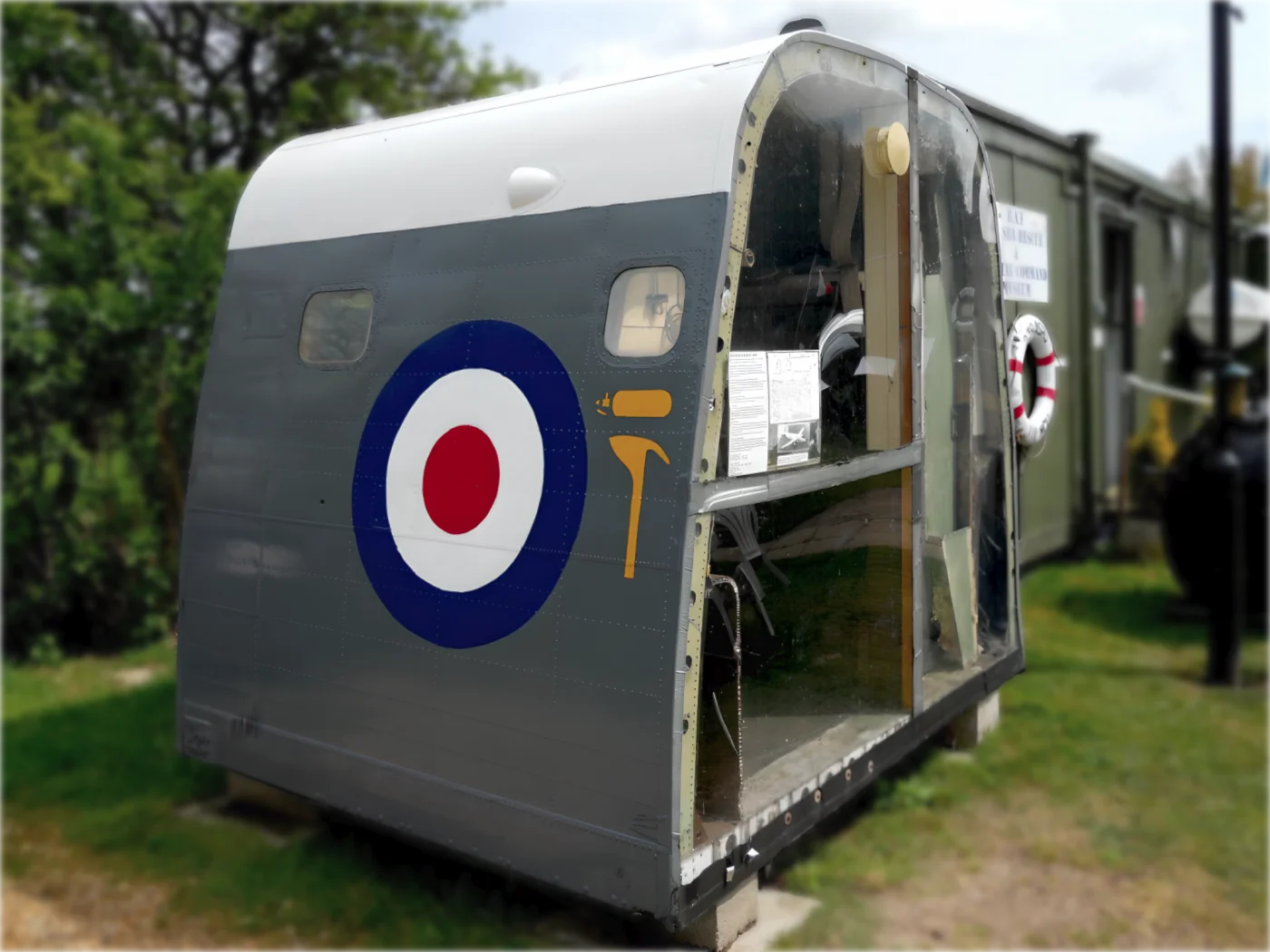
Avro
Shackleton
Manufacturer:
Avro
Model No:
MR.3/3
Registration No:
WR971
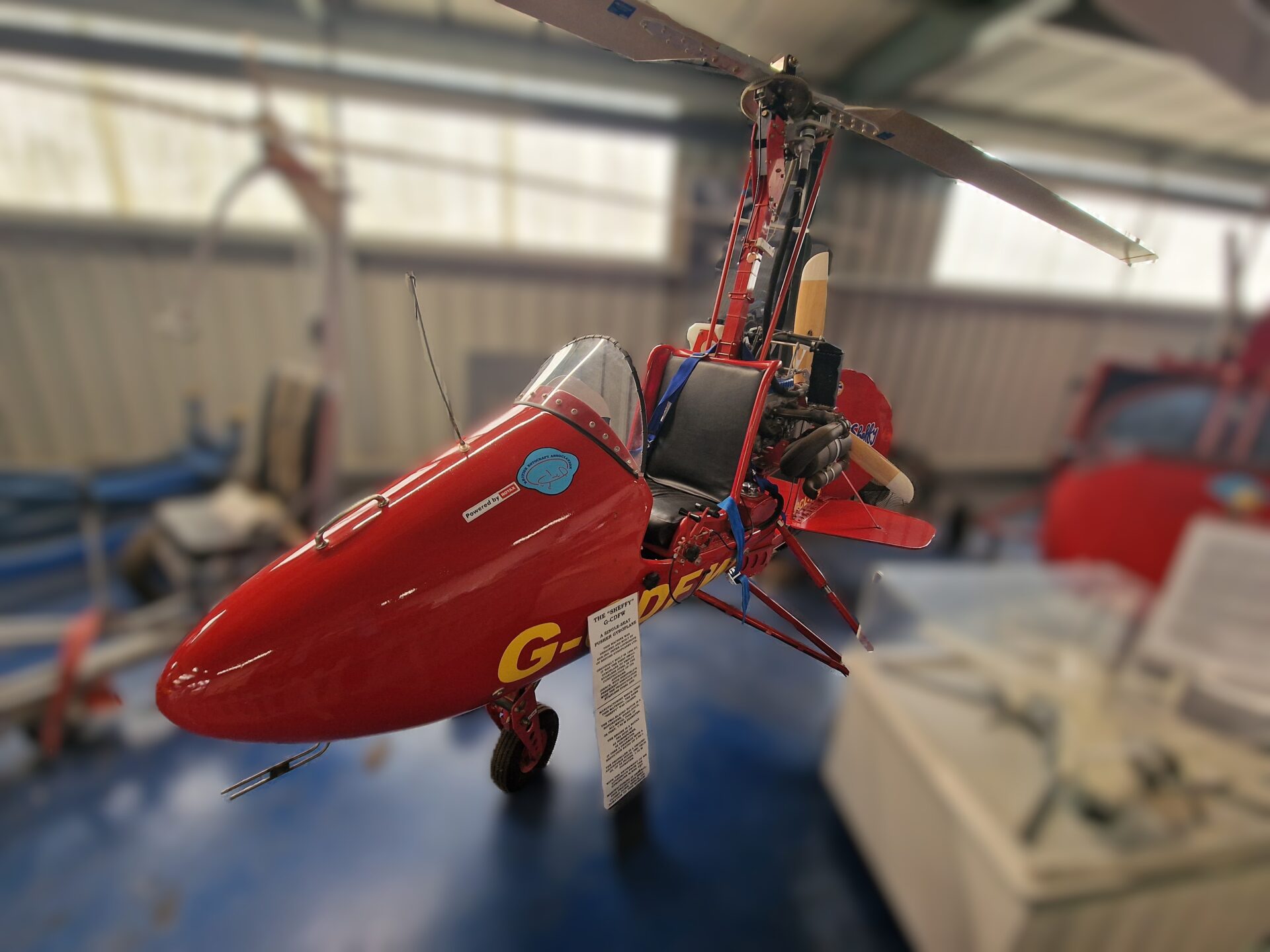
Lovegrove
Sheffy
Manufacturer:
Lovegrove
Model No:
n/a
Registration No:
G-CDFW
The Sheffy was designed and built by Peter Lovegrove in 1996/7. It incorporated stainless steel in its manufacture and the name 'Sheffy' pays tribute to Sheffield, the source of the stainless steel. Peter donated the autogyro to the museum on his retirement and closure of his company in 2010.
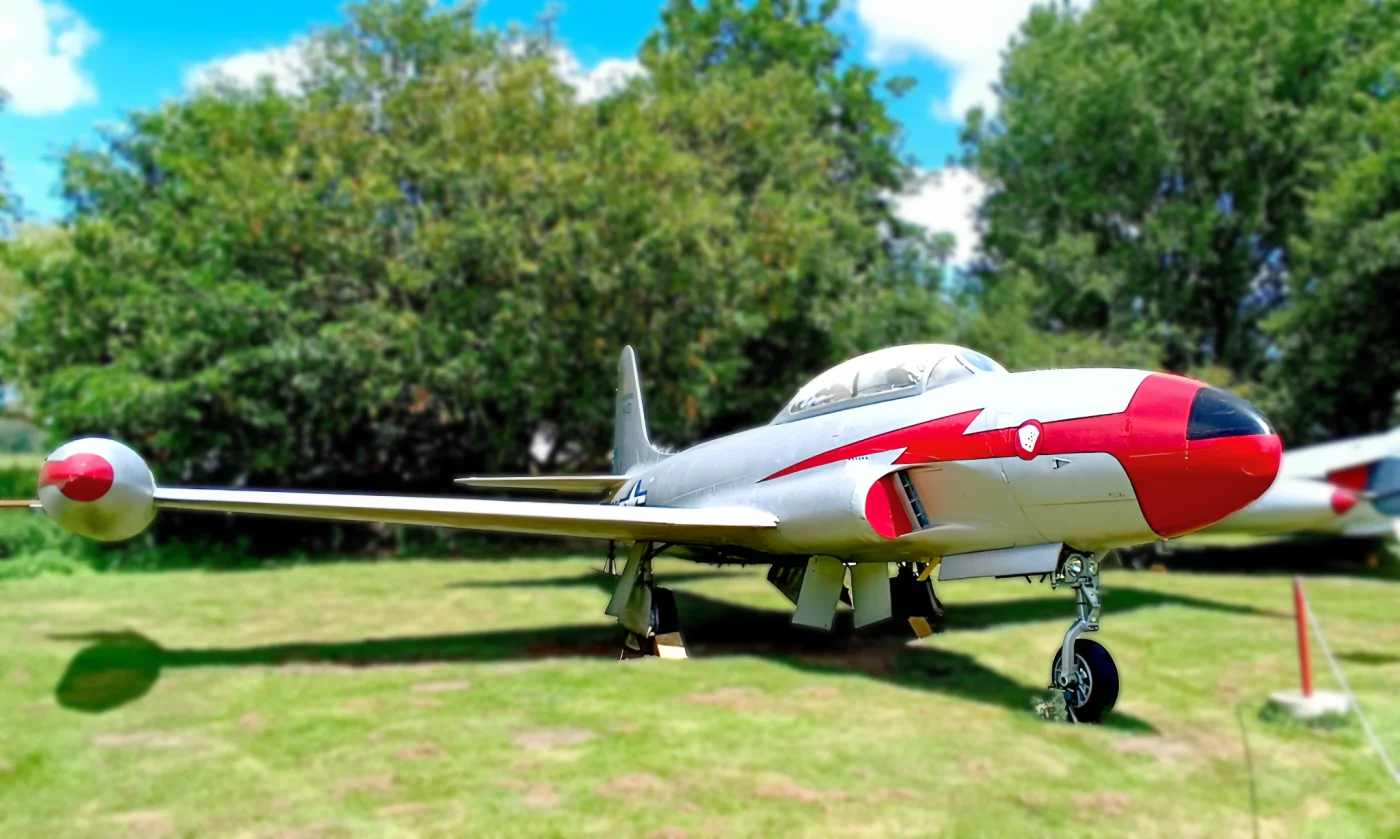
Lockheed
Shooting Star
Manufacturer:
Lockheed
Model No:
T33-A
Registration No:
55-443
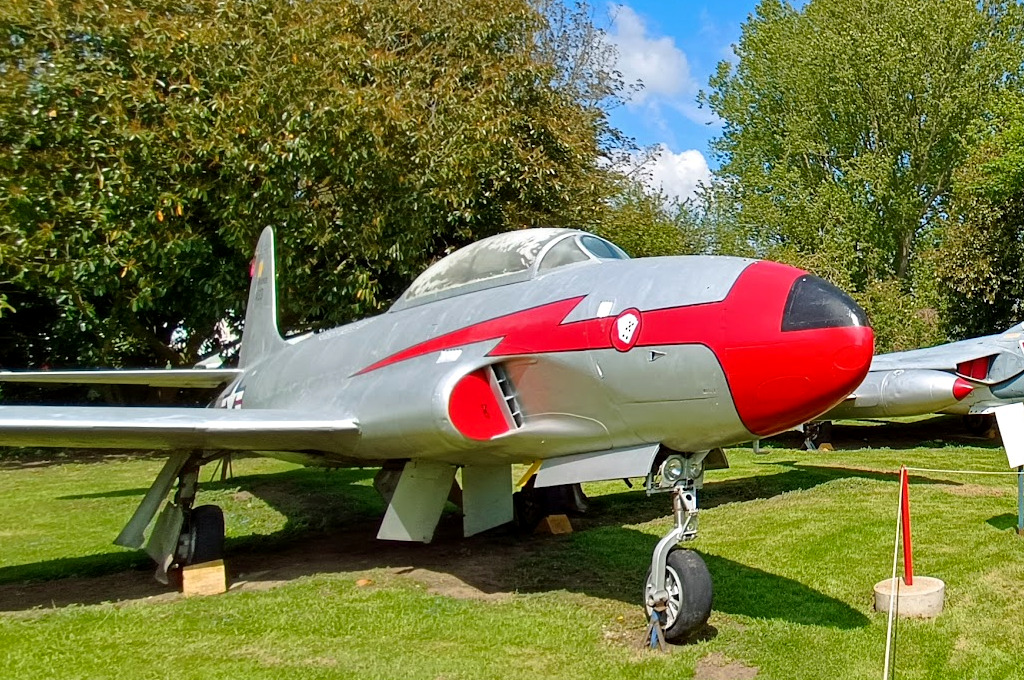
This aircraft served with the 20th Fighter-Bomber Group (FBG) and 803rd Fighter-Bomber Group, United States Airforce. Delivered and in service mid 1950's. Under the Mutual Defense Aid Programme (MDAP) this T-33A was transferred to to the French Air Force from 1956 to 1978.
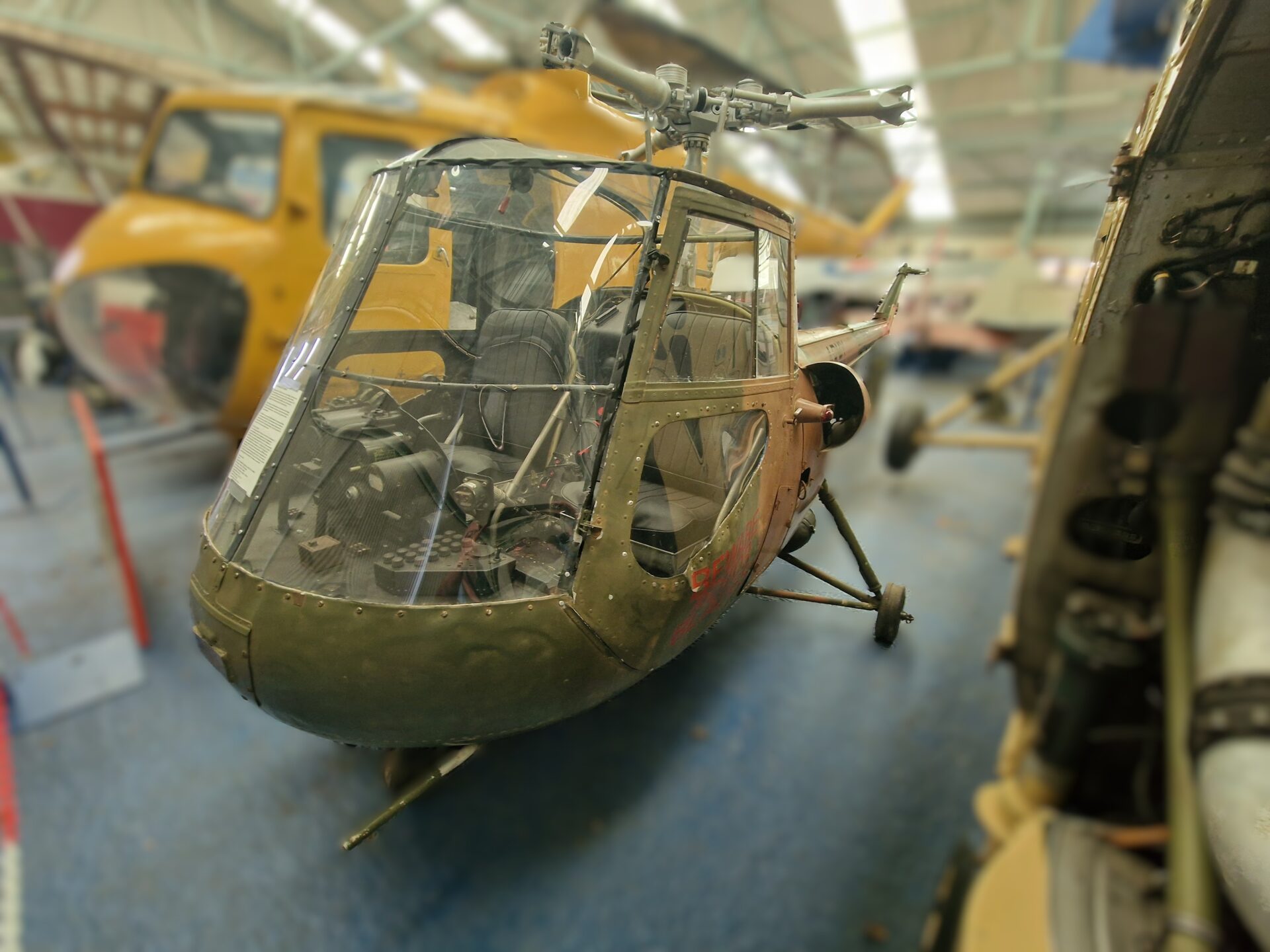
Saro
Skeeter
Manufacturer:
Saro
Model No:
AOP.12
Registration No:
XL739
Saunders-Roe Ltd (SARO) on the Isle of Wight built these 2 seater training and scout helicopters from 1957. They served until 1967. This airframe was placed on long term loan to Flixton in 2026 from the Norfolk Tank Museum. Signficant restoration was undertaken to get it ready for display.
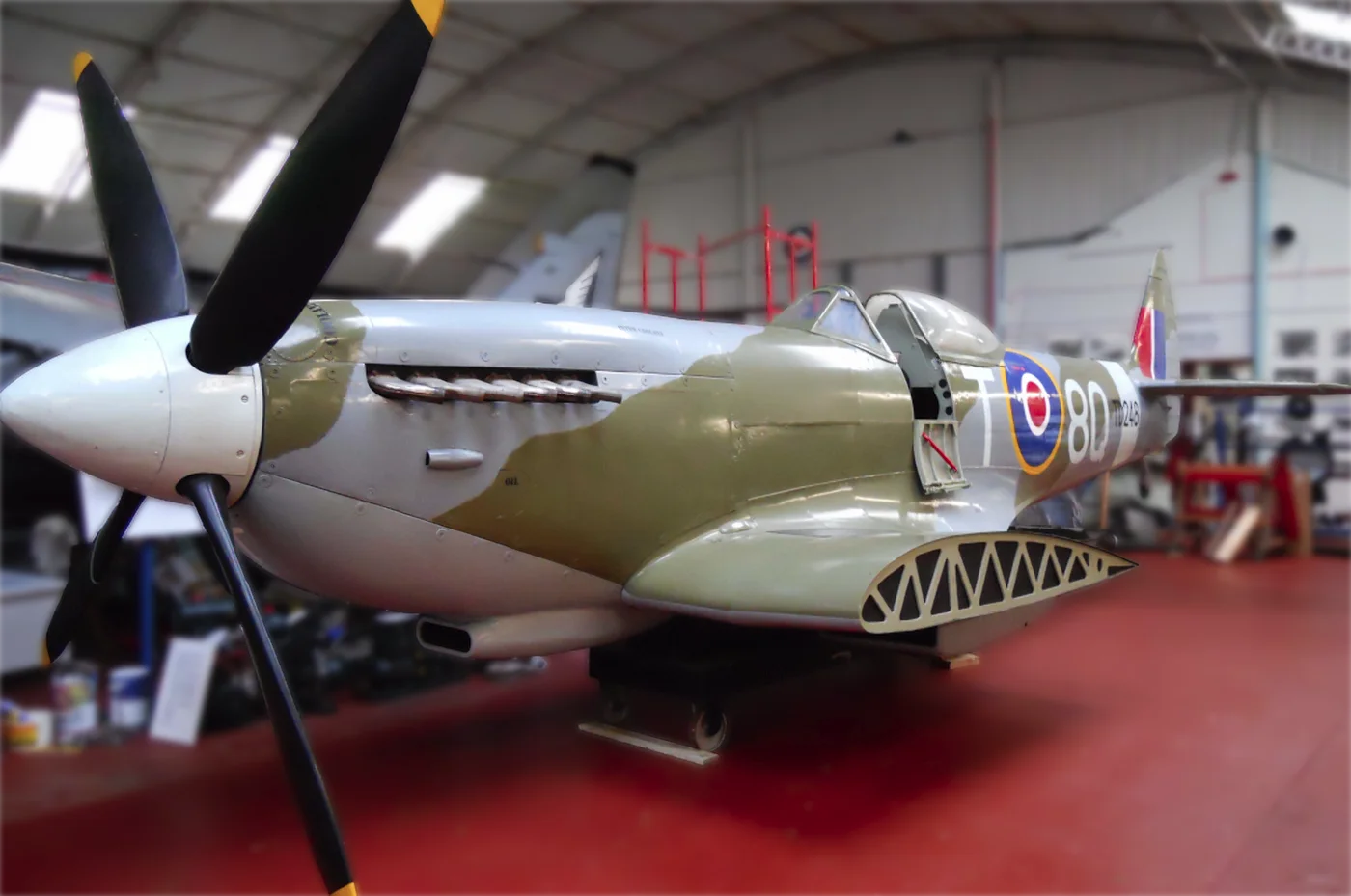
Vickers Supermarine
Spitfire
Manufacturer:
Vickers Supermarine
Model No:
LFXVIe
Registration No:
TD248
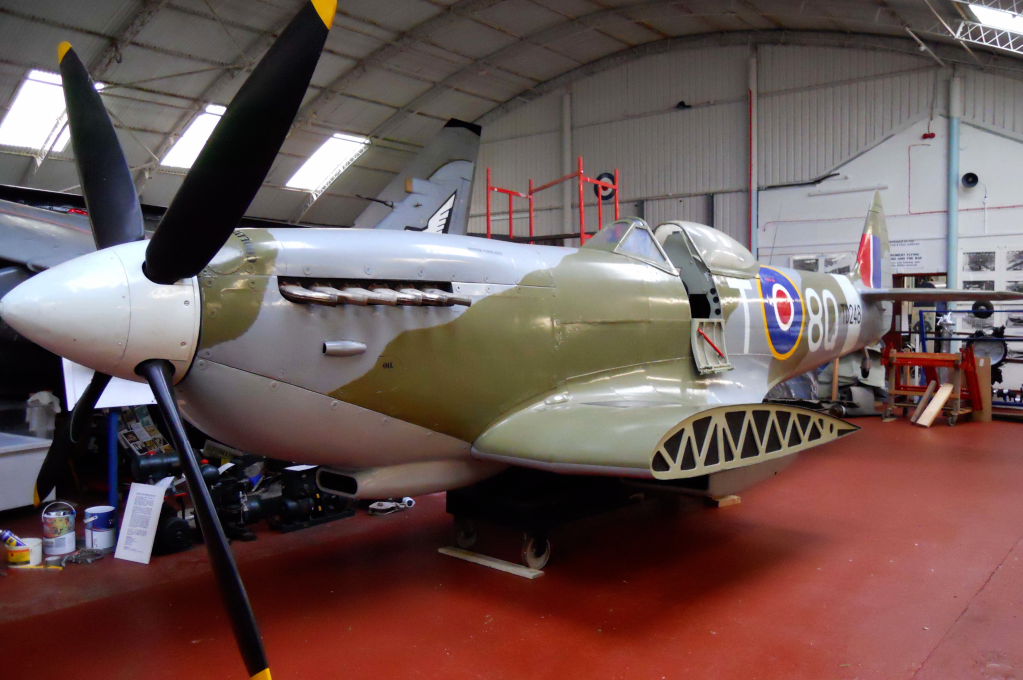
In July 1945, TD248 joined 695 Squadron on anti-aircraft co-operation duties at Bircham Newton, Norfolk, moving to nearby Horsham St Faith in August 1945. Retired in May 1954 it was transferred to 610 Squadron RAuxAF at Hooton Park, Cheshire as a parade quardian. TD248 was one of five Spitfires released to Historic Flying Ltd. in 1988 by the MOD. TD248 was reskinned and rebuilt to full flying condition. The example at Flixton is the original skin and components of TD248 after it had been declared a, "non-effective airframe".
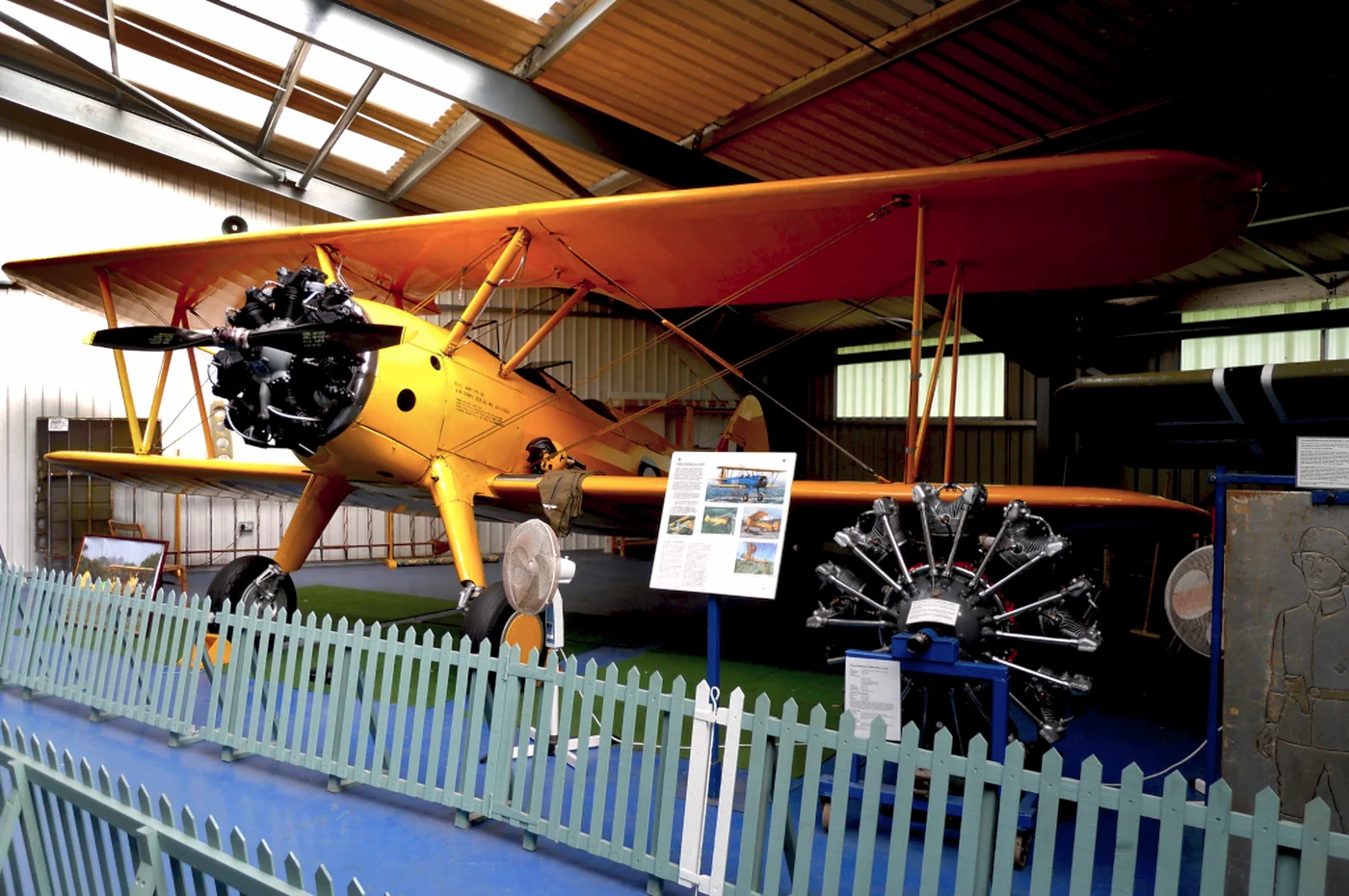
Boeing
Stearman
Manufacturer:
Boeing
Model No:
PT-27 KAYDET
Registration No:
42-15662/RAF-RCAF FJ801
Composite, fuselage frame of FJ801 plus components from other Stearman
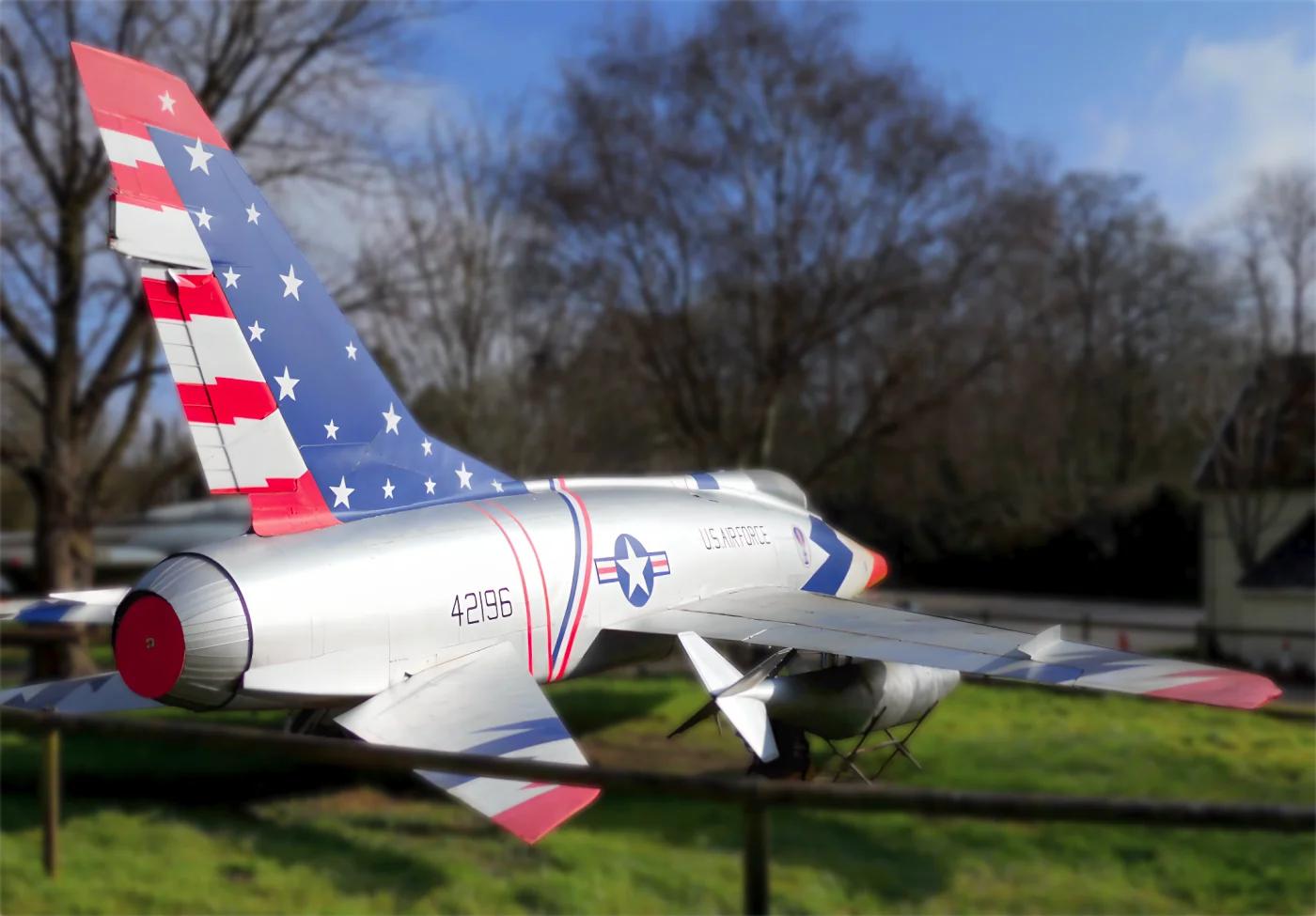
North American
Super Sabre
Manufacturer:
North American
Model No:
F-100D
Registration No:
54-2196
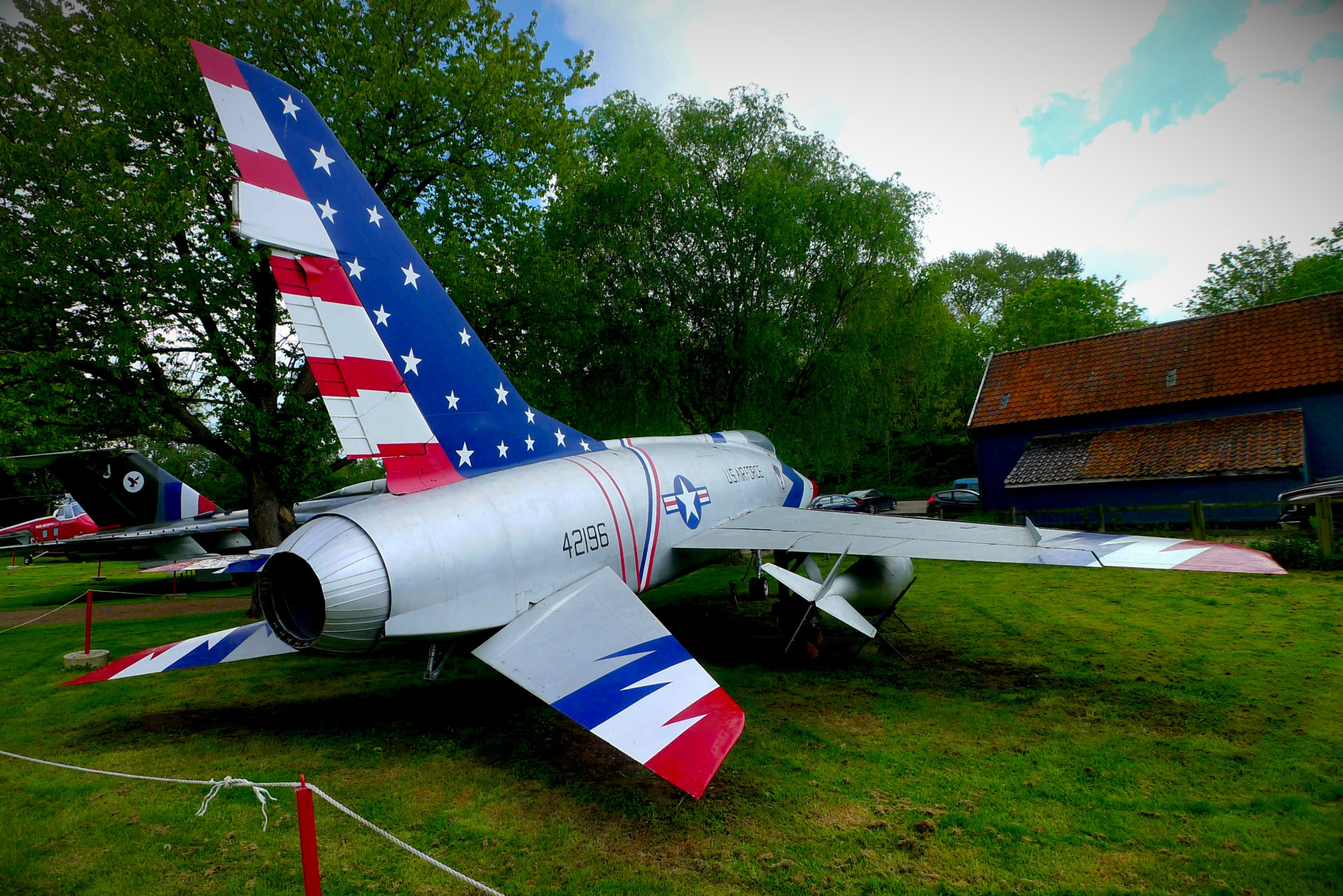
This aircraft served with the USAF circa 1954 and then the French Air Force. Assigned to the 45th Day Squadron at Sidi Slimane in French Morocco, then the 48th Fighter Bomber Wing then with EC2/11 Vosges’ and then EC4/11 ‘Jura’ in Dibouti. The aircraft is displayed in the colours of the US “Skyblazers” aerobatic team, serial number 42196.
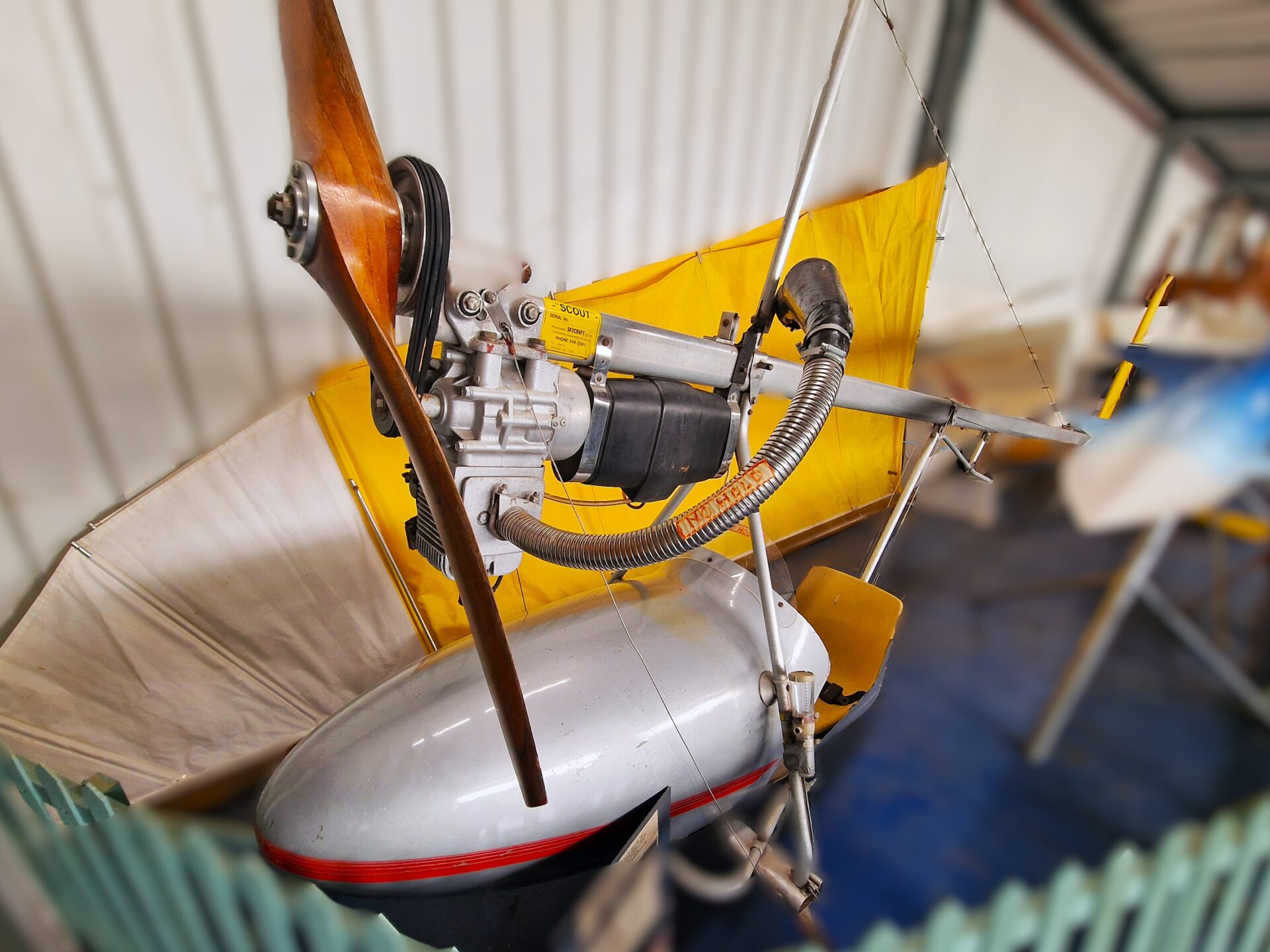
Skycraft/Flylite
Super Scout
Manufacturer:
Skycraft/Flylite
Model No:
250
Registration No:
G-MBUD
The Super Scout 250 was an Australian designed microlight. It was offered for sale in the UK from the late 1970s at a price of £2,995 (plus VAT).
Bristol
Sycamore
Manufacturer:
Bristol
Model No:
HR.14
Registration No:
XG518
The Sycamore was developed from the Bristol Type 171 Mk1 first flown in July 1947 and was the first British-designed helicopter to go into service with the RAF. This aircraft was equipped for air-sea rescue duties and initially assigned to the Middle East Air Force.
Bristol
Sycamore
Manufacturer:
Bristol
Model No:
HR.14 (cockpit flight simulator)
Registration No:
XG523
The HR.14 was the major production variant of the Sycamore and the RAF received around 90. The aircraft joined the Joint Experimental Helicopter Unit (JEHU) at Middle Wallop in January 1956 and was used for navigation, homing and landing aids training, as well as for casevac (casualty evacuation) and troop carrying. It was coded 5 and later V. It is now configured as a helicopter simulator, do you think you could fly it?
Beagle
Terrier
Manufacturer:
Beagle
Model No:
T10
Registration No:
VX123/ G-ARLP
Originally built as an Auster AOP.6 (VX123). Following it's sale by the MOD in 1961 it was converted by the manufacturer into a Beagle Terrier T.10 (G-ARLP)
MBA
Tiger Cub
Manufacturer:
MBA
Model No:
440
Registration No:
G-MJSU
Few Tiger Cubs were built and this example was the sixth one registered, on the 2nd February 1983 to Mr Bob Adams. Bob flew it from a grass strip near East Dereham. Its Certificate of Airworthiness expired in 1986 and the microlight never flew again. Bob donated it to the museum in 2002.
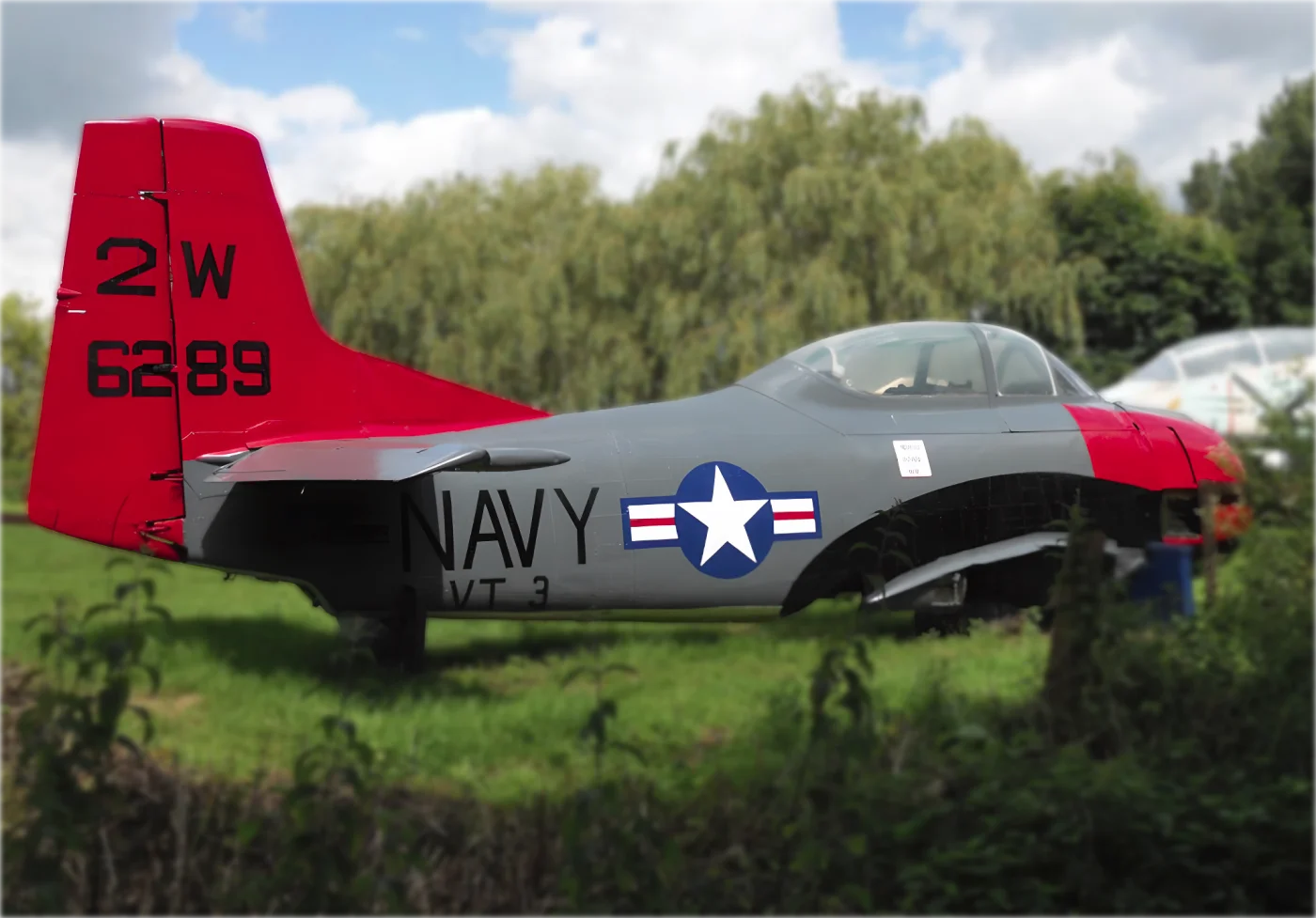
North American
Trojan
Manufacturer:
North American
Model No:
T28C
Registration No:
14629 / FG289
T-28C BuNo 14629 began its career in 1957 with the United States Navy. It initially served in the basic carrier qualification role, providing advanced pilot instruction including carrier landing practice aboard the USS Lexington (CV-16). After retirement, the aircraft was transferred to the Congo Air Force, based in Léopoldville during the Congo Crisis employed in a light attack and counter-insurgency role. When the Congo became Zaire it was stationed at Kamina airbase taking part in combat operations.
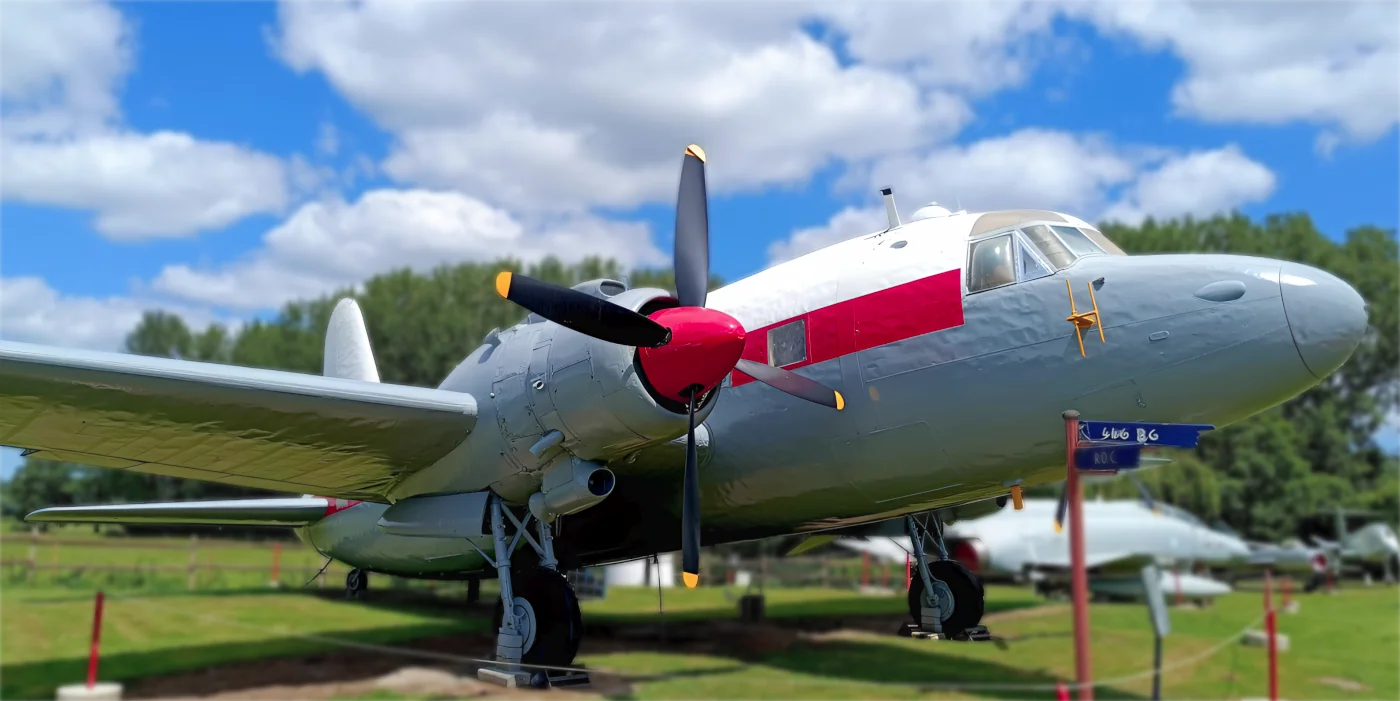
Vickers
Valetta
Manufacturer:
Vickers
Model No:
C.2
Registration No:
VX580
Built in Weybridge during 1950, VX580 saw service as a VIP transport based in Malta, Egypt and Cyprus. It was retired in 1968 and arrived at the museum in 1982.
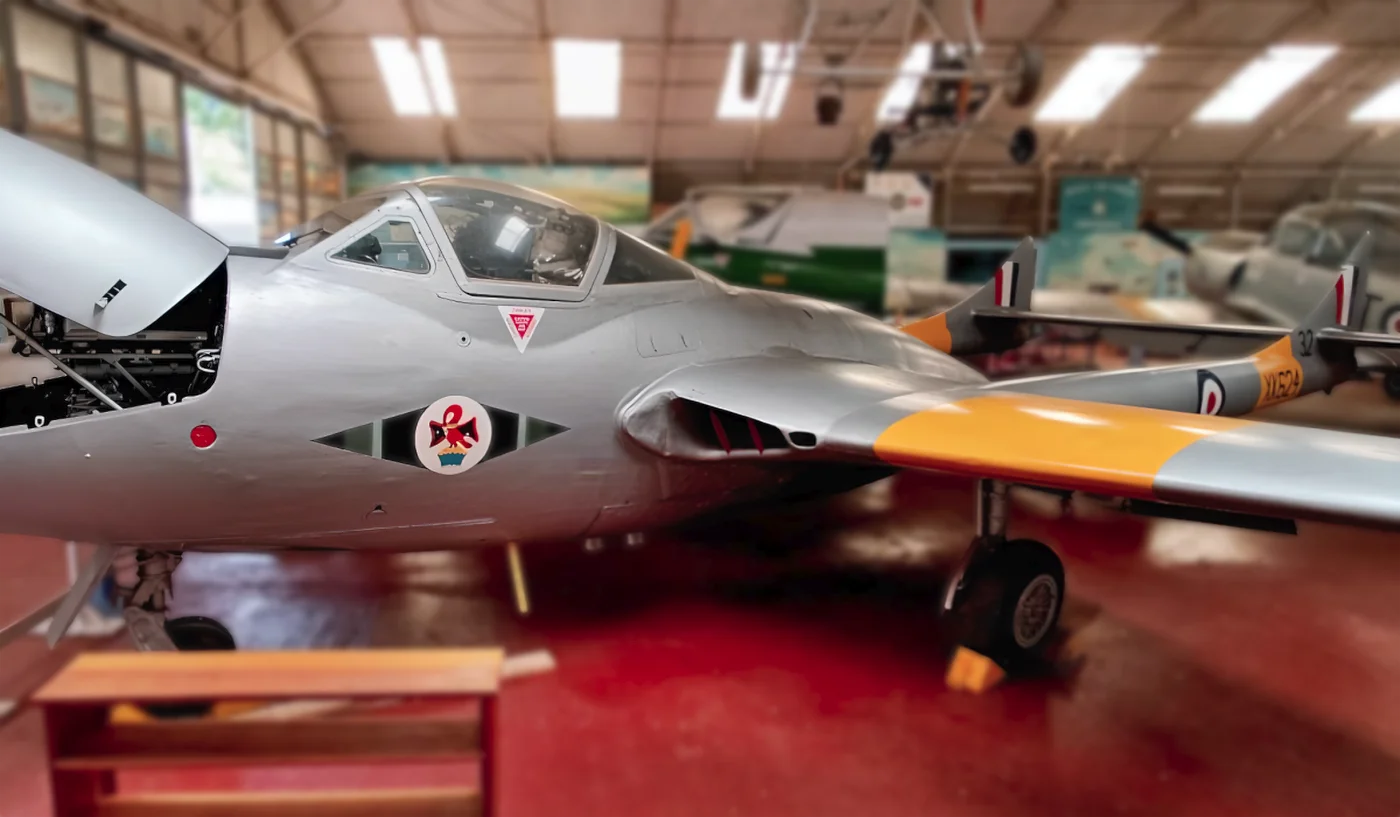
De Havilland
Vampire
Manufacturer:
De Havilland
Model No:
T.11
Registration No:
XK624
XK624 entered service in July 1956 with 7 FTS at Linton-on-Ouse. It was the last remaining T.11 in service displaying alongside a Meteor T.7 as the RAF Vintage Pair display team. The airframe was purchased by Flixton in 1980.
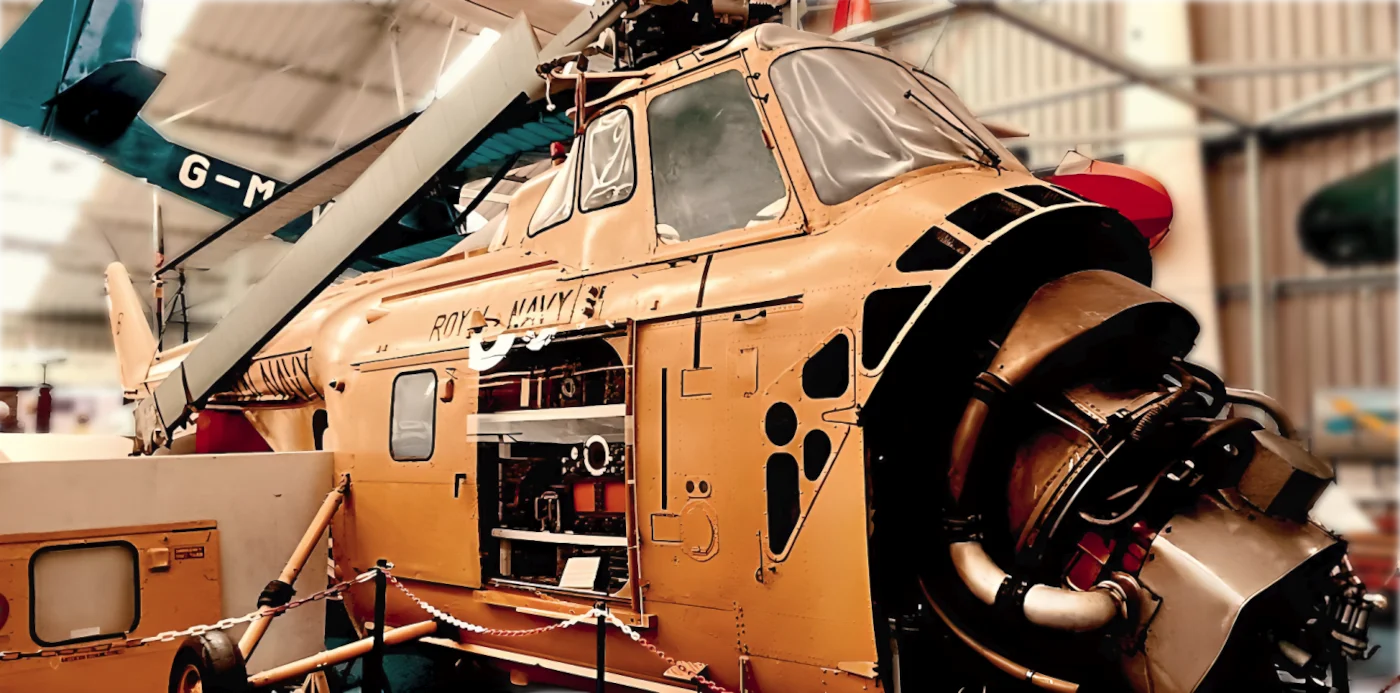
Westland
Whirlwind
Manufacturer:
Westland
Model No:
HAS.7
Registration No:
XN304
The Whirlwind was the British-built version of the Sikorsky S-55. One of 89 HAS.7 built. Used by the Royal Navy for anti-submarine duties and the Royal Marines as transports. The Navys HAS.7 (H=Helicopter, AS=anti submarine) variant was specially equipped for ASW operations. This aircraft first flew in December 1959 and joined 848 Squadron of the Royal Navy for Commando operations. It arrived at Flixton in 1982.
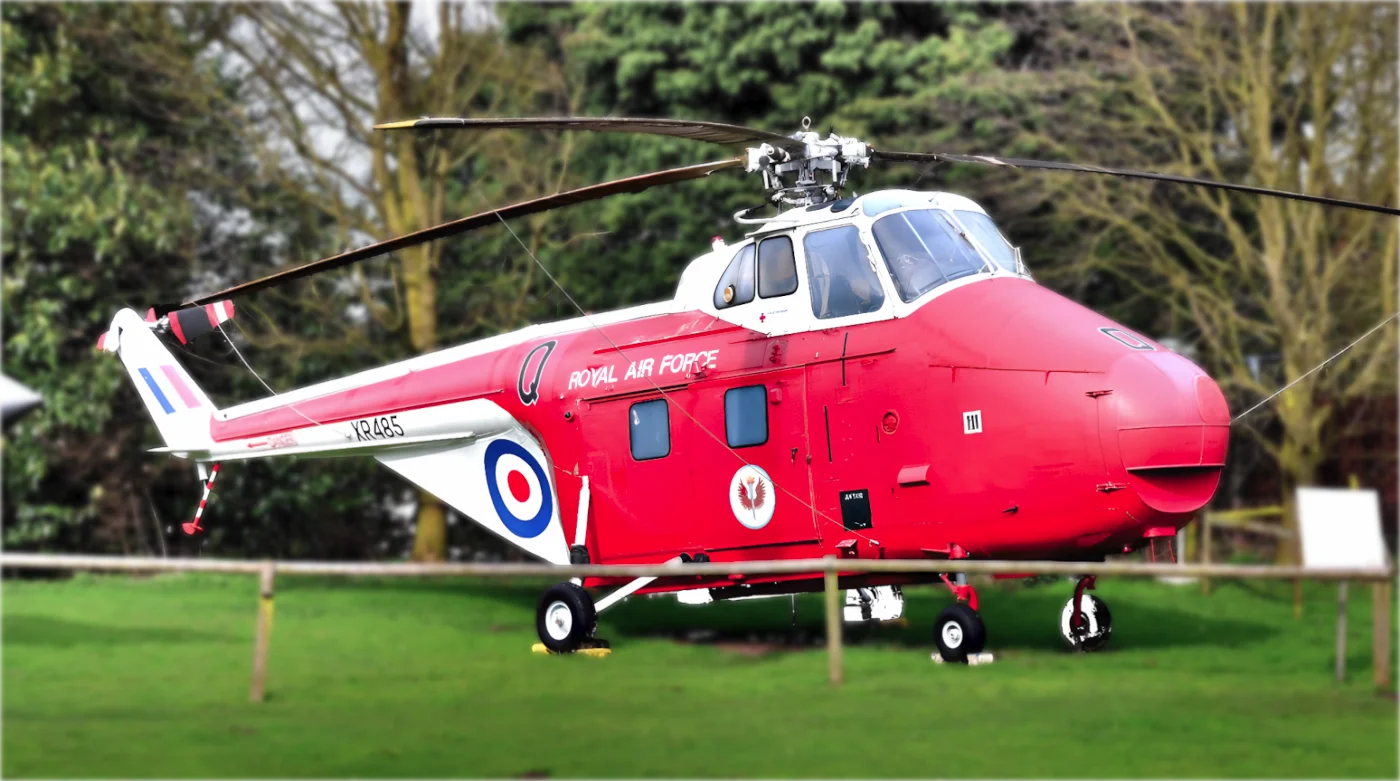
Westland
Whirlwind
Manufacturer:
Westland
Model No:
HAR.10
Registration No:
XR485
Built by Westland Aircraft, XR485 was part of the final and most capable iteration of the Whirlwind series. This aircraft made its maiden flight in May 1963 and was displayed at the 1963 París Air Show. XR485 served with the Royal Air Force in the search and rescue (SAR) role from the early 1960s through to the 1980s.
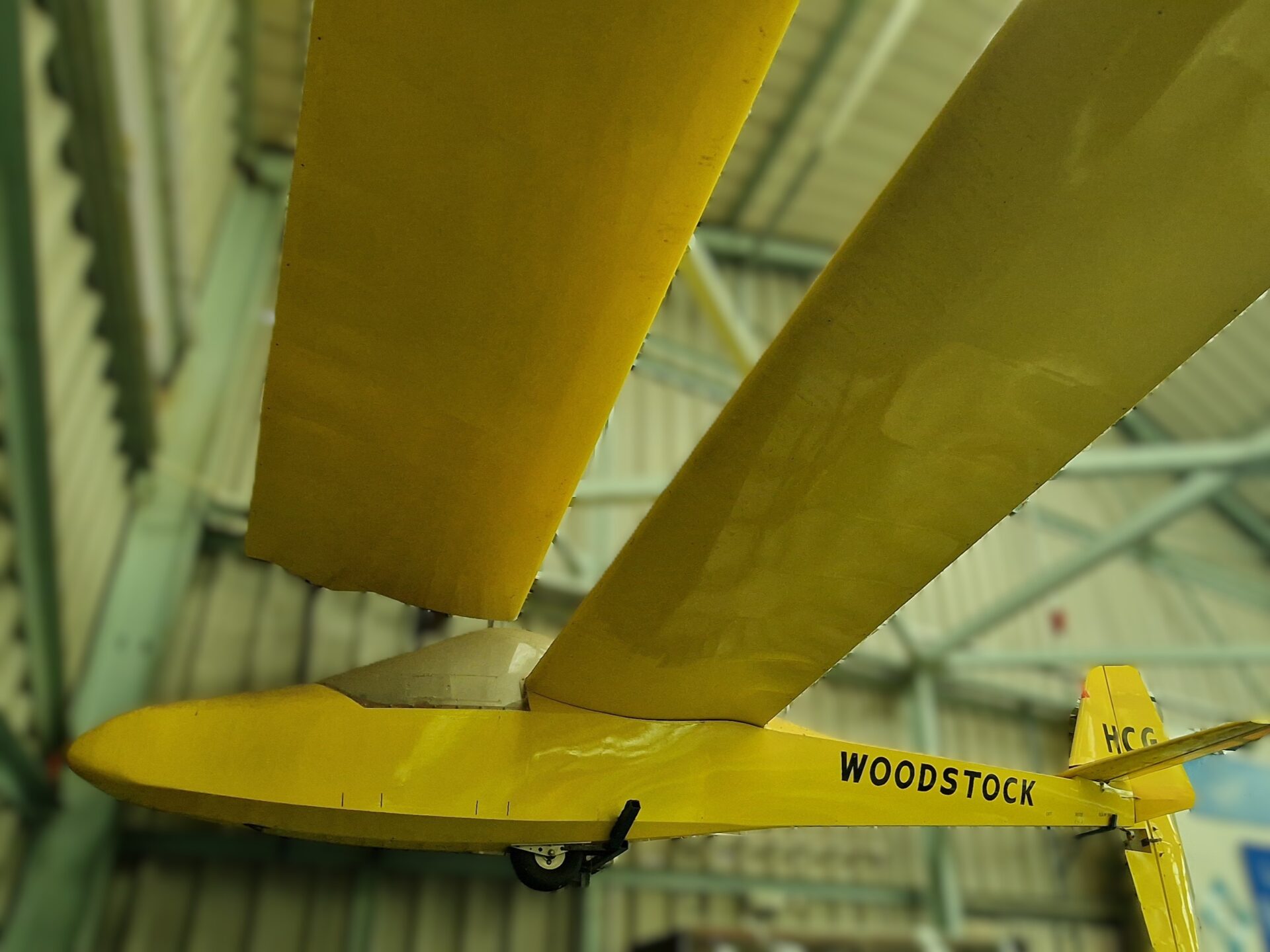
Jim Maupin
Woodstock
Manufacturer:
Jim Maupin
Model No:
n/a
Registration No:
n/a
Hand built from plans, this glider was designed to be built using the cheapest materials available and therefore provided a cheap entrance into the world of gliding.