
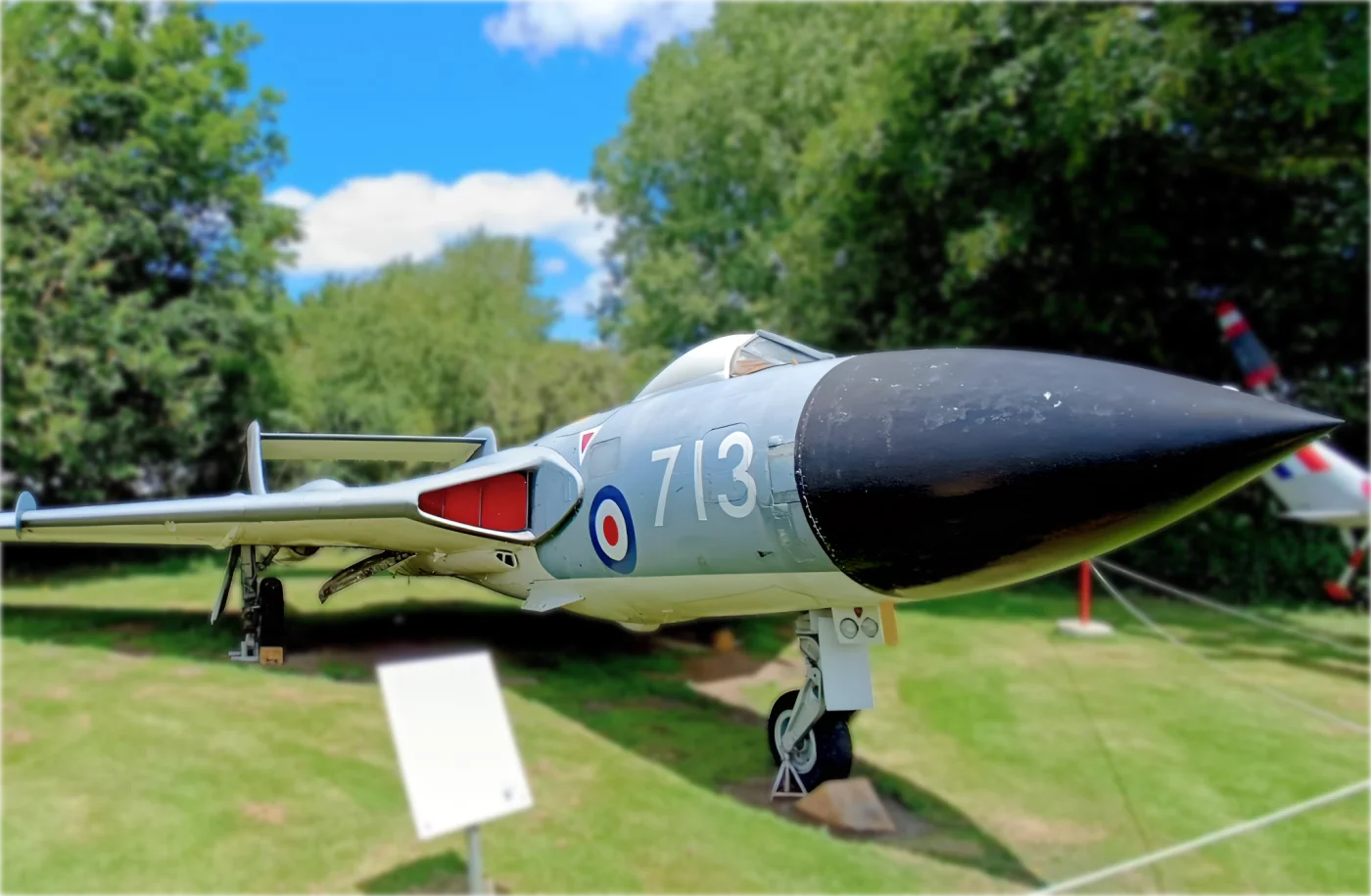
The Sea Vixen’s story is one of ambition, tragedy, perseverance, and ultimately, achievement. From its troubled beginnings to its brief but impactful service life, it embodied the spirit of post-war British aviation – daring, innovative, and uniquely stylish. First proposed in 1946, the prototype DH110 flew in September 1951 but broke up in mid alr at the Farnborough Air Show in 1952, killing the test pilot RAF interest was lost but the Royal Navy had a need for an advanced all-weather fighter so structural changes were made to the second prototype and it flew in September 1954. After acceptance trials, production started the following January and the first fully navalised FAW 1 aircraft flew in March 1957, it progressively replaced the Sea Venom from 1960.
In the late 1950s, a peculiar twin-boom fighter began prowling the decks of Royal Navy aircraft carriers. With its distinctive split tail, bulbous cockpit, and crescent-shaped wings, the de Havilland Sea Vixen cut an imposing figure as one of Britain’s first all-weather jet interceptors designed for carrier operations.
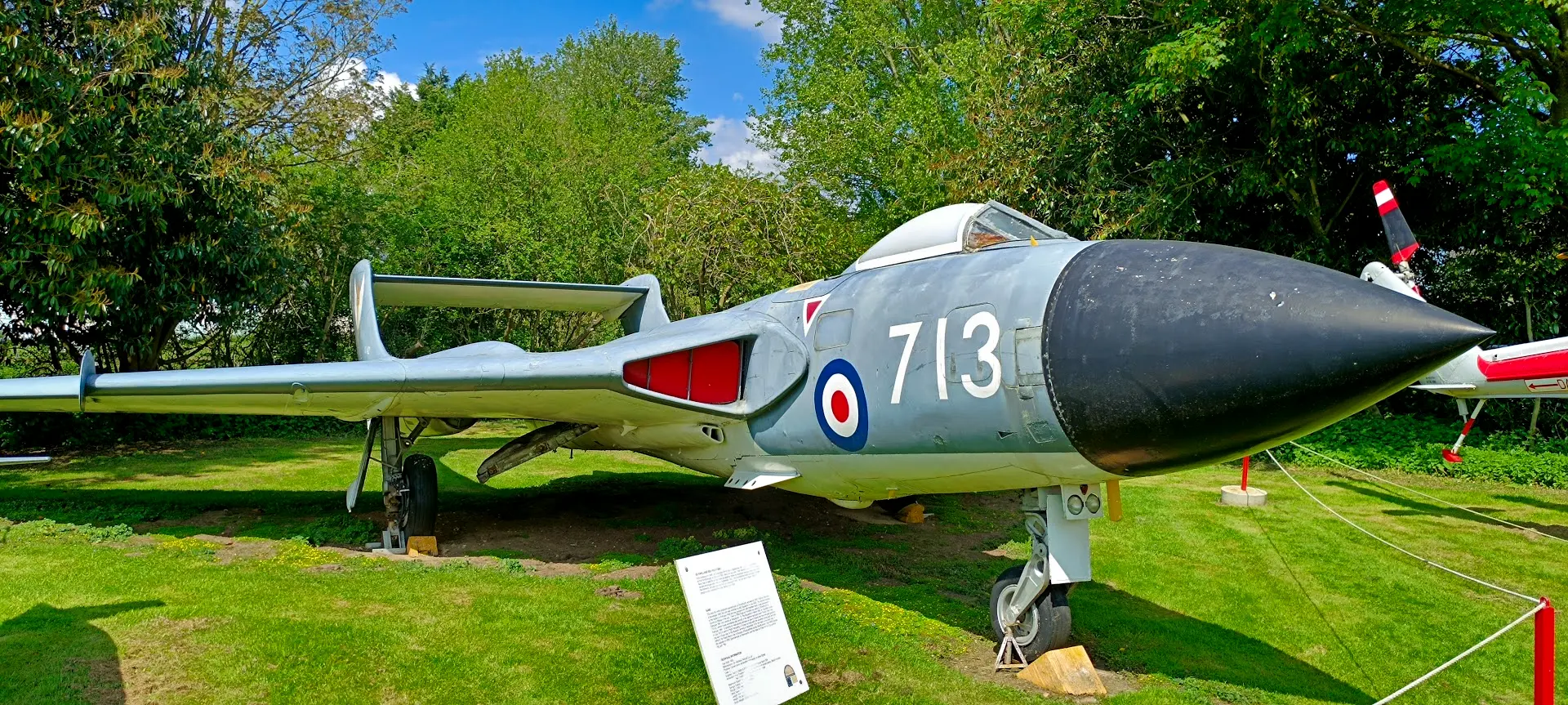
Climbing into the Sea Vixen’s cockpit was like entering another world. Unlike most fighter aircraft of the era, the pilot sat alone on the left side of the fuselage in a streamlined compartment. To the right, in a separate sealed compartment nicknamed the “coal hole,” sat the observer/radar operator. This unconventional arrangement allowed for a more aerodynamic nose cone but meant the two crew members could only communicate via intercom.
Firing up the twin Rolls-Royce Avon turbojet engines, you’d feel a surge of raw power as over 22,000 pounds of thrust came to life. The Sea Vixen’s acceleration was blistering, pinning you back in your seat as it leapt off the carrier deck. With its powerful engines and relatively light airframe, it could reach speeds of over 690 mph (1,110 km/h) – not quite supersonic, but impressively fast for a carrier-based aircraft of its time.
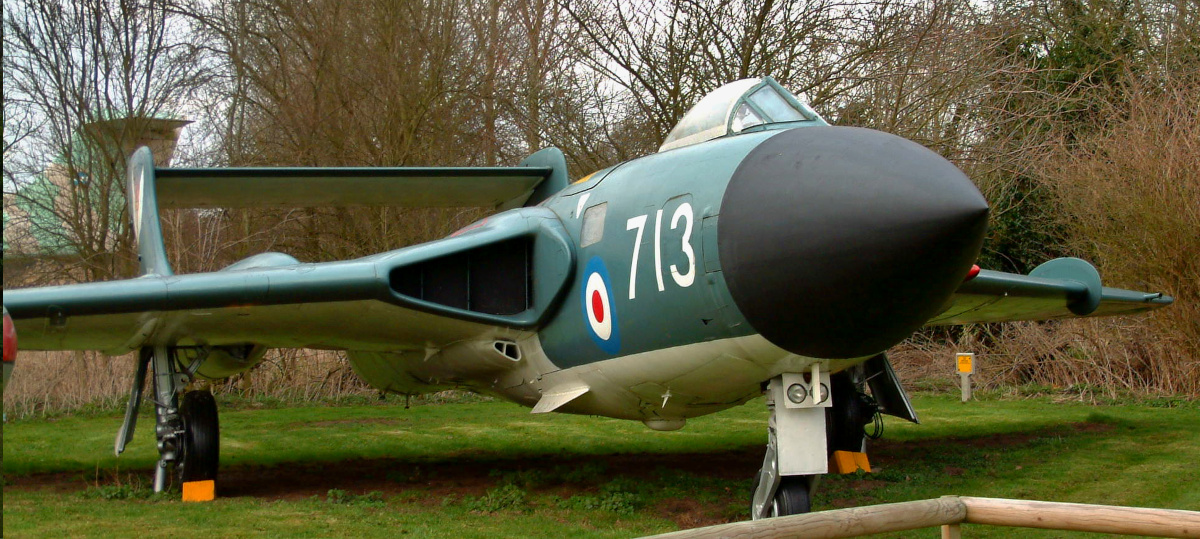
Flying the Sea Vixen was an exhilarating experience that demanded a pilot’s full attention. Its unconventional design made it responsive and agile, but also prone to some quirky handling characteristics. The crescent wing provided excellent low-speed handling for carrier landings, but could lead to some interesting stall behavior if pushed too far. One of the most challenging aspects of flying the Sea Vixen was its notoriously poor visibility. The cockpit’s position on the left side of the fuselage, combined with the aircraft’s nose-high attitude during carrier approaches, meant that pilots had to rely heavily on their observers and deck landing officers for guidance during the critical final moments of landing. Despite these challenges, pilots who mastered the Sea Vixen found it to be a capable and rewarding aircraft to fly. Its powerful radar and advanced weapons systems made it a formidable interceptor, while its carrier-based capabilities gave it a versatility that few other aircraft of its era could match.
In the aftermath of World War II, the Royal Navy recognized the need for a new generation of jet-powered, radar-equipped fighters capable of operating from aircraft carriers. The increasing threat of high-altitude Soviet bombers meant that any new fighter would need to be able to intercept targets in all weather conditions, day or night. The first prototype flew in 1951, showcasing impressive performance but also revealing some stability issues that would need to be addressed. Tragedy struck during the aircraft’s public debut at the 1952 Farnborough Airshow when a DH.110 prototype disintegrated mid-flight, killing both crew members and 29 spectators. This disaster nearly derailed the entire project, but de Havilland persevered, making significant structural improvements to address the issues that had led to the crash. Despite the setback, the potential of the design was clear, and in 1955, the Royal Navy selected a navalised version of the DH.110 as its new fleet defender. Renamed the Sea Vixen, the aircraft entered service in 1959 as the FAW.1 (Fighter All-Weather, Mark 1) variant.
The Sea Vixen FAW.1 was a technological marvel for its time. It was the first British fighter to be completely equipped with guided missiles and rockets, carrying no gun armament. Its primary weapons were four de Havilland Firestreak air-to-air missiles, supplemented by an array of unguided rockets and bombs for ground attack missions. At the heart of the Sea Vixen’s capabilities was its advanced radar system. The AI.18 radar, operated by the observer in the right-hand cockpit, gave the aircraft true all-weather interception capabilities. This, combined with its high speed and good high-altitude performance, made the Sea Vixen a potent threat to any potential intruders in British airspace.
The aircraft’s twin-boom design, while unconventional, provided several advantages. It allowed for a more compact airframe, crucial for carrier operations, while also providing excellent stability at high speeds. The booms also housed the aircraft’s fuel tanks, giving it a respectable range for a carrier-based fighter of its era.
In service, the Sea Vixen proved to be a versatile and capable aircraft. Its primary role was fleet air defense, protecting Royal Navy carrier groups from potential Soviet bomber attacks. However, it also saw use in ground attack roles, particularly during operations in Tanganyika (modern-day Tanzania) in 1964, where it provided air support during a mutiny. The Sea Vixen’s most significant operational use came during the Beira Patrol, a naval blockade of Rhodesia (now Zimbabwe) from 1966 to 1975. Sea Vixens flew countless patrol missions, monitoring shipping traffic and enforcing the embargo against the breakaway British colony.
Despite its impressive capabilities, the Sea Vixen was not without its flaws. Its complex systems made it maintenance-intensive, and its unconventional layout presented challenges for both pilots and deck crews. The lack of ejection seats for both crew members (the observer had to manually bail out in an emergency) was a particular concern, especially given the aircraft’s sometimes unpredictable handling characteristics.
The Sea Vixen’s career with the Fleet Air Arm was relatively short-lived. By the late 1960s, advances in aircraft design and changing strategic priorities were already making it obsolete. The improved FAW.2 variant, introduced in 1964, addressed some of the original model’s shortcomings, but couldn’t forestall the inevitable. The last Sea Vixens were withdrawn from front-line service in 1972, replaced by the more advanced Phantom FG.1.
Despite its relatively brief operational career, the Sea Vixen left an indelible mark on British naval aviation. It represented a crucial transitional phase between the first generation of naval jets and the more sophisticated multi-role fighters that would follow. Its unique design and capabilities made it a true pioneer in many respects.
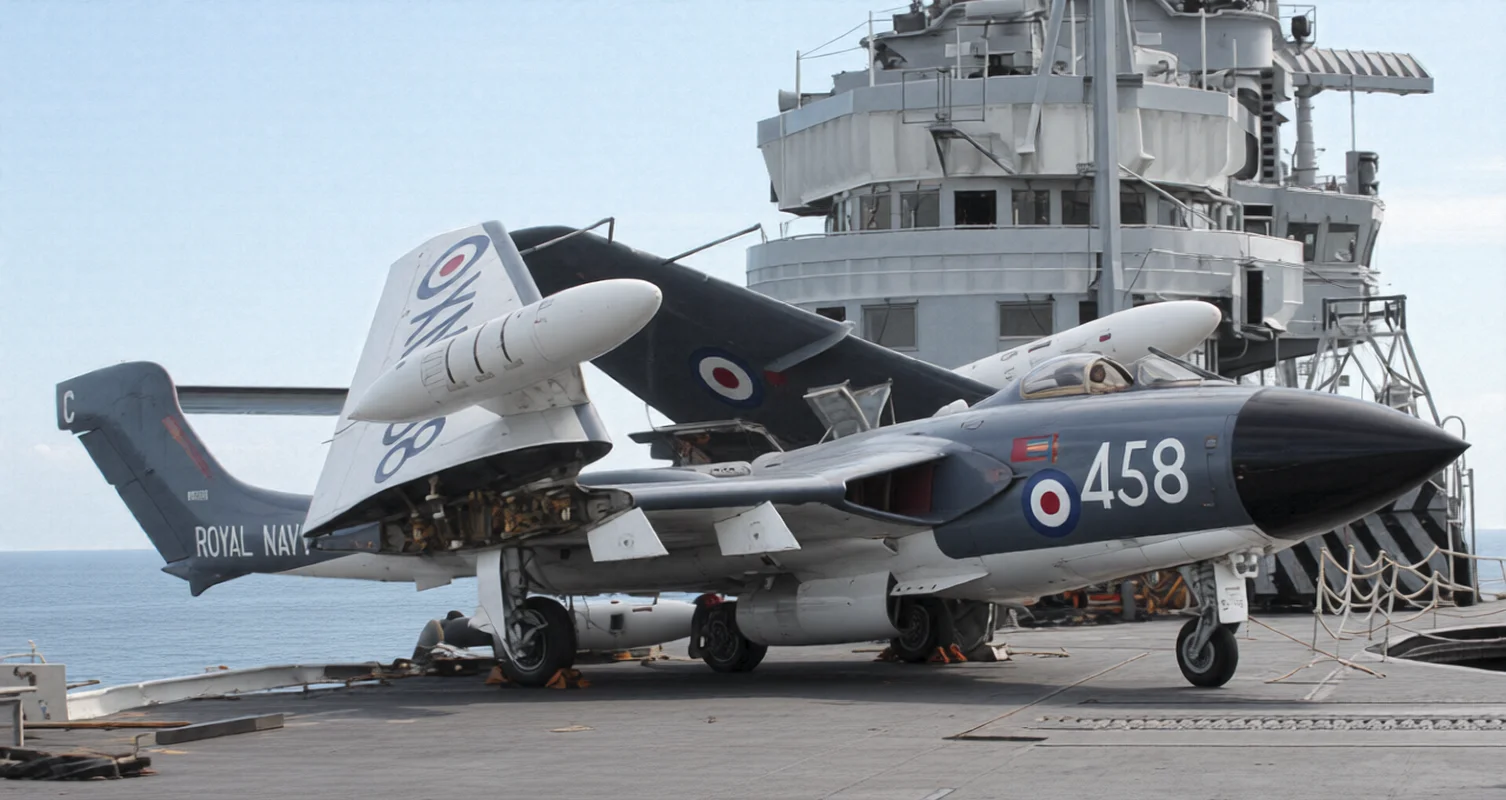
For the pilots and observers who flew it, the Sea Vixen was more than just an aircraft – it was a challenging mistress that demanded respect and skill to master. Many spoke fondly of its responsiveness and the thrill of catapult launches and arrested landings on heaving carrier decks. The unique crew arrangement fostered a special bond between pilot and observer, relying on each other’s skills and trust to operate effectively. One former Sea Vixen pilot recalled, “She was a handful, no doubt about it. That crescent wing could bite you if you weren’t careful. But when you got her right, there was nothing quite like it. Screaming off the deck of a carrier at night, pushing her to the limits – it was exhilarating and terrifying in equal measure.“
The observer’s role was equally crucial and demanding. Sealed in their separate cockpit, they were responsible for operating the radar, navigating, and coordinating weapons systems. One former observer noted, “You had to have complete trust in your pilot. There you were, unable to see out properly, relying entirely on your instruments and what the pilot was telling you. It was intense, but when you worked well together, it was like a well-oiled machine.”
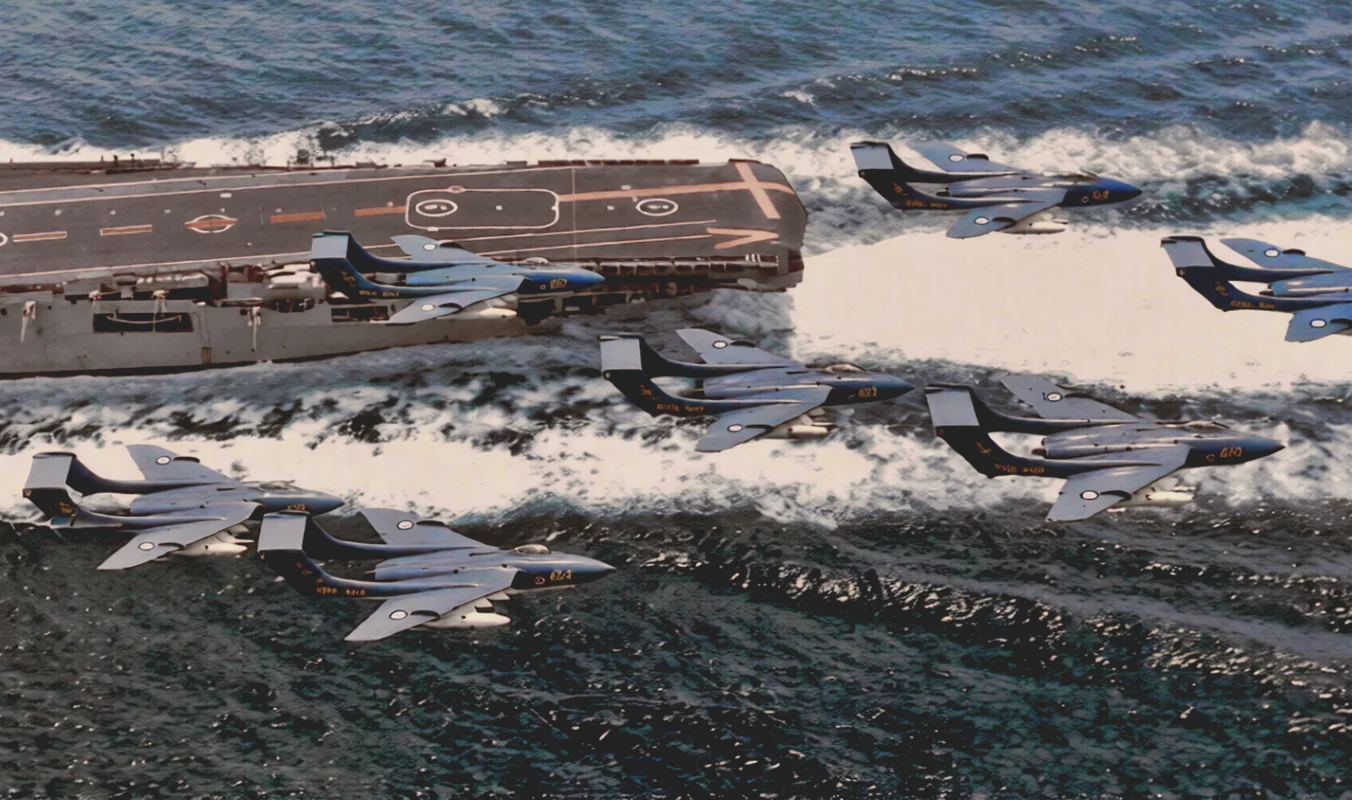
In retrospect, the Sea Vixen FAW.1 stands as a testament to British aerospace innovation in the post-war era. It pushed the boundaries of what was possible in naval aviation, incorporating cutting-edge technologies and novel design approaches. While not without its flaws, it represented a significant leap forward in capability for the Fleet Air Arm. The legacy of the Sea Vixen extends beyond its operational service. Many of the lessons learned from its design and operation influenced future British aircraft development. Its advanced avionics and missile armament pointed the way forward for fighter design, while the challenges posed by its unconventional layout led to improvements in cockpit ergonomics and crew safety in subsequent aircraft.
For all its quirks and challenges, the de Havilland Sea Vixen FAW.1 remains a beloved icon of British naval aviation. It represents a unique period in aerospace history when engineers and pilots were pushing the boundaries of what was possible, sometimes with mixed results but always with an eye toward innovation and improvement. As we look back on the Sea Vixen today, we see more than just an unusual-looking fighter jet. We see a aircraft that challenged conventions, pushed technological boundaries, and asked pilots and observers to adapt to new ways of flying and fighting. In doing so, it helped pave the way for the more advanced carrier-based fighters that would follow, ensuring that the Royal Navy’s Fleet Air Arm remained a potent force in the latter half of the 20th century.
The de Havilland Sea Vixen FAW.1 may have had a relatively short service life, but its impact on naval aviation and its place in the hearts of those who flew and maintained it ensure that it will be remembered as one of the most distinctive and important aircraft of its era. Its twin-boom silhouette, once a common sight on Royal Navy carriers, remains an enduring symbol of a time when British aerospace engineers dared to think differently, producing an aircraft that was as unconventional as it was capable.
Our Sea Vixen – XJ482
This was the ninth production aircraft built at Christchurch and went to 700Y Flight at Yeovilton in November 1958, this unit was reformed as 892 Squadron in July 1959. The aircraft returned to the factory in February 1959 and was prepared for cold chamber tests, it was delivered to Vickers at Wisley in the July Then to 7668 Flight at Yeovilton but back to Christchurch in February 1961 via a period at Abbotsinch.
To 766 Squadron in March 1962 at Yeovilton (coded 713 VL) where it was sometimes lead aircraft in the stations aerobatic team “Fred’s Five” until February 1967 It became an instructional airframe at Lee-on-Solent and then the gate guardian.
In July 1972 it went to Flight Refuelling in Dorset for trials with the universal drone pack and after this work it was sold to the Museum, arriving in November 1979; the mark is now very rare. It reflects the Royal Navy’s use of Bungay (Flixton) airfield during 1945/6 when it was HMS Europa, the satellite of HMS Sparrowhawk at Halesworth, and the base for Fleet Air Arm Squadrons 762 and 798.