
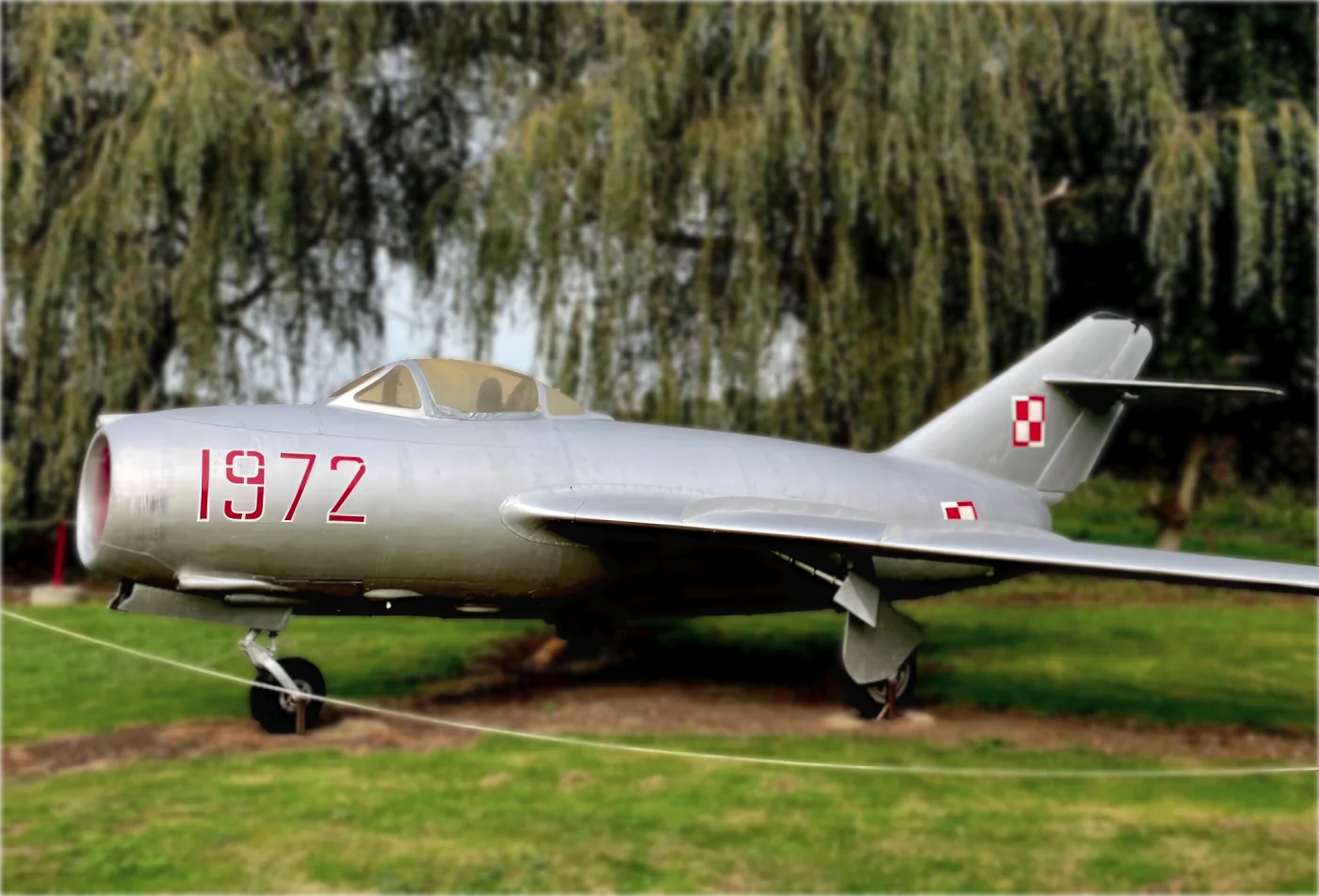
The Mikoyan-Gurevich MiG-15, particularly its improved MiG-15bis variant, stands as one of the most significant fighter aircraft of the early jet age. This swept-wing interceptor not only challenged Western air supremacy during the Korean War but also served as the backbone of many Warsaw Pact air forces, including the Czechoslovak Air Force. Its performance even caught the attention of famed test pilot Chuck Yeager, who had the rare opportunity to evaluate a captured aircraft.
The MiG-15’s story begins in the late 1940s, as the Soviet Union sought to develop a fighter capable of intercepting American B-29 bombers. Drawing on captured German research into swept-wing technology, and powered by a reverse-engineered Rolls-Royce Nene turbojet engine (produced as the Klimov VK-1), the MiG-15 first flew on December 30, 1947. The MiG-15bis, introduced in 1950, featured an uprated engine, improved armament, and other refinements. These enhancements solidified the aircraft’s position as one of the most formidable fighters of its era.
Pilots who flew the MiG-15bis often spoke of its exceptional climb rate, high-altitude performance, and powerful armament.
Climbing into the MiG-15bis’s cockpit, pilots are greeted by a relatively simple layout typical of early jet fighters. The canopy provides good visibility, particularly important for a dogfighting aircraft. The control stick and rudder pedals are conventionally placed, with engine and weapons controls easily accessible. The instrument panel features standard flight instruments, with some uniquely Soviet design elements. Western pilots often noted the mirror-image layout of some instruments compared to their own aircraft.
As the throttle is advanced for take-off, pilots feel the impressive thrust of the VK-1 engine. The MiG-15bis accelerates quickly, becoming airborne at around 175-180 km/h. Once airborne, the aircraft’s exceptional climb rate becomes apparent. With a sea-level climb rate exceeding 50 meters per second, the MiG-15bis could rapidly reach high altitudes, a crucial advantage in interceptor operations. At typical combat speeds, the MiG-15bis exhibits responsive handling, particularly in the roll axis thanks to its hydraulically boosted ailerons. The aircraft’s swept wings provide good performance in the transonic regime, allowing it to effectively intercept straight-winged bombers and fighters.
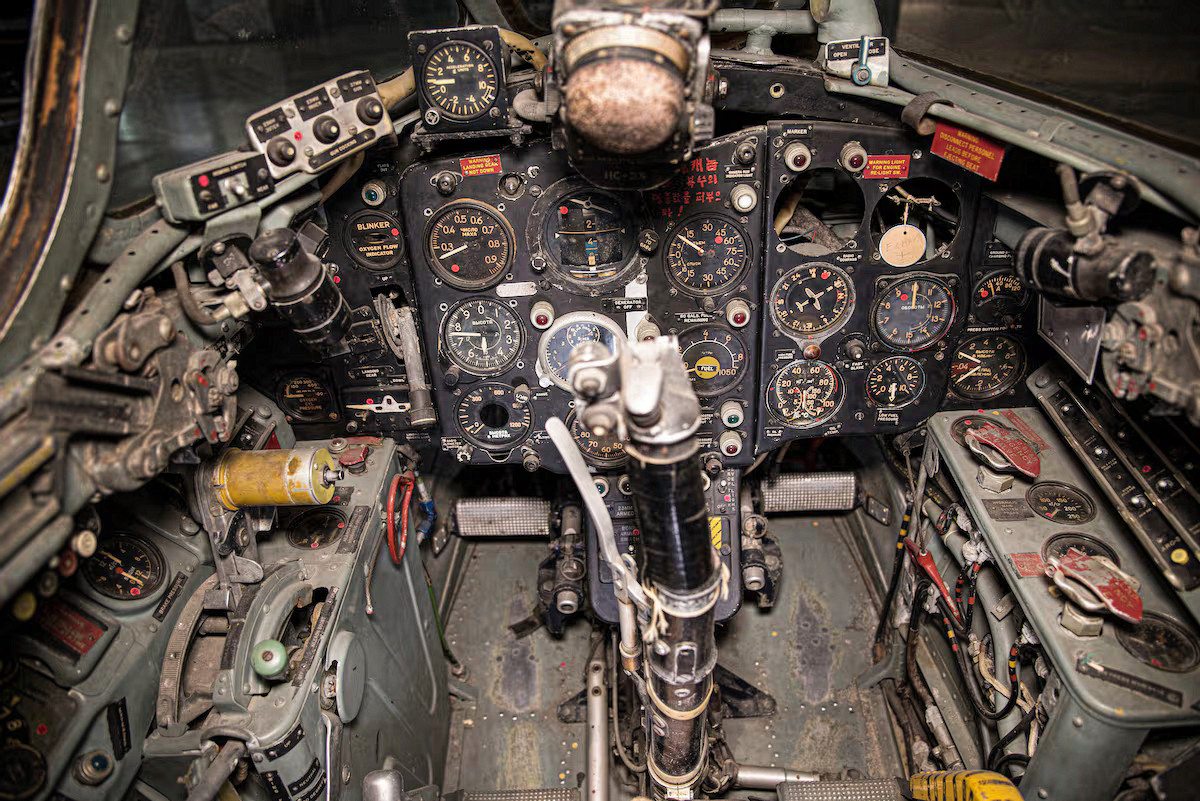
However, pilots needed to be cautious of some handling quirks. The MiG-15bis was known for its tendency to pitch up at high speeds, a characteristic that could lead to loss of control if not properly managed. Additionally, the aircraft could experience sudden wing drops at high angles of attack, requiring careful handling in low-speed situations.
In combat scenarios, the MiG-15bis’s strengths come to the fore. Its high thrust-to-weight ratio and low wing loading make it highly maneuverable in the vertical plane. Pilots could use the aircraft’s impressive zoom climb capability to gain an altitude advantage over opponents. The MiG-15bis’s powerful armament, consisting of two 23mm and one 37mm cannon, provided a significant punch. However, the differing ballistics of these weapons required skill to use effectively.
Approaching for landing, pilots needed to be mindful of the MiG-15bis’s relatively high landing speed and limited forward visibility. The aircraft’s bicycle landing gear configuration, with outrigger wheels on the wings, required a precise touch for smooth landings.
The Meteor F(TT).8 entered service with the RAF in the late 1950s, primarily operating from coastal airfields where it could tow targets over the sea for safety reasons. It quickly proved its worth, providing a stable and reliable platform for training air defense crews and testing new weapons systems. One of the key advantages of the F(TT).8 was its ability to operate at a wide range of speeds and altitudes. It could simulate everything from slow-moving bombers to high-speed fighter targets, making it an invaluable asset for training. The aircraft could also carry multiple target types, allowing for varied training scenarios in a single sortie.
The MiG-15bis’s performance capabilities made it a formidable opponent:
- Maximum speed: 1,076 km/h at sea level
- Service ceiling: 15,500 meters
- Range: 1,240 km
- Rate of climb: 50 m/s at sea level
- Armament: Two 23mm NR-23 cannons, one 37mm N-37 cannon
This performance envelope allowed the MiG-15bis to effectively intercept high-flying bombers and engage in dogfights with enemy fighters.
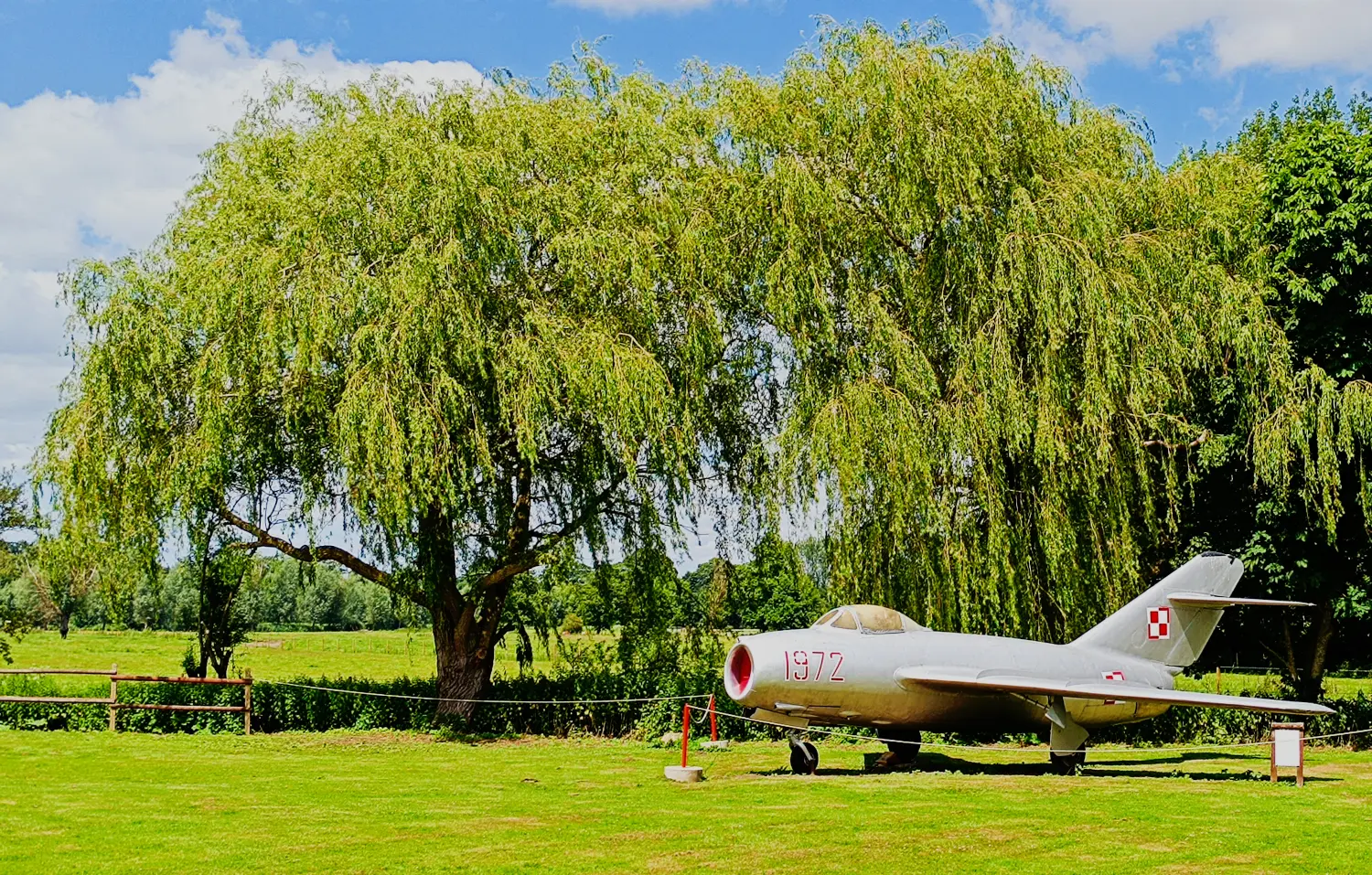
The Czechoslovak Air Force began receiving MiG-15 aircraft in 1951, with the more capable MiG-15bis following shortly after.
The introduction of these advanced jet fighters significantly enhanced Czechoslovakia’s air defense capabilities. Czech pilots quickly adapted to the new aircraft, and the MiG-15bis became a cornerstone of the country’s air force throughout the 1950s and into the 1960s. The Czechoslovak aircraft industry even began licensed production of the MiG-15 and MiG-15bis, manufacturing over 700 aircraft.
The MiG-15bis served in various roles within the Czech Air Force, including:
- Air defense interceptor
- Fighter-bomber
- Advanced trainer (two-seat UTI variant)
Czech MiG-15 and MiG-15bis aircraft participated in numerous Warsaw Pact exercises, allowing Czech pilots to hone their skills alongside other allied air forces. The aircraft’s presence also served as a deterrent during periods of Cold War tension, such as the 1968 Prague Spring.
Chuck Yeager and the Captured MiG-15
One of the most intriguing chapters in the MiG-15’s history involves famed American test pilot Chuck Yeager. In 1953, during the Korean War, North Korean pilot No Kum-sok defected with his MiG-15bis, landing at Kimpo Air Base in South Korea. This presented a unique opportunity for Western analysts to examine the aircraft that had been challenging UN forces. The captured MiG-15bis was disassembled and shipped to Kadena Air Base in Okinawa, Japan, where it was reassembled for evaluation. Chuck Yeager, already famous for breaking the sound barrier, was selected to conduct comparative flight tests against American fighters.
Yeager’s impressions of the MiG-15bis were mixed. He praised its simplicity, ruggedness, and high-altitude performance. The Soviet fighter’s ability to operate effectively above 50,000 feet impressed Yeager, who noted that it outperformed contemporary American fighters at those altitudes. However, Yeager also identified several weaknesses. He found the cockpit layout less intuitive than Western designs and noted that the aircraft’s handling became problematic at high speeds, particularly the tendency to pitch up. Yeager’s evaluation helped American pilots develop tactics to counter the MiG-15 more effectively in combat.
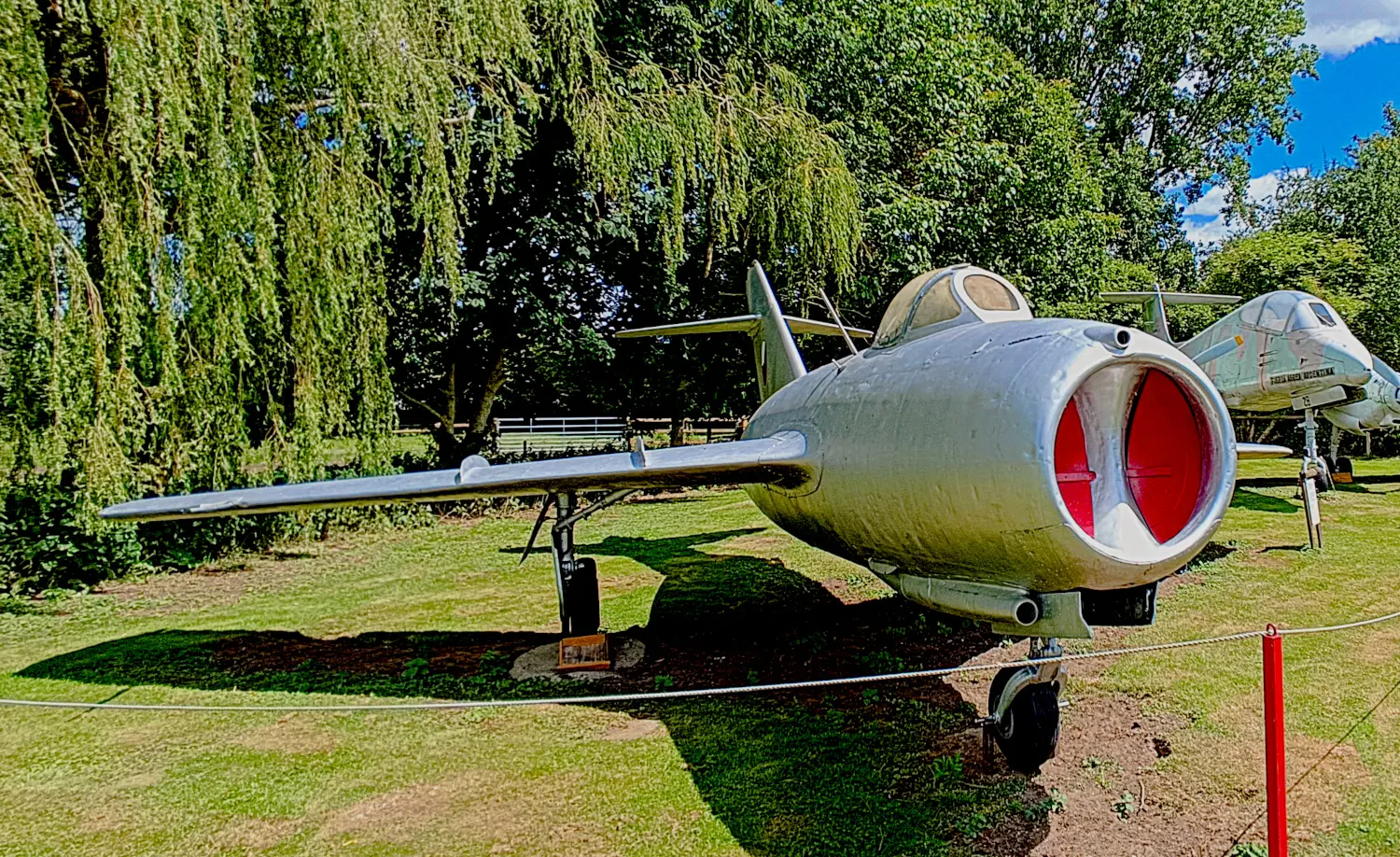
The MiG-15, particularly the MiG-15bis variant, left an indelible mark on aviation history. Its performance in the Korean War shocked Western air forces, ending the era of US air superiority and spurring the development of more advanced fighters like the F-86 Sabre and its successors. For the Czech Air Force and other Warsaw Pact nations, the MiG-15bis represented a quantum leap in capability. It allowed these air forces to field modern, high-performance jet fighters, significantly enhancing their defense capabilities and international standing.
The aircraft’s influence extended beyond military circles. The MiG-15’s distinctive design, with its swept wings and nose-mounted intake, became an iconic image of the jet age. Even today, the MiG-15 is instantly recognizable to aviation enthusiasts worldwide.
The MiG-15bis stands as a testament to the rapid advancement of aviation technology in the post-World War II era. Its blend of performance, simplicity, and effectiveness made it a formidable opponent in the skies over Korea and a valuable asset to air forces like Czechoslovakia’s for many years. The MiG-15bis’s legacy lives on in the annals of aviation history. From its combat record in Korea to its long service in air forces around the world, and even in the hands of legendary test pilots like Chuck Yeager, the MiG-15bis played a crucial role in shaping the course of Cold War aviation. It remains a powerful symbol of an era when the sound barrier was regularly broken and the sky seemed to hold no limits for human achievement.
For the pilots who flew it, the MiG-15bis offered a thrilling, if sometimes challenging, flight experience. Its high performance pushed the boundaries of what was possible in fighter aircraft of the early 1950s, setting the stage for the even more capable designs that would follow.