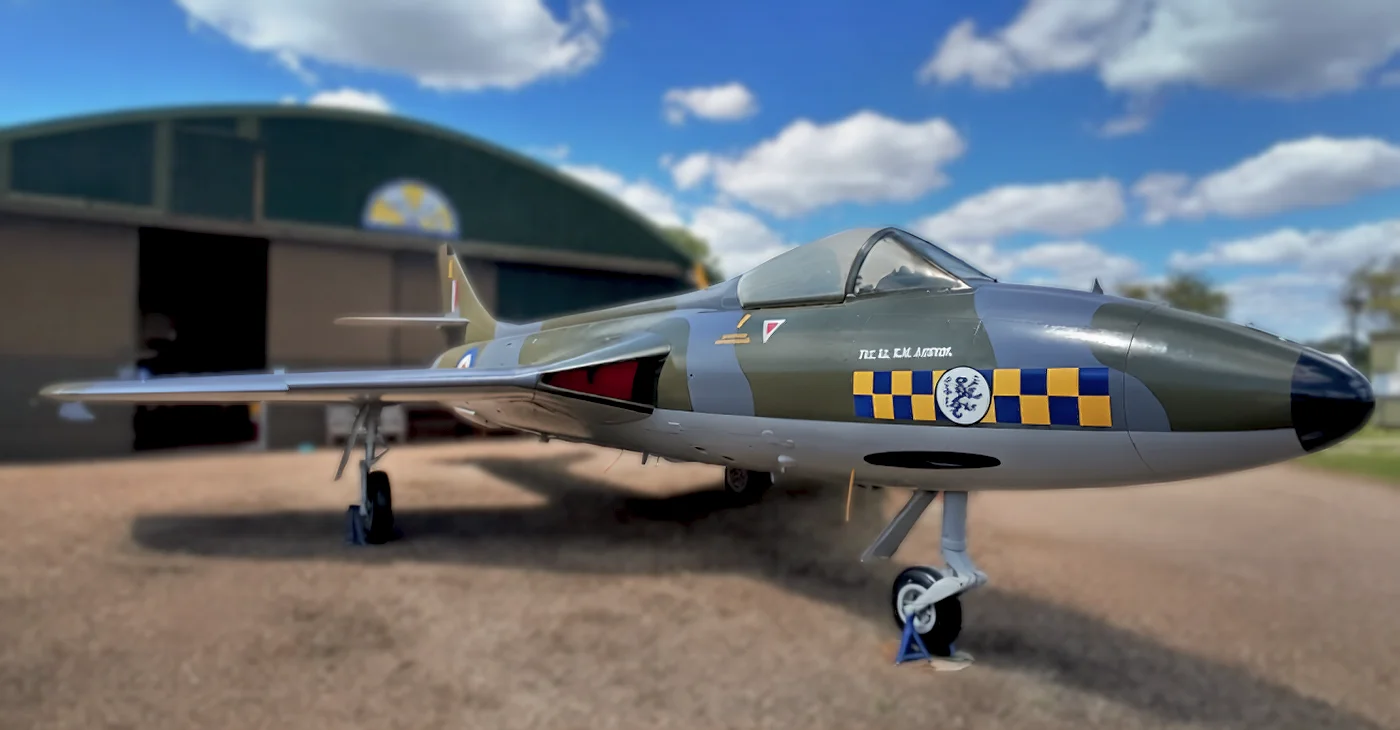
The Hawker Hunter FGA.9 (Fighter Ground Attack) stands as one of the most iconic and versatile aircraft to serve with the Royal Air Force during the Cold War era. This sleek, swept-wing fighter-bomber combined elegant design with impressive performance, earning it a special place in aviation history.
The Hunter FGA.9 was an evolution of the successful Hunter F.6 fighter. Recognizing the need for a dedicated ground attack aircraft, Hawker Aviation began modifying the Hunter for this role in the late 1950s. The FGA.9 first flew in 1959 and entered RAF service in 1960.
Key modifications for the FGA.9 variant included:
- Strengthened wings for carrying external stores
- Improved avionics for ground attack missions
- Addition of a gun camera
- Upgraded Rolls-Royce Avon 207 engine
These changes transformed the Hunter from a pure interceptor into a formidable multi-role combat aircraft.
Pilots who flew the Hunter often speak of its responsive handling, impressive performance, and forgiving nature.
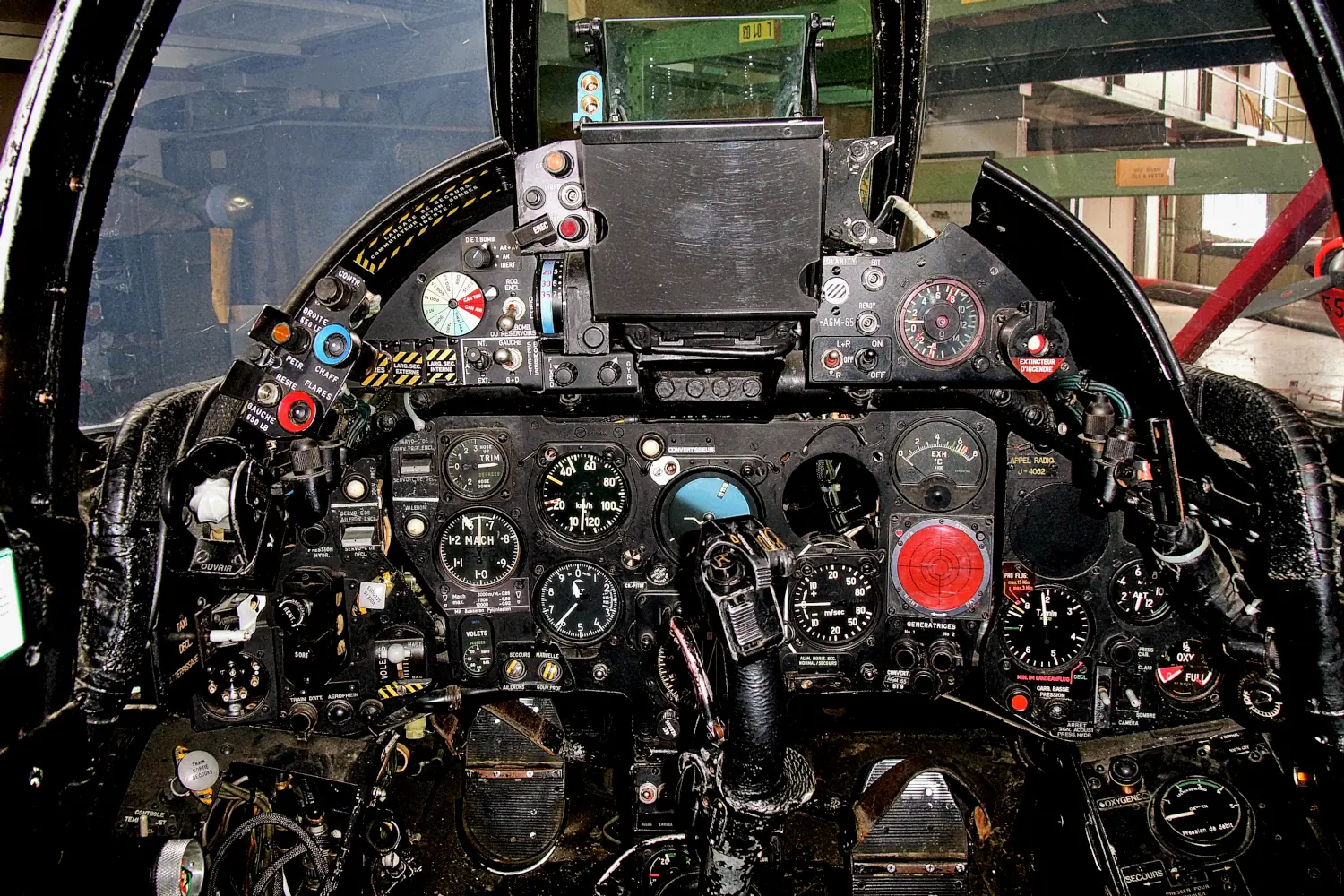
Climbing into the Hunter’s cockpit, pilots are greeted by a well-organized and relatively spacious environment. The bubble canopy provides excellent visibility in all directions, crucial for both air-to-air and air-to-ground missions. The control stick and throttle fall naturally to hand, with essential switches and controls within easy reach. The instrument panel features a logical layout, with flight instruments centrally positioned and engine gauges easily visible. The Hunter’s cockpit, while not as advanced as later fighters, provides all the necessary information for effective mission execution.
As the throttle is advanced for take-off, pilots feel the impressive thrust of the Avon 207 engine. The Hunter accelerates quickly, becoming airborne at around 150 knots. Once airborne, the aircraft’s excellent thrust-to-weight ratio becomes apparent. With a sea-level climb rate exceeding 17,000 feet per minute, the Hunter can rapidly reach altitude, a valuable asset in both interceptor and ground attack roles. At typical combat speeds, the Hunter FGA.9 exhibits responsive and well-harmonized controls. The aircraft’s swept wings provide good performance in the transonic regime, allowing it to effectively intercept targets or egress from ground attack missions.
Pilots often praise the Hunter’s stability, particularly at high speeds. This stability, combined with the excellent visibility from the cockpit, makes the aircraft well-suited for its ground attack role, allowing for accurate weapons delivery. One of the Hunter’s most appreciated characteristics is its forgiving nature. The aircraft provides clear feedback as it approaches its limits, allowing pilots to safely explore its performance envelope. This quality made the Hunter an excellent advanced trainer, in addition to its combat roles.
In combat scenarios, the Hunter FGA.9’s versatility shines. Its high speed and good maneuverability allow it to hold its own in air-to-air engagements, while its stability and range of weapons options make it effective in the ground attack role. The aircraft’s four 30mm ADEN cannons provide significant firepower, effective against both air and ground targets. The ability to carry a variety of external stores, including bombs, rockets, and additional fuel tanks, further enhances its combat flexibility.
Approaching for landing, pilots appreciate the Hunter’s stable handling characteristics. The aircraft’s design allows for relatively low approach speeds, enhancing safety during landings. The effective airbrakes and robust landing gear enable smooth touchdowns, even on shorter runways.
This performance envelope allowed the Hunter FGA.9 to effectively carry out a wide range of missions, from interception to close air support.
The Hunter FGA.9 served with numerous RAF squadrons, primarily in the ground attack and reconnaissance roles. Notable squadrons include:
- No. 1 Squadron: Based at RAF Wittering, it was one of the first to receive the FGA.9.
- No. 8 Squadron: Operated the Hunter FGA.9 from RAF Khormaksar in Aden.
- No. 20 Squadron: Flew Hunters from RAF Tengah in Singapore.
- No. 54 Squadron: Based at RAF Chivenor, it used Hunters for advanced training.
These squadrons, among others, employed the Hunter FGA.9 in various theaters of operation, showcasing the aircraft’s versatility and reliability. The Hunter FGA.9 saw active service in several conflicts and operations during its RAF career:
Aden Emergency (1963-1967):
Hunters played a crucial role in supporting British forces during the Aden Emergency. Operating from RAF Khormaksar, they conducted ground attack missions against insurgent targets, demonstrating their effectiveness in the close air support role.
Indonesia-Malaysia Confrontation (1962-1966):
RAF Hunters based in Singapore participated in operations during the confrontation between Indonesia and the newly formed Federation of Malaysia. They conducted patrol and deterrence missions, helping to maintain stability in the region.
Radfan Campaign (1964):
Hunters were extensively used during the Radfan Campaign in Yemen, providing vital close air support to British and local forces fighting against rebels in the mountainous Radfan region.
Beira Patrol (1966-1975):
Although primarily a naval operation, RAF Hunters occasionally supported the Beira Patrol, enforcing sanctions against Rhodesia by preventing oil tankers from reaching the port of Beira in Mozambique.
Throughout these operations, the Hunter FGA.9 proved its worth as a reliable and effective combat aircraft. Its ability to operate in diverse environments, from the deserts of Aden to the jungles of Southeast Asia, underscored its versatility.
In addition to its combat duties, the Hunter FGA.9 served as an advanced trainer for the RAF. Its handling characteristics and performance made it an ideal platform for training pilots transitioning to high-performance jet aircraft. The Hunter’s role in training extended beyond the RAF. The two-seat trainer variant, the T.7, was widely used and helped prepare pilots from numerous air forces around the world.
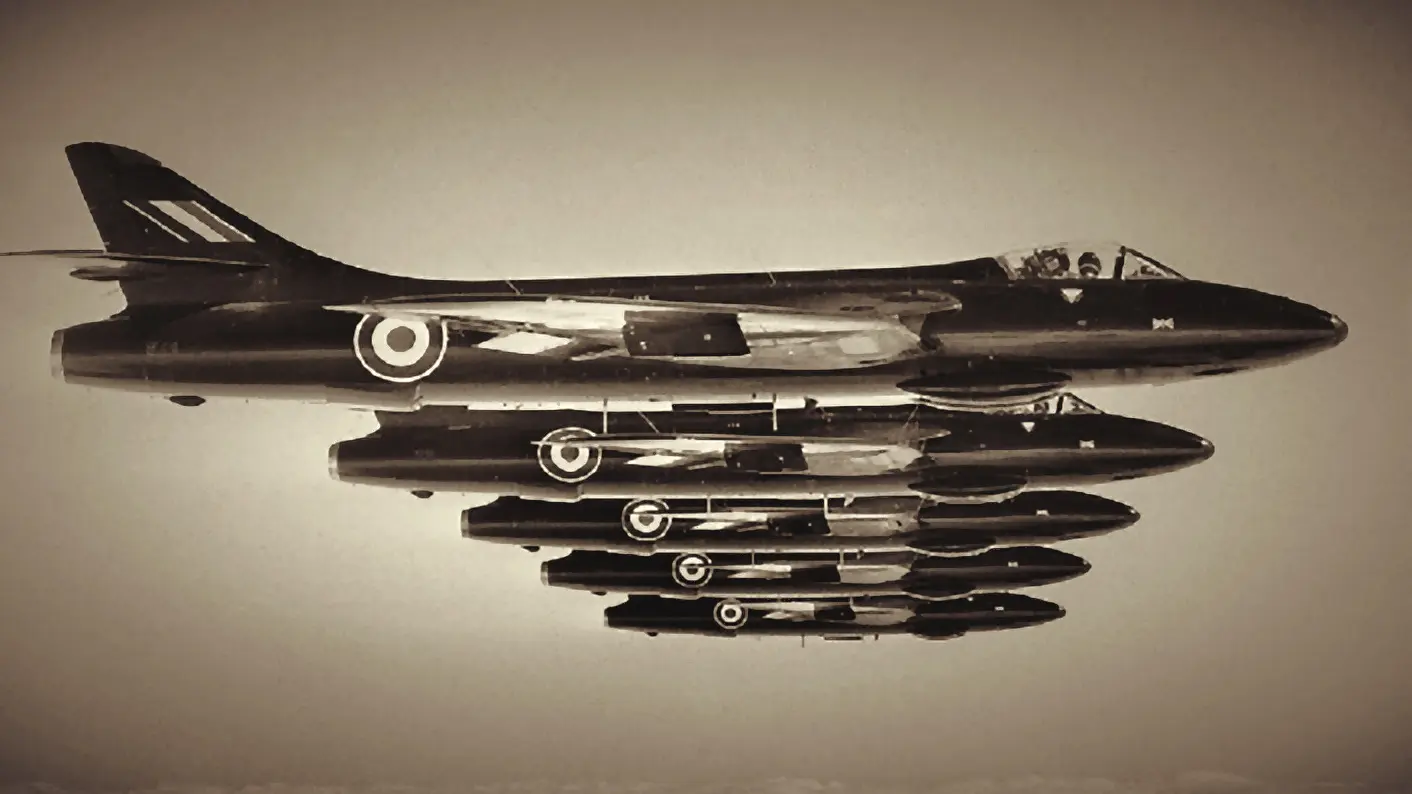
The Black Arrows: Precision and Spectacle in the Sky
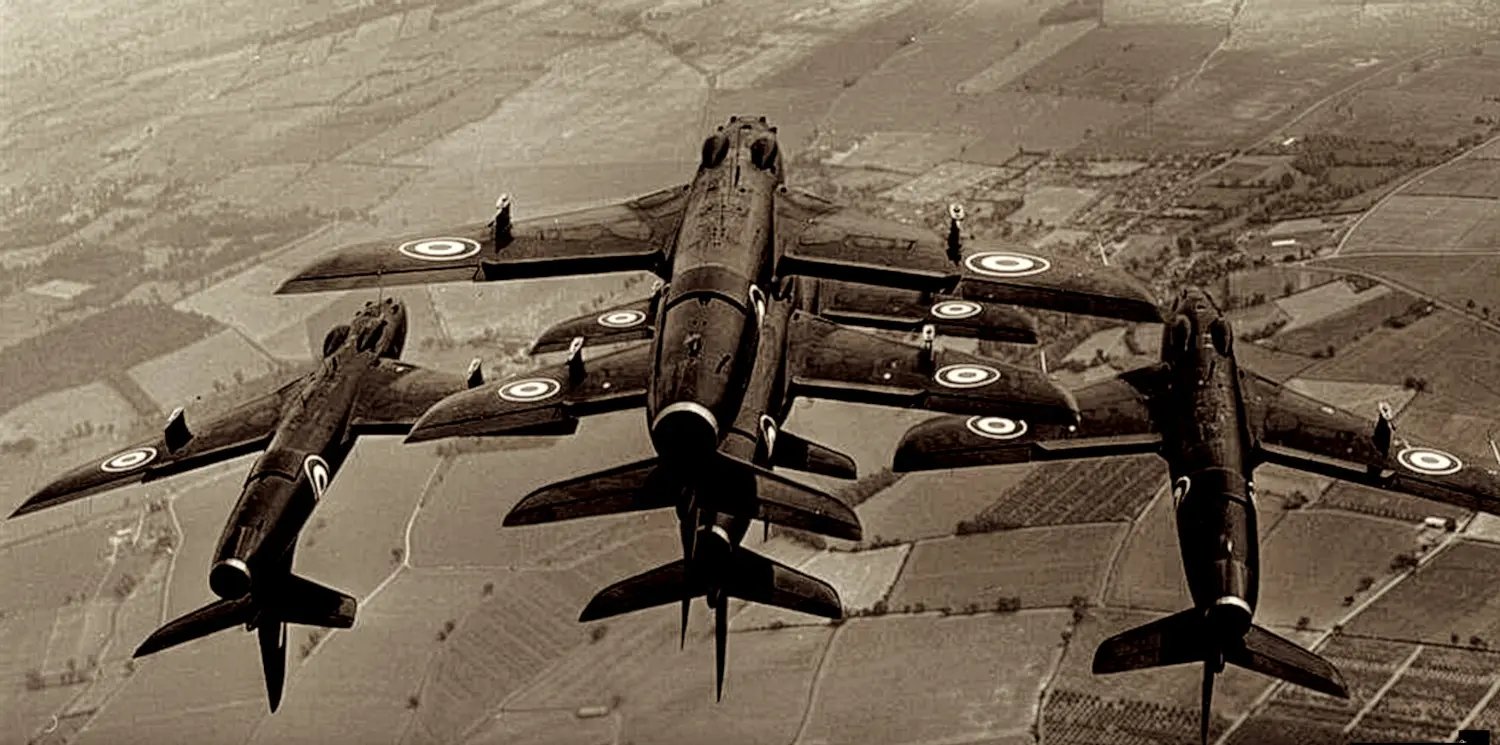
The Black Arrows, the official aerobatic display team of the Royal Air Force’s No. 111 Squadron from 1956 to 1961, set new standards for aerial displays and became a source of national pride. Flying the sleek Hawker Hunter, the team captivated audiences with their precision formation flying and daring maneuvers. At the heart of the Black Arrows’ success was the Hawker Hunter, a versatile and responsive aircraft that proved ideal for aerobatic displays. Pilots who flew with the team often speak of the Hunter’s excellent handling characteristics, which allowed for precise control during complex formations.
The Black Arrows’ signature maneuver was the “Diamond Nine” formation, where nine aircraft flew in a tight diamond shape. This formation, first performed at the Farnborough Airshow in 1958, became iconic and set a world record for the largest formation loop. Flying as part of the Black Arrows demanded exceptional skill and concentration. Pilots had to maintain perfect positioning relative to their teammates, often flying just feet apart at high speeds. The lead pilot would give commands over the radio, with the team responding in unison to create the spectacular shapes and patterns that thrilled spectators.
During this time, as a Flying Officer, Roger Hymans was part of the formation that performed the 22 aircraft close-formation loop, a record that still stands today. The formation members flew a lot of short sorties to achieve this feat – in August 1958, he flew 43 sorties for only 17:15 hours. We link to 2 great interviews with Roger where he describes flying the Hunter and his time with the legendary Black Arrows.
The Black Arrows’ performances in the Hunter helped showcase British aviation technology and piloting skill to the world. Their legacy lives on in the precision and artistry of modern aerobatic teams, with the Hawker Hunter forever associated with this golden age of aerial displays.
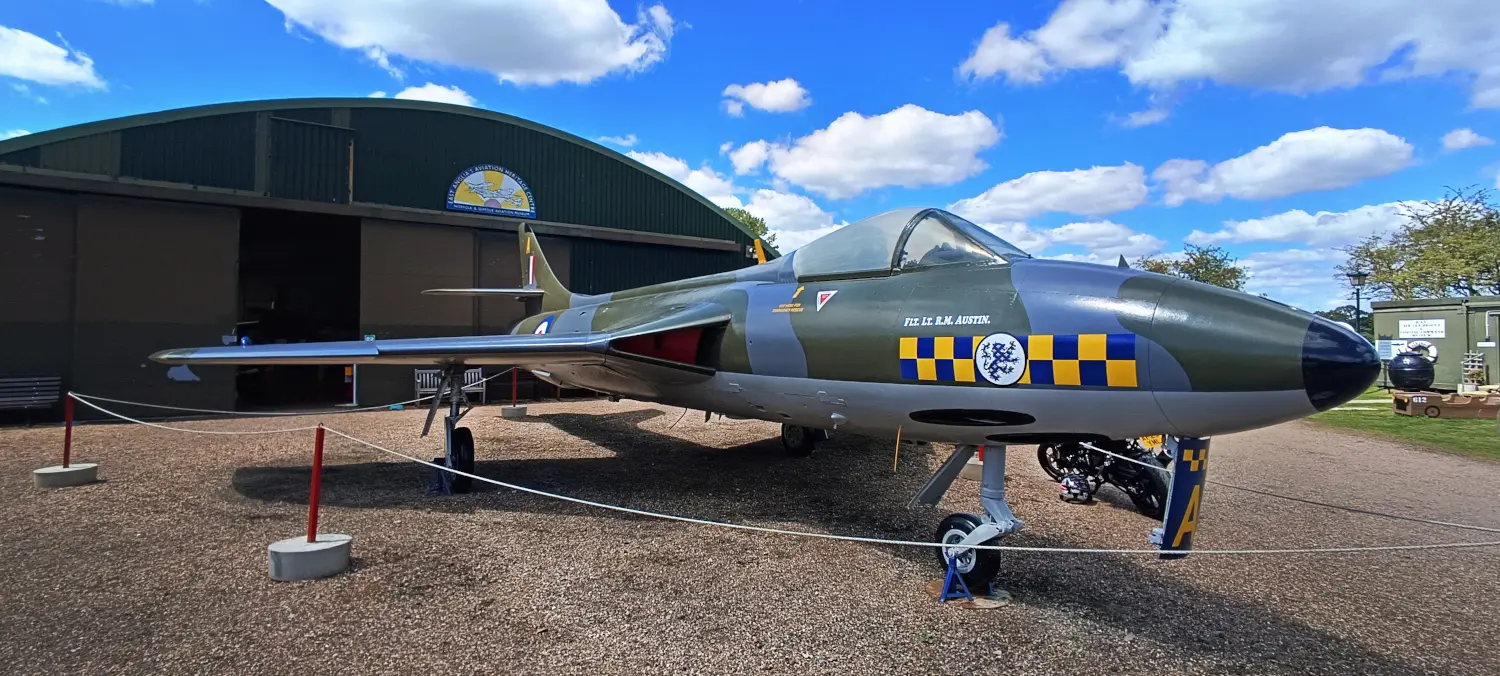
Our Hawker Hunter 55-443
This aircraft on display was one of a total of 1,058 machines supplied under the Mutual Defence Aid Programme to Europe and served with the French Air Force at Nancy and Sonteux between 1956 and 1978.
Previously, it served with the 20th FBG And 803rd FBG USAF.
It was returned to RAF Sculthorpe in Norfolk at the end of its service life and placed on loan to the museum in 1978 by the USAF
The Hawker Hunter FGA.9 left an indelible mark on RAF operations during the Cold War era. Its combination of performance, versatility, and reliability made it a favorite among pilots and ground crews alike. The Hunter’s impact extended beyond its operational service. Its elegant design and impressive performance captured the public imagination, making it a star of air shows and a symbol of British aviation prowess. Many of the lessons learned from operating the Hunter influenced the development of subsequent British combat aircraft. The concept of a multi-role fighter-bomber, capable of both air-to-air and air-to-ground missions, became a cornerstone of modern combat aircraft design.
The Hawker Hunter FGA.9 stands as a testament to British aerospace engineering during the Cold War. From its sleek lines to its impressive performance, the Hunter captured the essence of its era – a time of rapid technological advancement and geopolitical tension. For the pilots who flew it, the Hunter offered a thrilling and rewarding experience. Its responsive handling and forgiving nature made it a joy to fly, while its combat capabilities instilled confidence in those who took it into harm’s way. The Hunter’s service with RAF squadrons around the world demonstrated its versatility and reliability. From the skies over Aden to the jungles of Southeast Asia, the Hunter FGA.9 proved itself time and again as a capable and dependable combat aircraft.
As we reflect on the Hunter’s legacy, we see more than just an aircraft. We see a symbol of a pivotal time in aviation history, a tool that helped shape Cold War geopolitics, and a machine that inspired a generation of pilots and aviation enthusiasts. The Hawker Hunter FGA.9 may no longer grace the skies in RAF service, but its impact on military aviation and its place in the hearts of those who flew and maintained it ensure that it will be remembered as one of the great combat aircraft of its time.